At a glance
- The Arctic king crab cruise is from US$261, with the option to reserve now and pay later.[1]
- Plan for 4.5 hours on the water with a live guide in Norwegian and English.[1]
- Book with confidence: a full refund is given for cancellations up to 24 hours prior.[1]
- Average winter temperatures are around −4°C; pack layers and a windproof shell.[2]
- From late August to early April, under dark, clear skies, northern lights can appear.[3]
| Polar night | Northern lights season | Midnight sun | |
|---|---|---|---|
| Dates | 27 November to 15 January[4] | Late August to early April[3] | 20 May to 22 July[5] |
| Daylight | Blue twilight at midday | Long nights with aurora potential | Midnight sun, no real darkness |
| Ideal for | Cosy fjord scenery and quieter harbours | Pairing the cruise with an evening aurora hunt | Late adventures under endless light |
| Booking note | Check availability for starting times[1] | Reserve now and pay later[1] | Free cancellation up to 24 hours ahead[1] |
The northern lights may be visible in the Tromsø region from late August to early April, whenever the sky is dark and sufficiently clear.
Why this cruise earns a spot in your Tromsø week
Before reserving
What to pack
- Warm base layer, mid layer and windproof shell
- Sunglasses for low sun and snow glare
- Grippy, waterproof boots for the deck
- Questions and curiosity for the crew
Why book this early in your stay
Tromsø fills up quickly in winter, so it pays to lock in the experiences you really want before you arrive. The Arctic king crab cruise is a 4.5-hour trip with a live guide who speaks Norwegian and English.[1] Book it for your second or third day rather than your last, so a change in the weather or a late night chasing auroras does not cost you the cruise. Hotels, flights and tours all get busier as the season goes on, and having the cruise settled early means you can relax into the rest of your trip.
Booking allows you to pay later while reserving now.[1] That gives you the freedom to secure a slot as soon as your plans firm up, then sort out the rest of the week without rushing. You are holding the important part: a place on the boat. You may also cancel up to 24 hours before for a full refund, which removes the risk of committing to an activity while your plans are still in flux.[1]
What actually stops a sailing
On the day, the crew makes the final call. Norwegian fjord weather can change in minutes, and the conditions that matter are wind strength, visibility and sea ice. These are the things you cannot judge from a hotel window, which is why the guide's judgement is the one that counts. A fresh breeze across the deck is normal and part of the experience; what the crew will not do is take you into conditions they are not happy with.
The cruise carries on in snow showers and cold that would send many people indoors. That is part of the Arctic charm. What you can control is how you book: a reserve now and pay later slot means you are not tied down if your own plans shift.[1] If the snow is falling, the cabin windows steam up and the landscape gets softer; if the sky clears, the mountains come out sharp and white.
If a sailing is called off, your operator will talk through the options. The important thing is to leave a little slack in your itinerary, especially if you have booked other activities around this one. Weather is the one part of an Arctic trip nobody controls, so the sensible strategy is to plan for it rather than fight it.
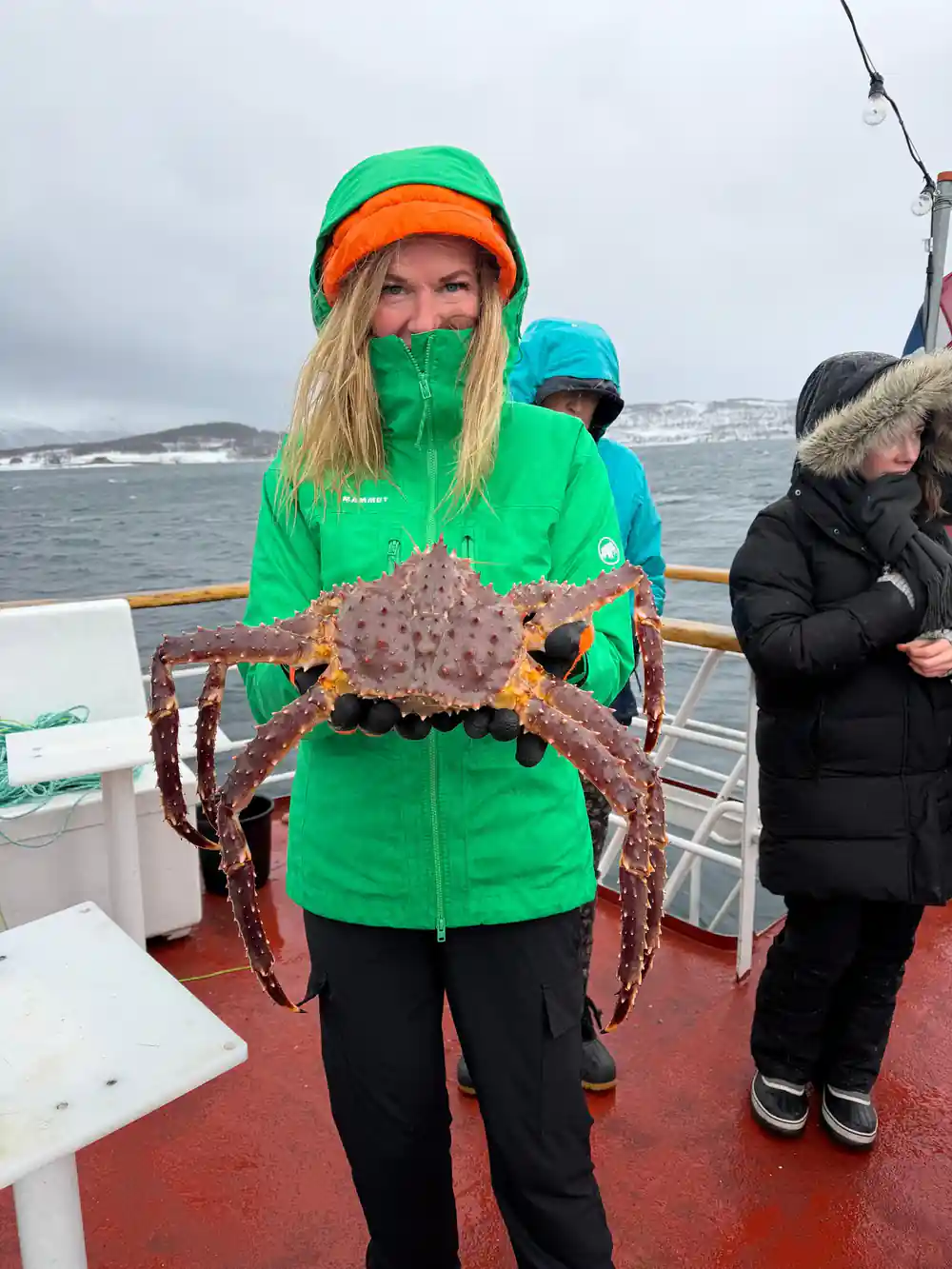
Guests in insulated suits crowd the rail as snow falls over the fjord.
How Arctic weather behaves
Winter in Tromsø is not as extreme as many people imagine, but it is still properly cold. The average winter temperature is around −4°C.[2] On an open deck, the wind makes it feel colder, so dress in layers from base layer to windproof shell. A warm hat, gloves and a scarf make more difference than a single thick coat, and insulated boots keep your feet happy while you move around the boat.
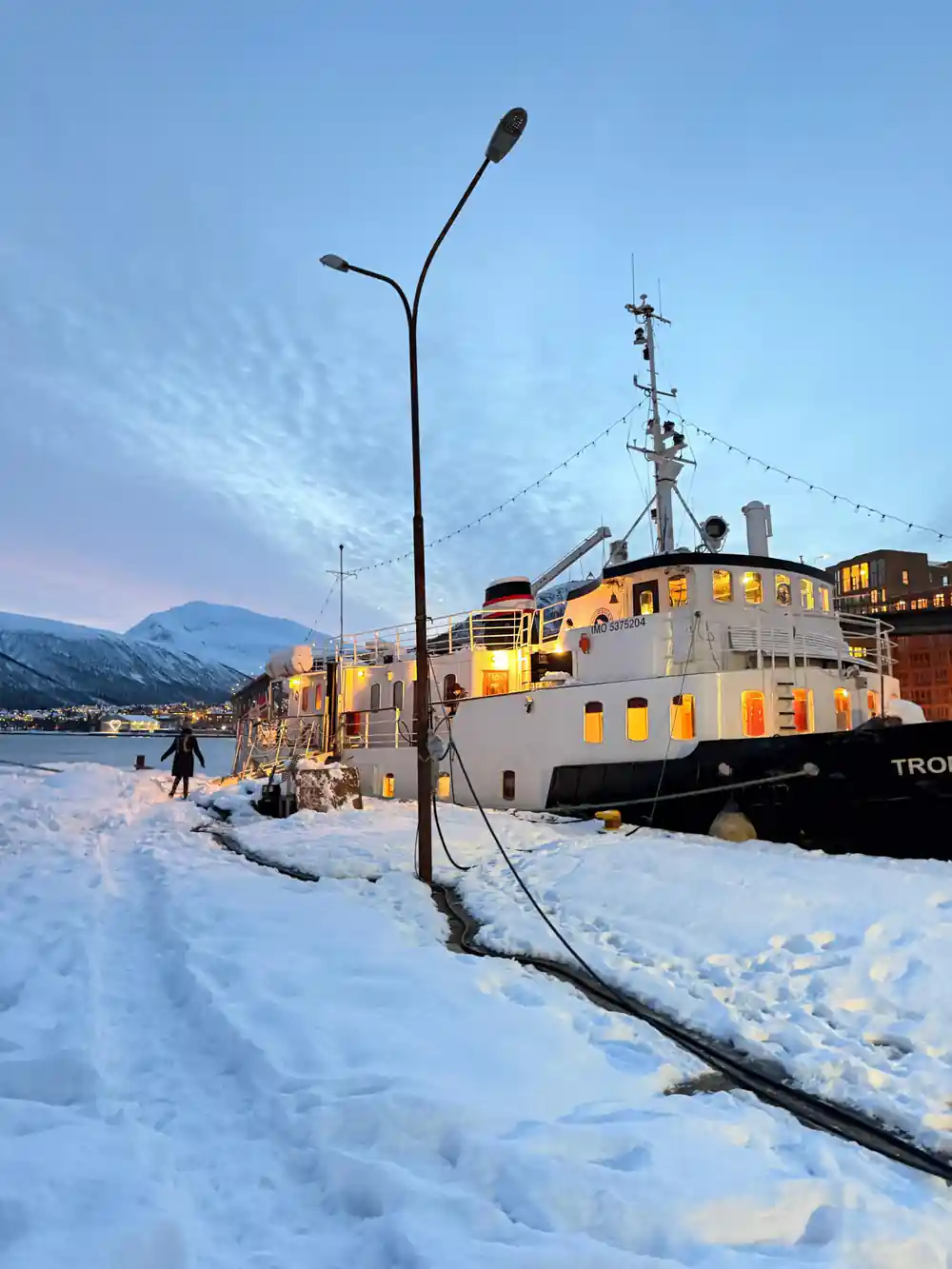
From about 27 November until 15 January, during the polar night, the sun remains under the horizon and the city shines with blue twilight.[4] That soft light makes the mountains and fjord look almost monochrome, and it is a beautiful setting for a cruise. The darkness is not total: there is a long, gentle dusk around midday, and the snow itself seems to hold the light.
Later in the season, the days stretch out quickly. By the time the midnight sun arrives, around 20 May to 22 July, the cruise runs in endless daylight.[5] Each season gives the same fjord a completely different mood, from the quiet blue of polar night to the bright evenings of summer, so the cruise works whenever you visit.
What free cancellation gives you
A strong reason to book from this page is the flexible cancellation. A full refund applies to cancellations made at least 24 hours in advance.[1] That means you can book with confidence even when the forecast is uncertain. If your travel plans shift, you have a clear window to decide without losing money.
The cruise lasts 4.5 hours, which is a good chunk of a day.[1] If your flight is delayed or a better opportunity appears, the 24-hour window gives you room to adjust without losing money.[1] It also means you can plan the rest of your day around a fixed block of time, whether that is a meal in town or a quiet evening.
Reserve now and pay later is the other half of the safety net.[1] Your card is not charged today, and you have until departure to settle in. That makes it easier to compare tours and decide where your money is best spent, without the pressure of paying for everything at once.
from US$261
Book the 4.5-hour Arctic king crab cruise with a live guide in Norwegian and English, and cancel free up to 24 hours before.[1]
Fitting it around the northern lights
From late August to early April, the northern lights can be spotted in the Tromsø region if the sky is dark and reasonably clear.[3] In aurora season, a daytime activity like this cruise leaves your evening free for a dedicated aurora hunt. The lights do not appear on a schedule, so it is smart to leave your nights open and do your fjord and crab adventure during daylight.
If the lights are the main reason you came, plan at least a couple of clear nights. The cruise itself is about the fjord and the king crab, and a 4.5-hour sail fits neatly before darkness falls.[1] That way, you are not exhausted before the aurora chase begins.
During the polar night, the dark hours are long, so you do not need to chase the clock. Just remember that aurora visibility depends on the sky, not the calendar.[3] Even if a tour is running, no guide can guarantee a show; what they can guarantee is a good place to watch and the knowledge to read the sky.
Season and availability
The way you experience the cruise changes with the season. From 27 November to 15 January you get the polar night's blue twilight; from around 20 May to 22 July you get the midnight sun.[4][5] The starting time may vary, so check availability when you book.[1] If you are coming in the core winter months, expect lower temperatures and shorter days; if you are coming in summer, expect long bright evenings and a much quieter fjord.
Winter is the busiest time, and the most popular slots go first. Booking early in your stay is the easiest way to avoid disappointment. Pay later and reserve now; if something comes up, you can cancel as late as 24 hours before.[1] That combination means the earlier you book, the more choice you have, and the more flexibility you keep.
On the day itself
Expect a proper Arctic cruise. The boat moves through a landscape of steep islands, snow dusted peaks and dark water, with a live guide in Norwegian and English pointing out what you are seeing.[1] There is something special about watching the snow fall from a warm cabin, or stepping outside just long enough to feel the cold on your cheeks before going back in.
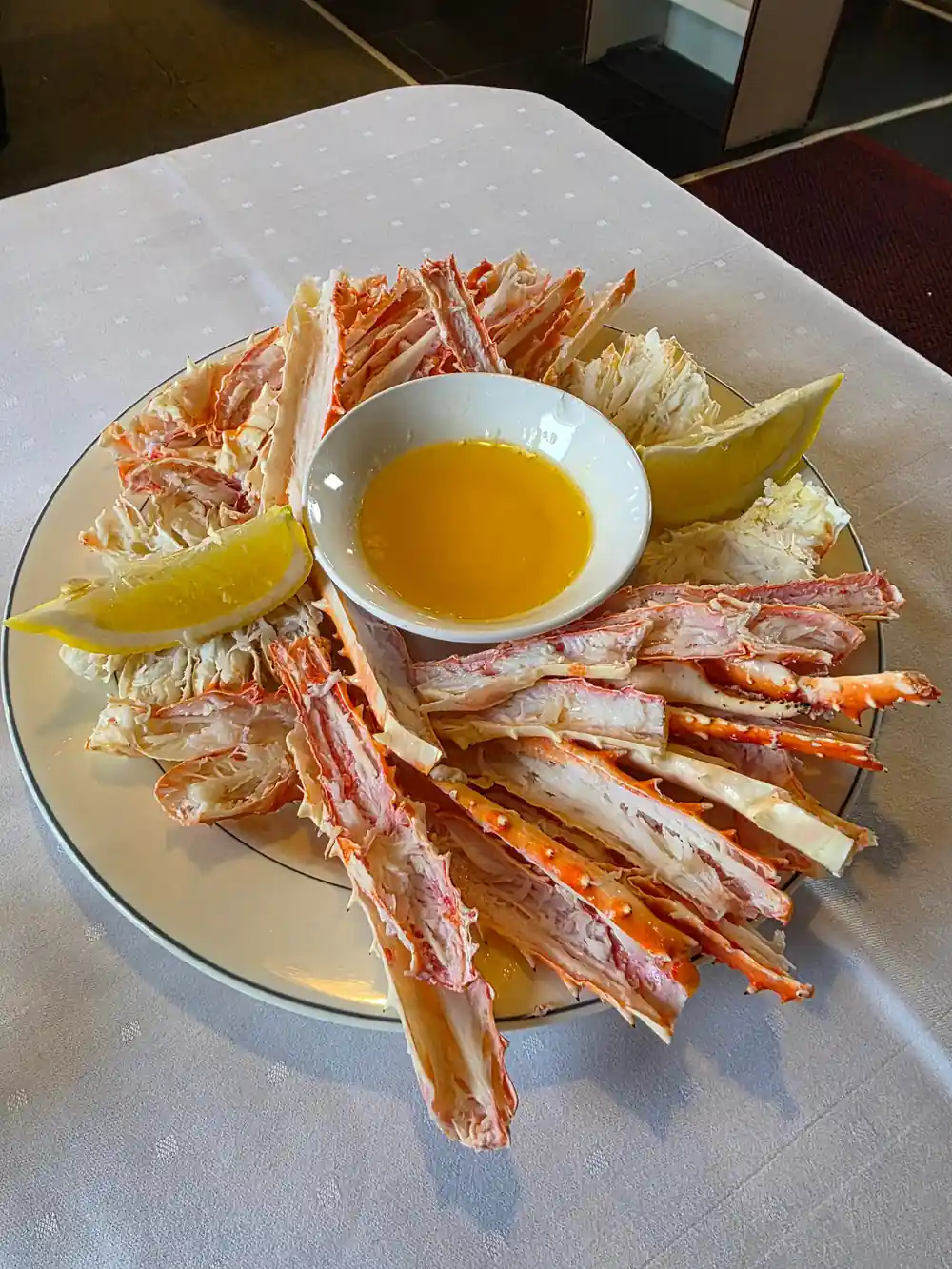
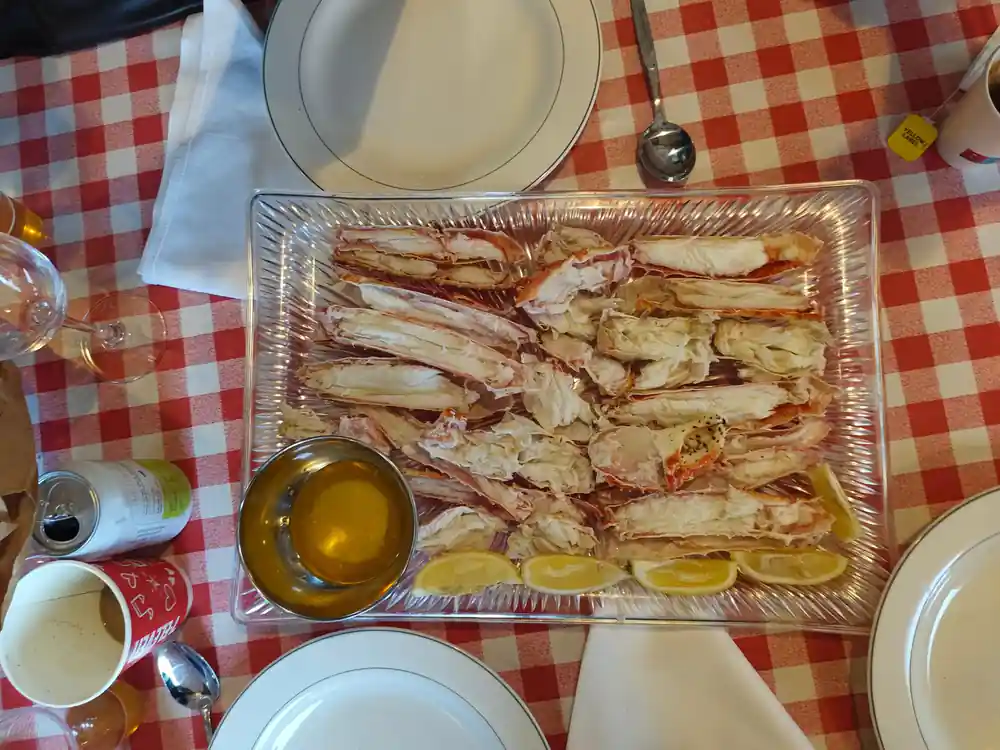
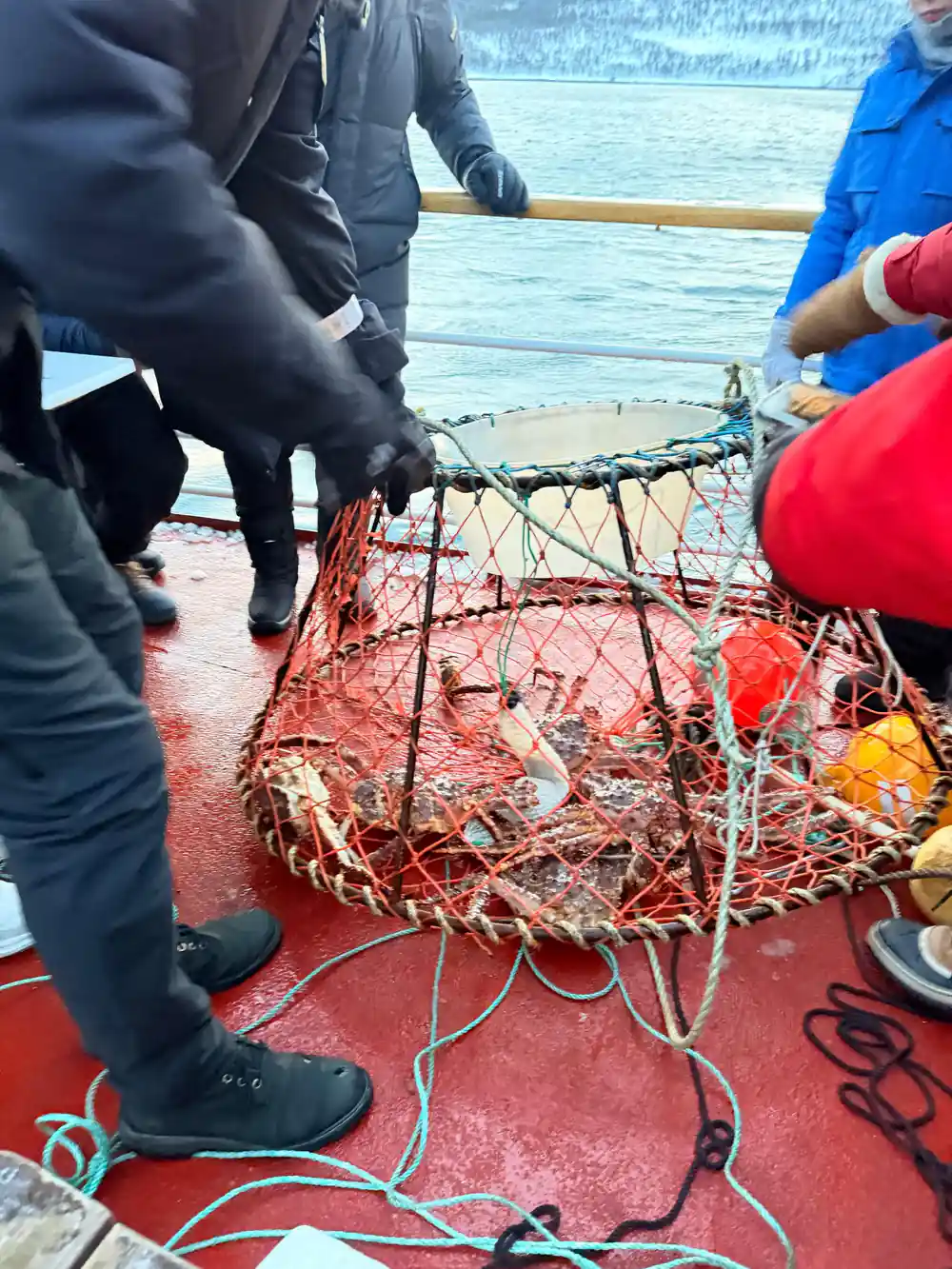
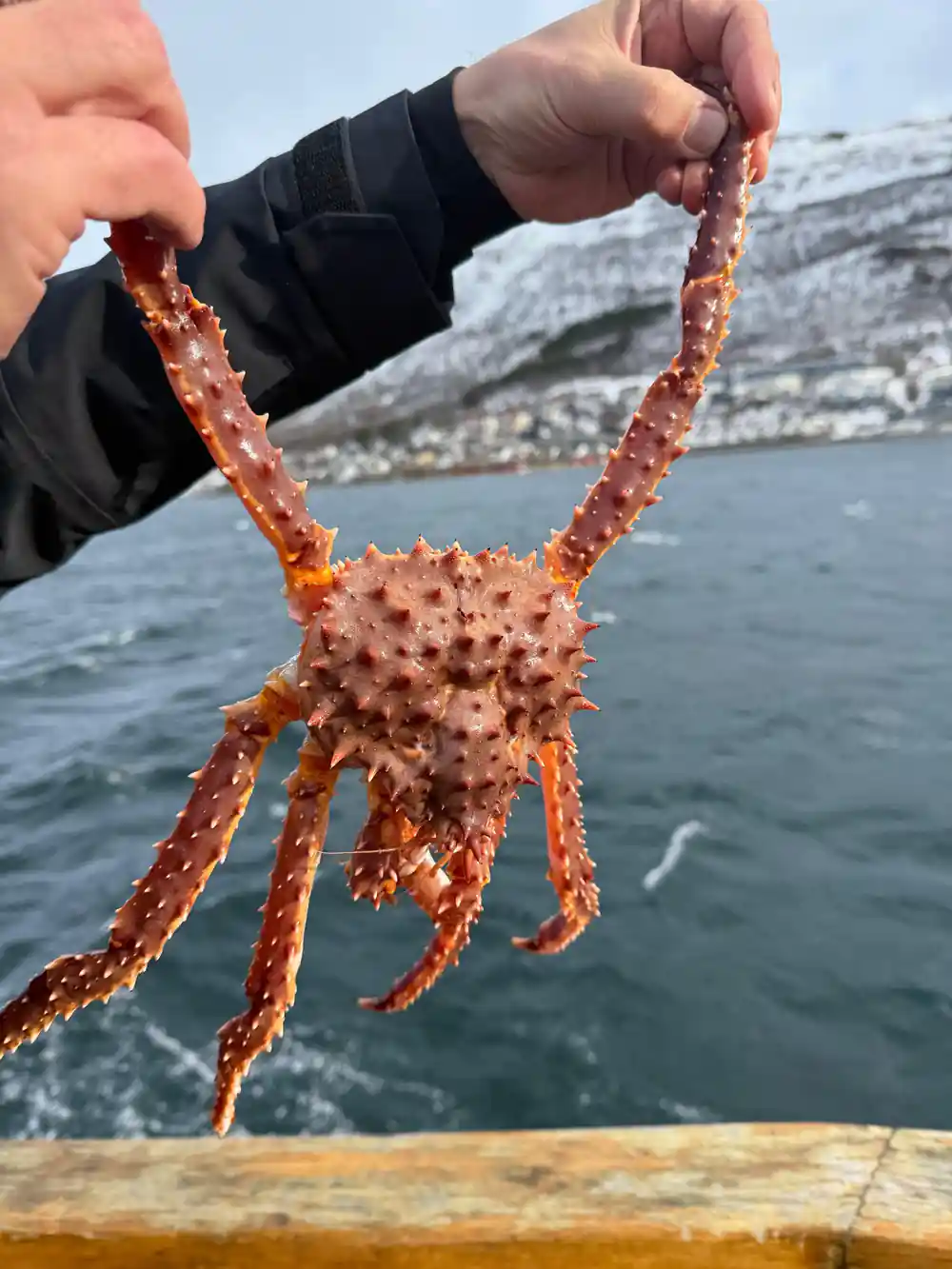
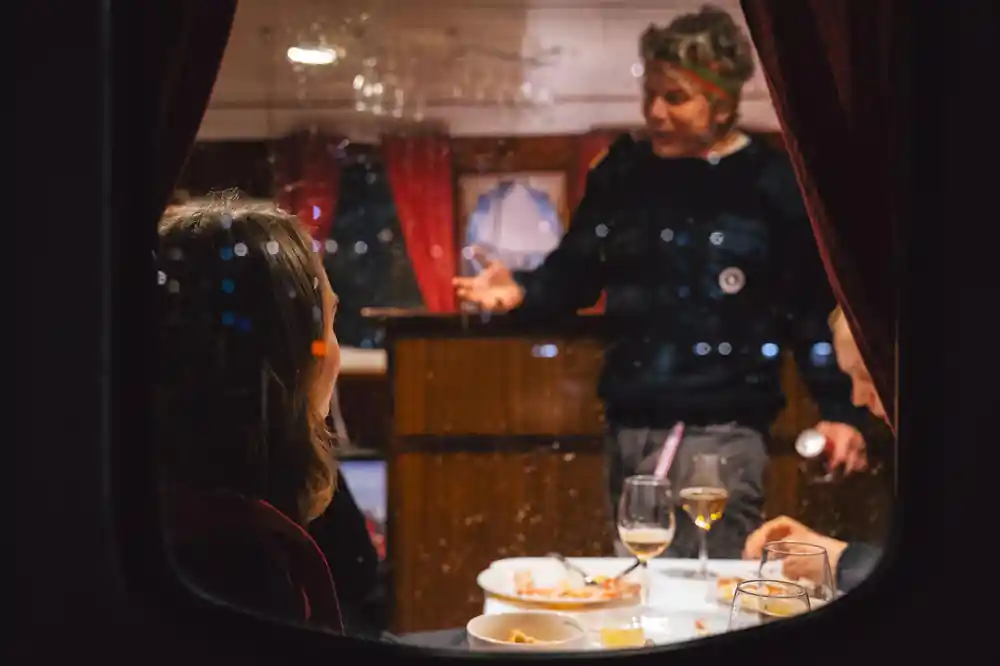
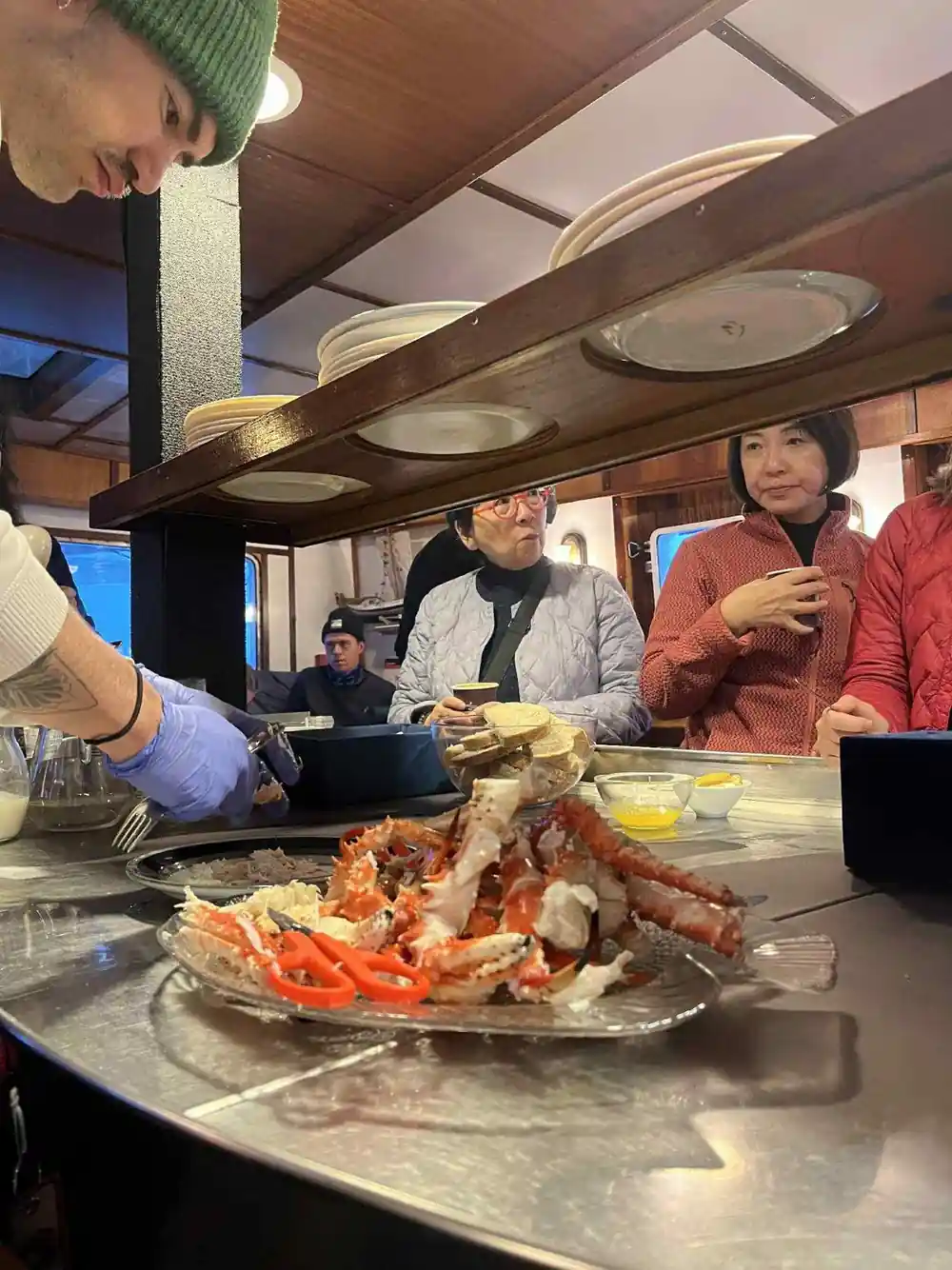
The self-captured lunch is the heart of the trip. You get to be part of hauling in the catch, then taste the crab prepared on board. It is messy, delicious and very Norwegian. Even if you have eaten king crab before, doing it in the middle of a winter fjord makes it taste completely different.
Give yourself time to get to the departure point, and dress for a moving deck. If you have booked with reserve now and pay later, all that is left is to show up.[1] The crew will sort the rest, and you can spend the cruise watching birds, counting islands and waiting for the pots to come up.
Tour durations in hours
Compare US dollar from-prices
From-prices in US dollars from listings; child rates not published.[1][6][7][8]
When to book around the Arctic calendar
Booking in five steps
Pick your date
Check availability to see starting times for the 4.5-hour cruise, then choose a day that leaves your evening free.[1]
Reserve your day
Book with reserve now and pay later, so you hold your place without paying today.[1]
Cancel free if plans change
A full refund applies to cancellations made at least 24 hours in advance.[1]
Pack for the fjord
Temperatures average around −4°C in winter, so bring layers and a warm coat.[2]
Meet the boat
Arrive at the harbour ready to board; a live guide will lead the cruise in Norwegian and English.[1]
Ready to meet the king crab? Book the cruise and keep your plans flexible.
from US$261Reserve now & pay later