




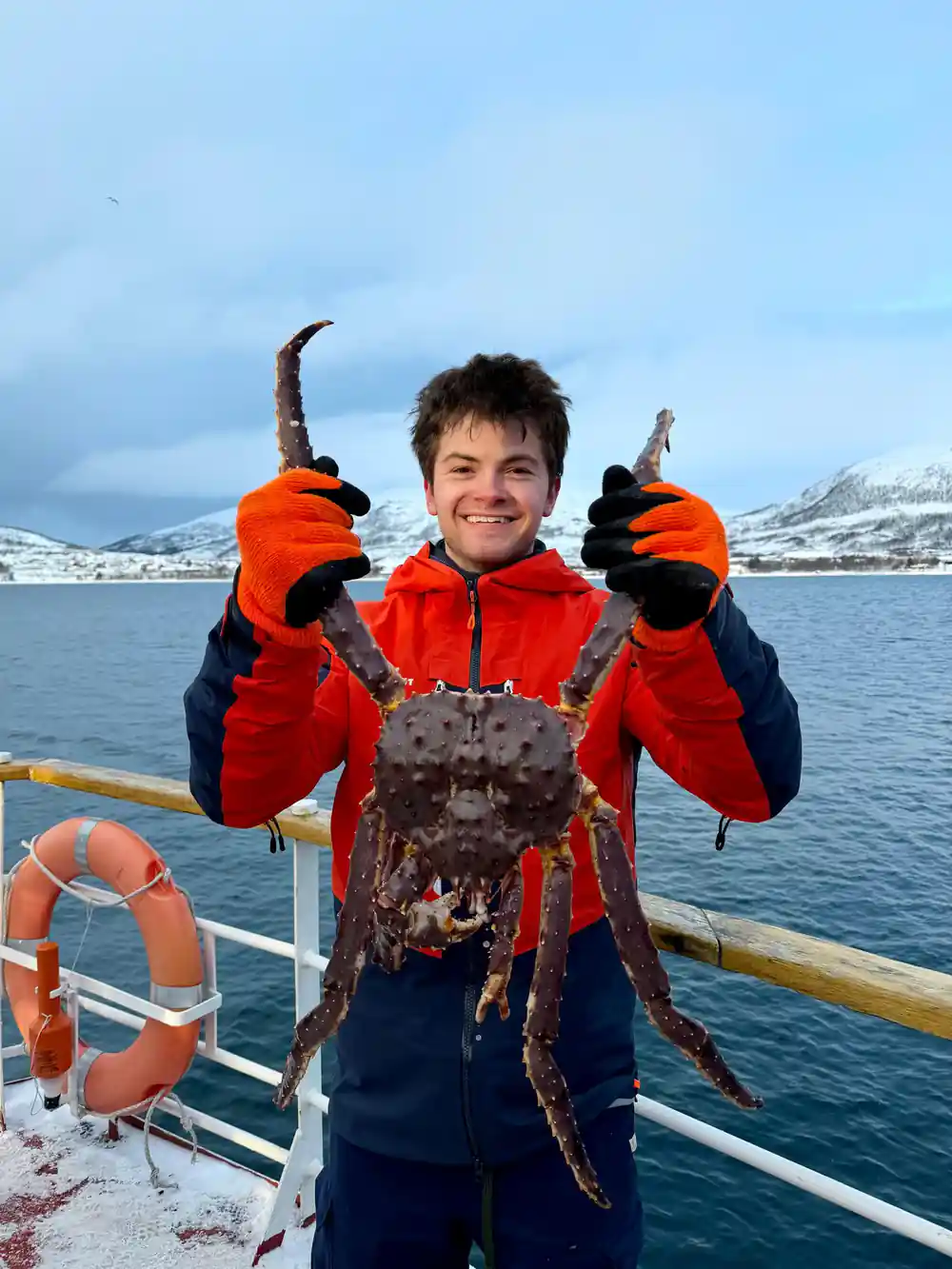





Why there is king crab outside Tromso at all
Nothing about this animal is local. It belongs to the North Pacific, arrived in the Barents Sea last century by way of a Soviet stocking programme, and has been pushing steadily westward down the Norwegian coast for decades. Tromso is comparatively new ground for it, reached long after Finnmark.
That westward spread is why this cruise exists. Tromso is a long way from Kirkenes and the original fishery, and for most of the crab's history in Norway there was nothing to catch here. Now there is enough on the seabed of the fjords outside the city to work pots commercially, which is a genuinely recent development and the reason a visitor can do this from a city with an international airport.
What the four and a half hours contain
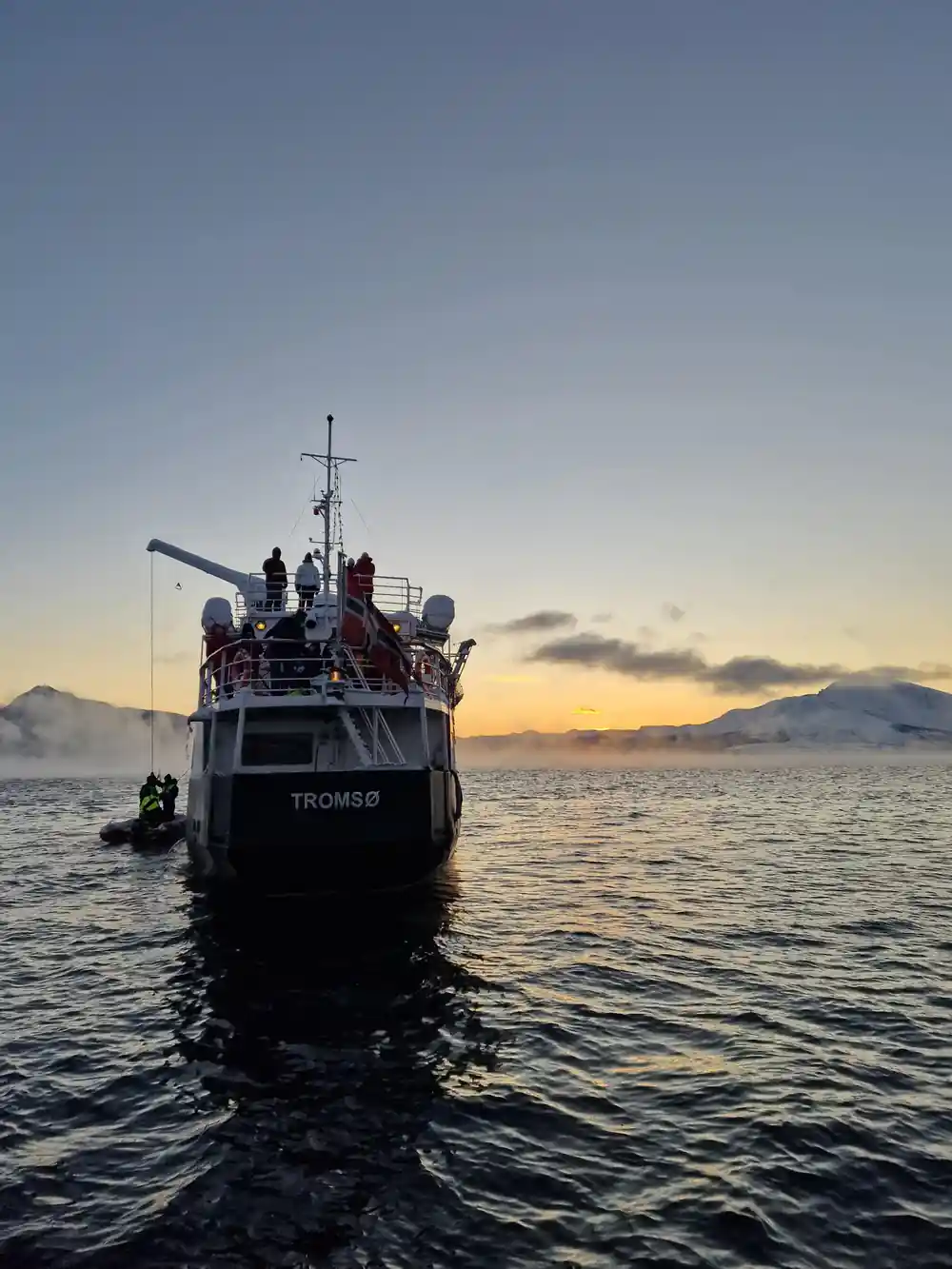
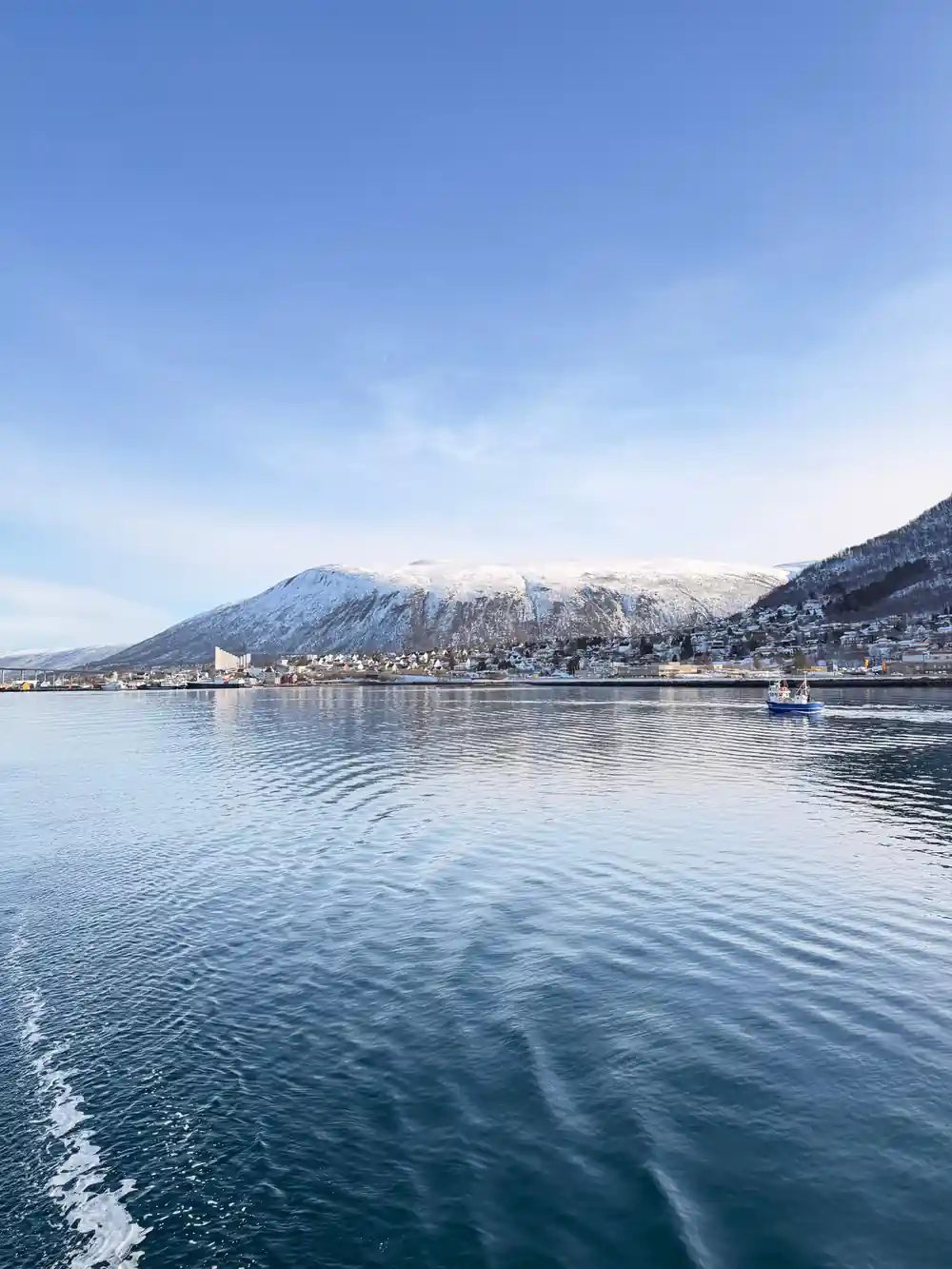
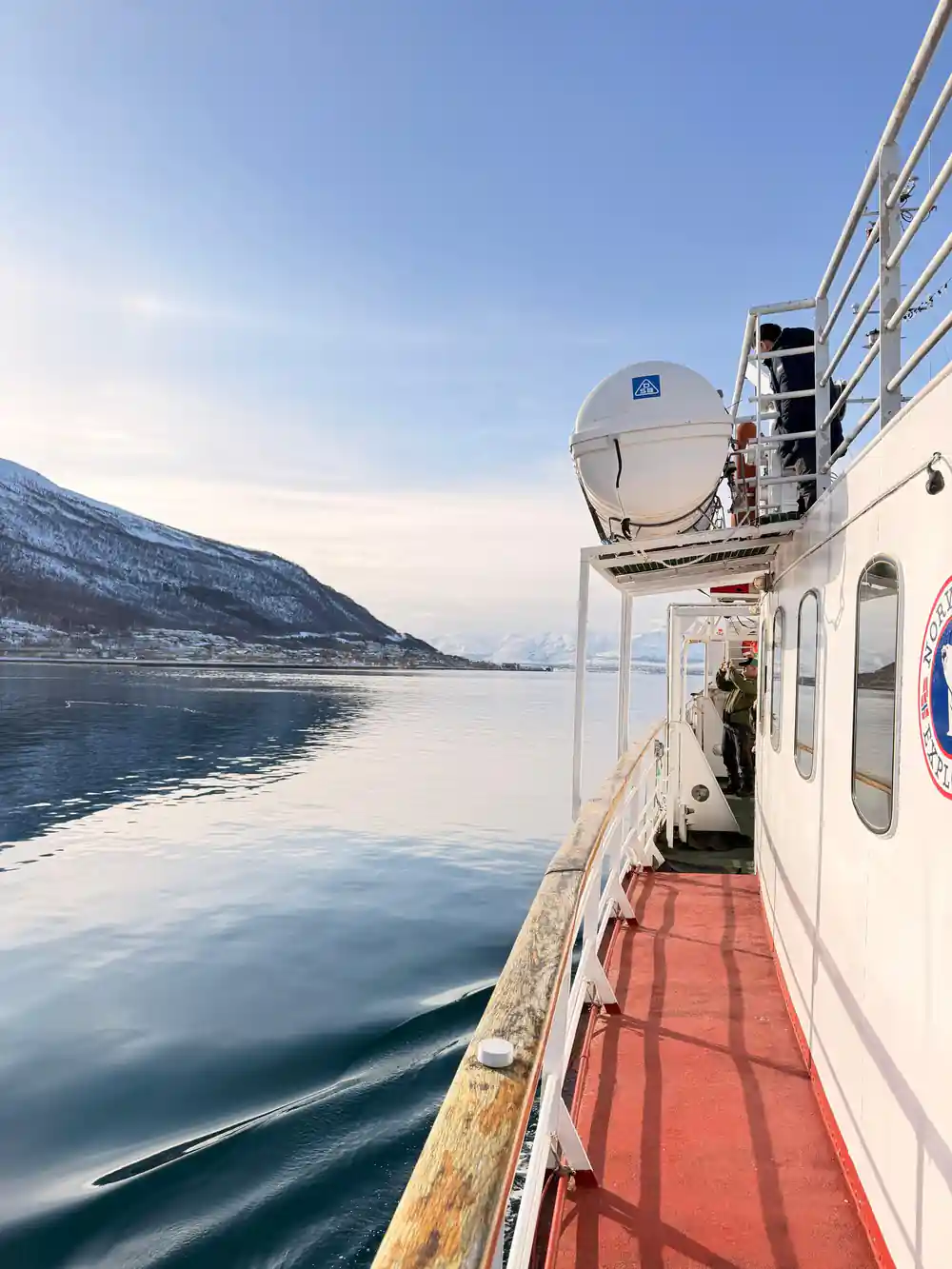
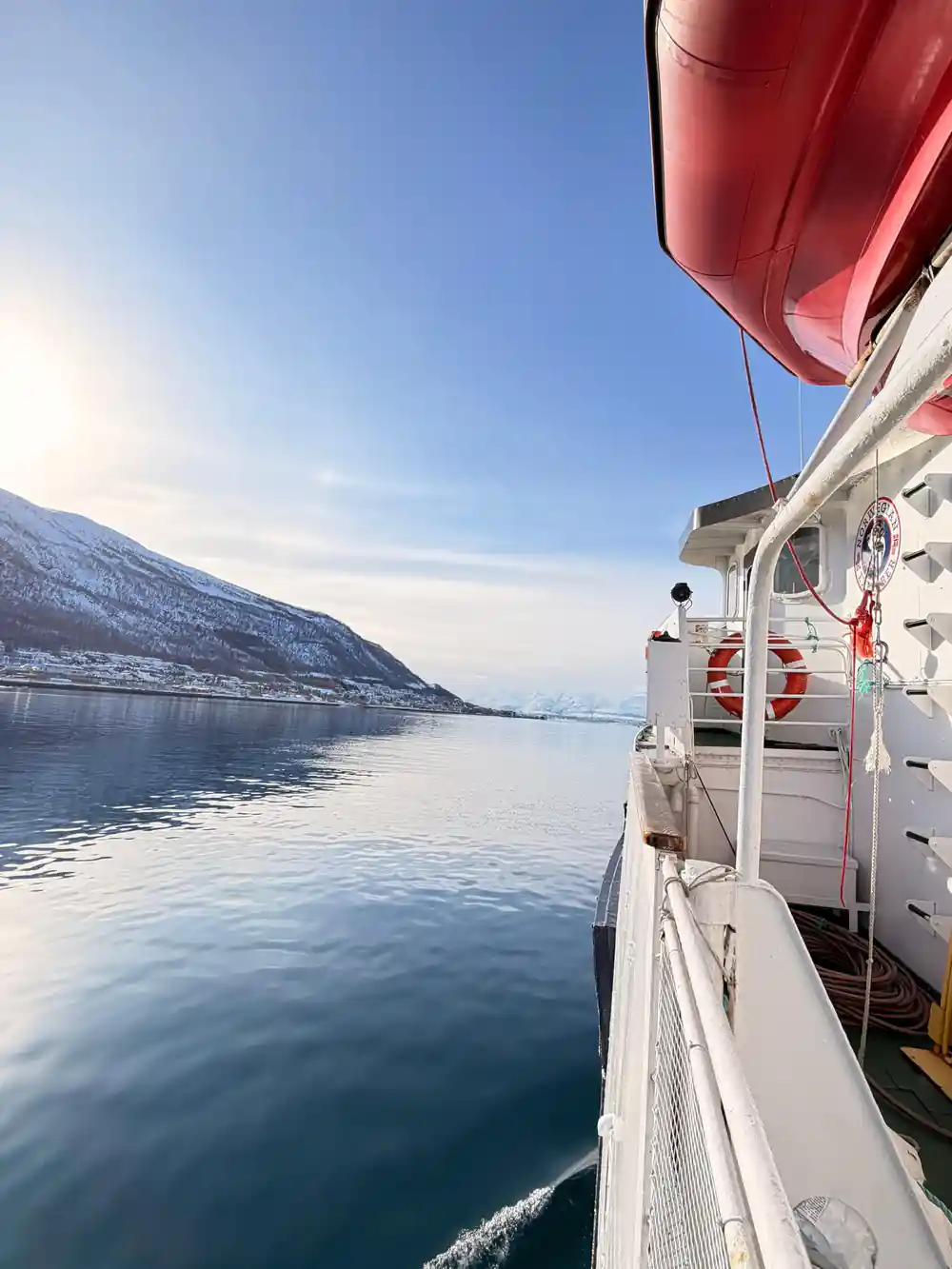
The cruise sails at ten and is back at half past two, and that time divides roughly into two hours of sailing and the rest given over to the crab and the meal. The first stretch takes you out of the harbour and into the deep fjords, which on a clear winter day is a startling piece of coastline to move through.
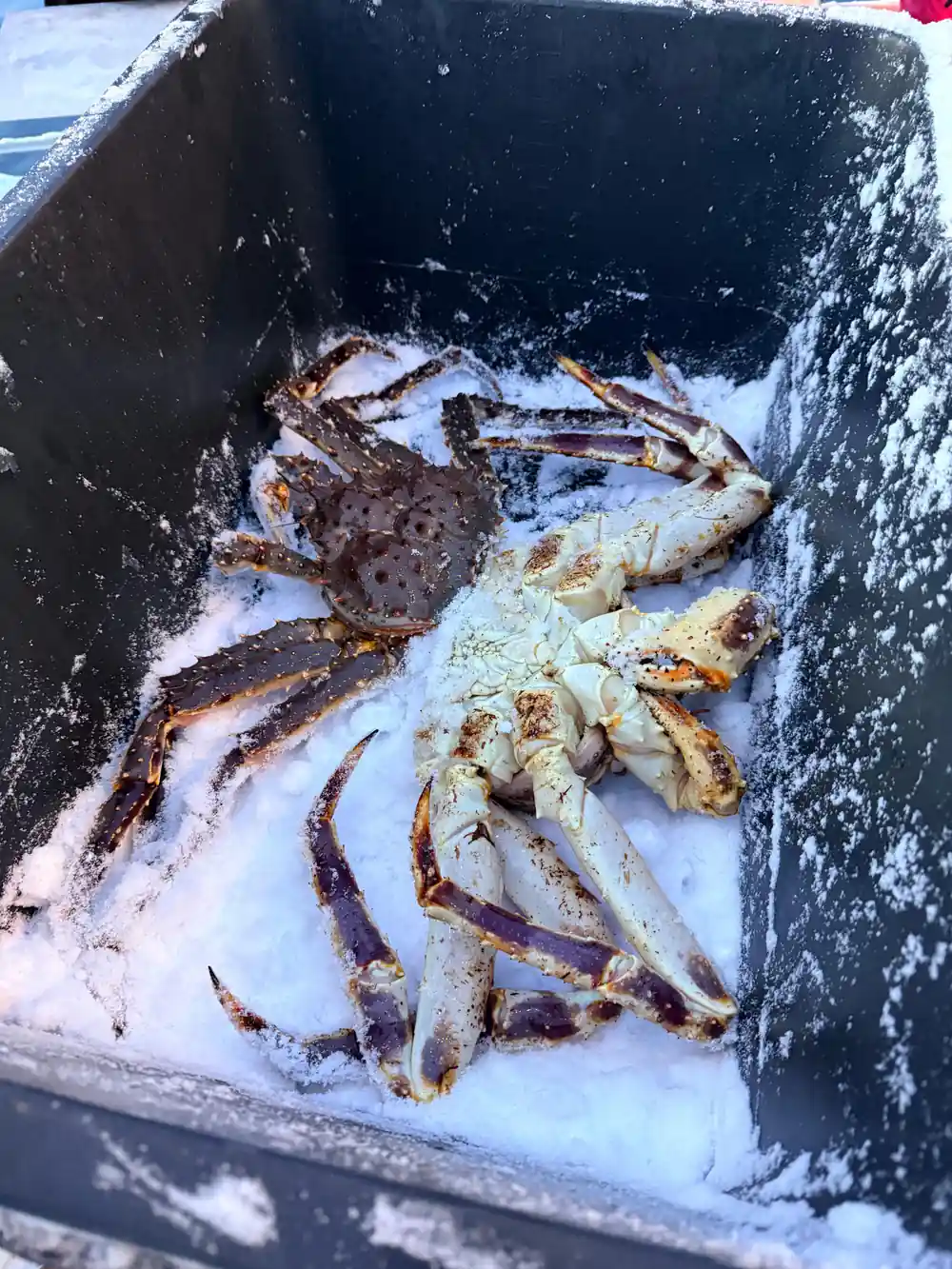
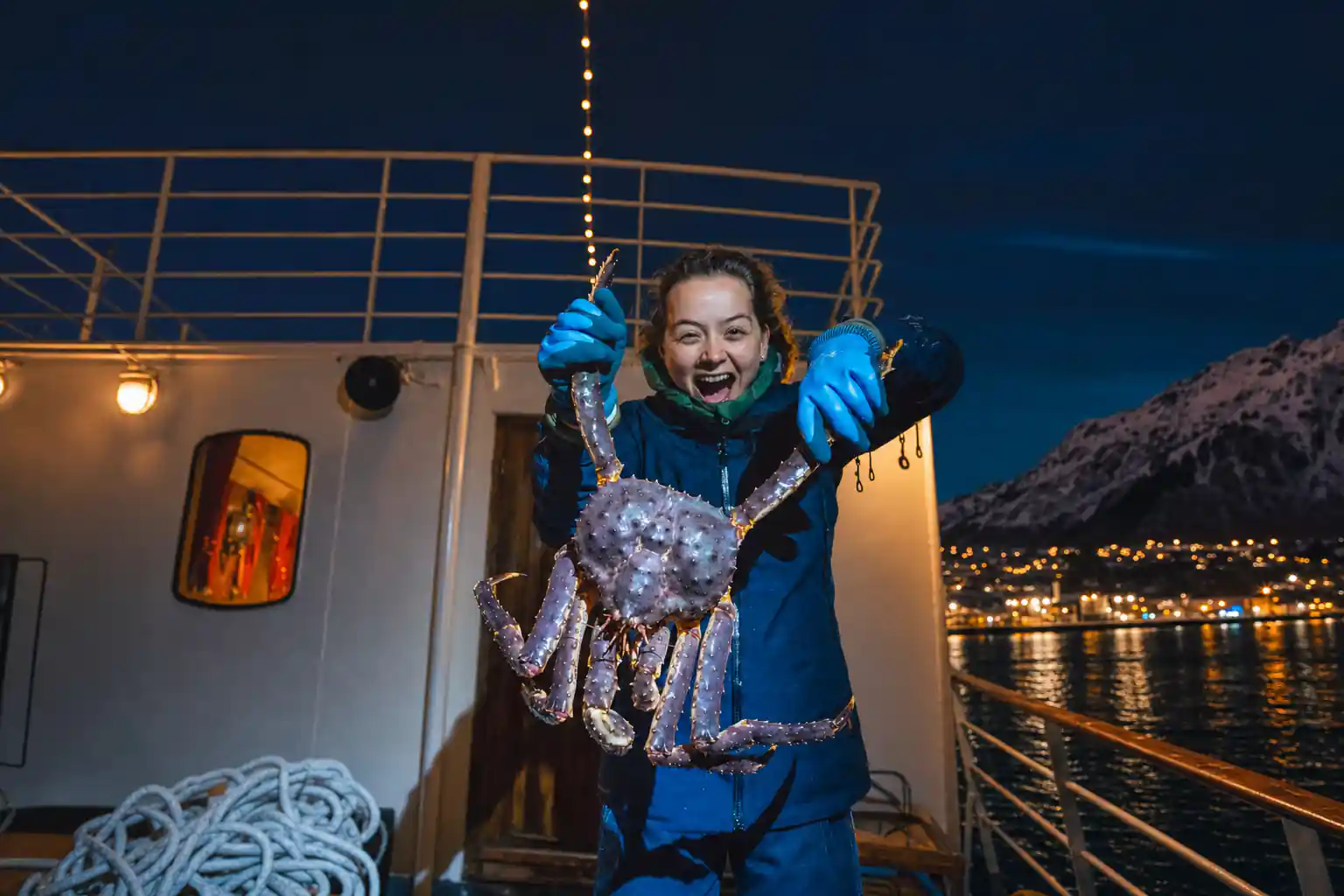
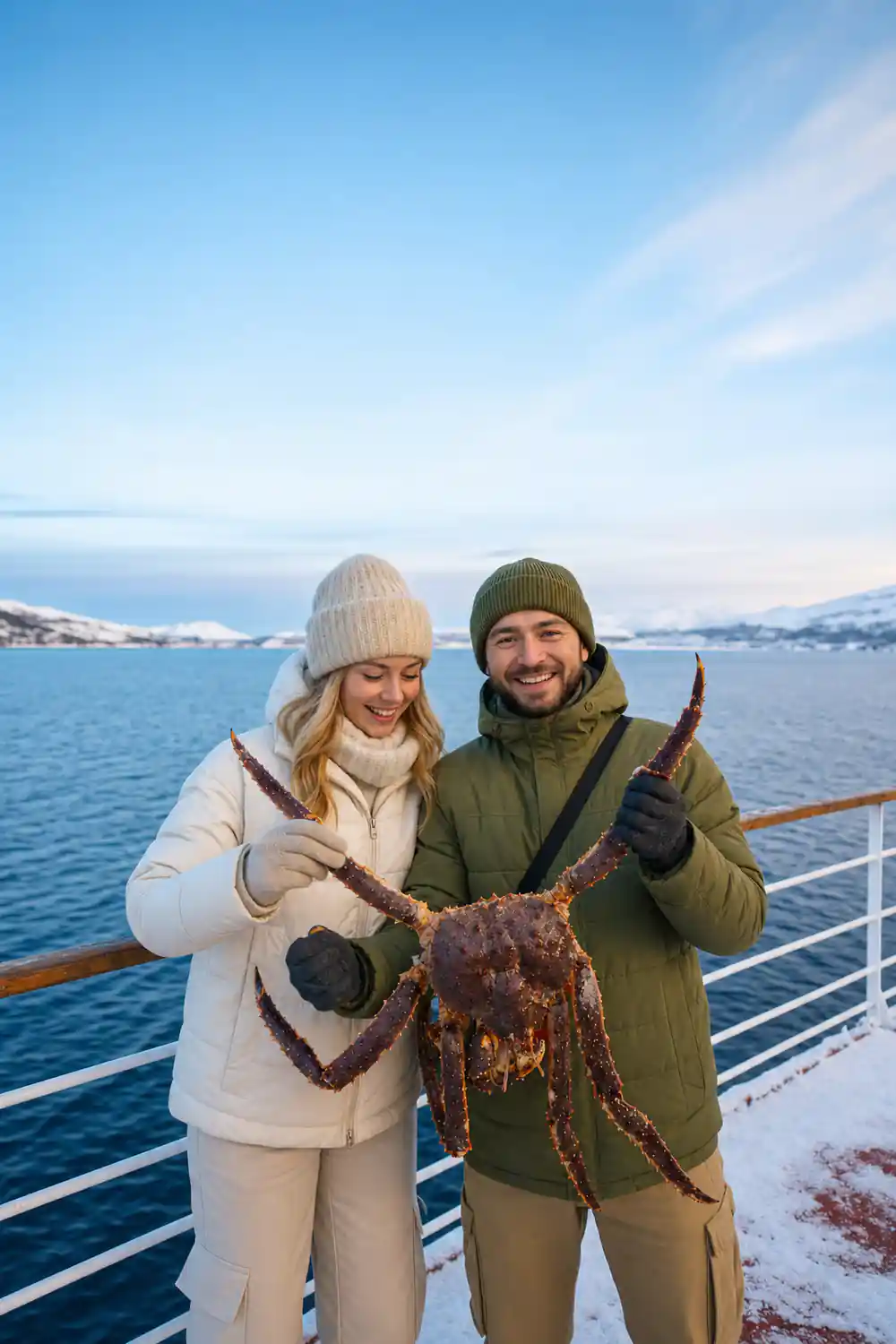
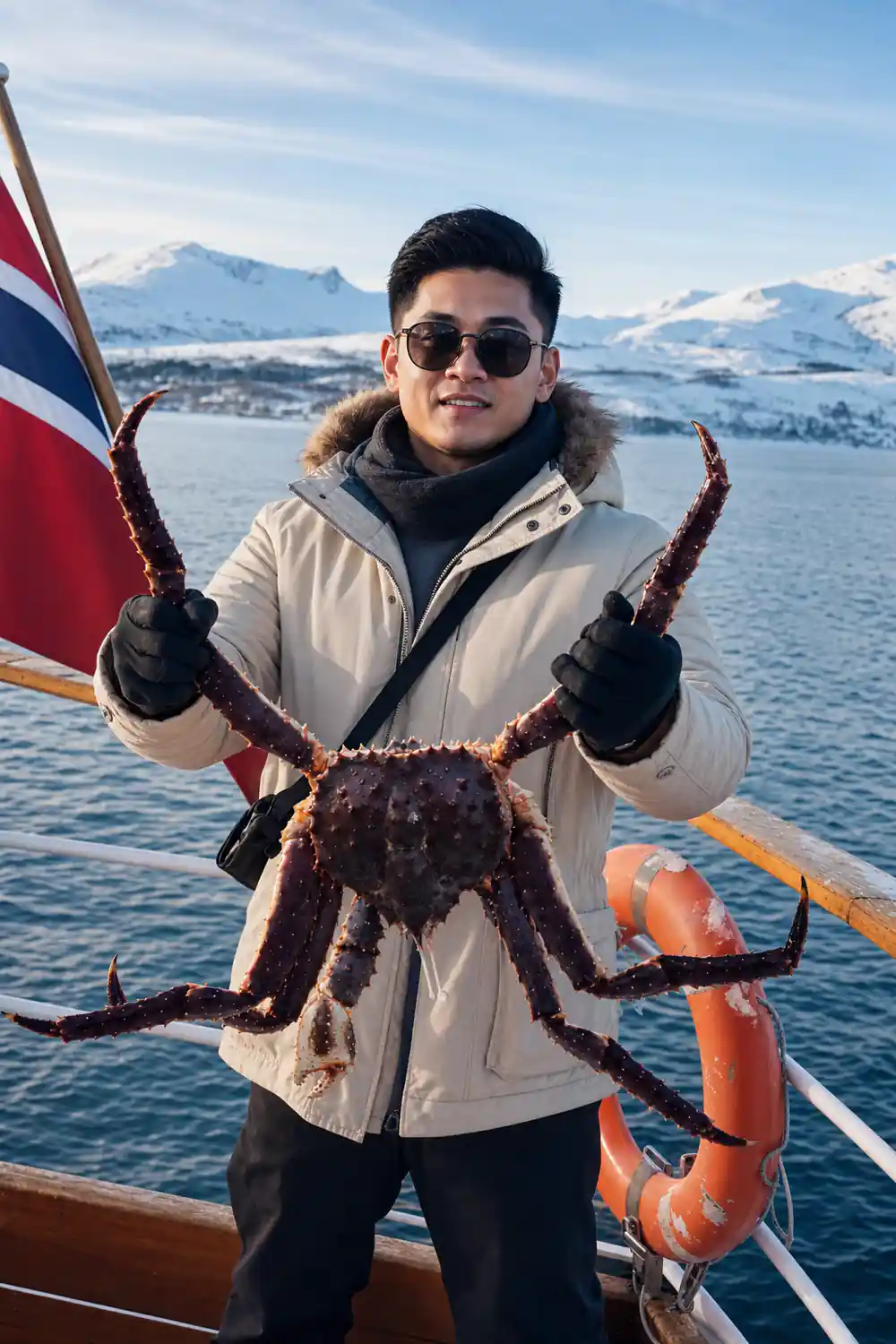
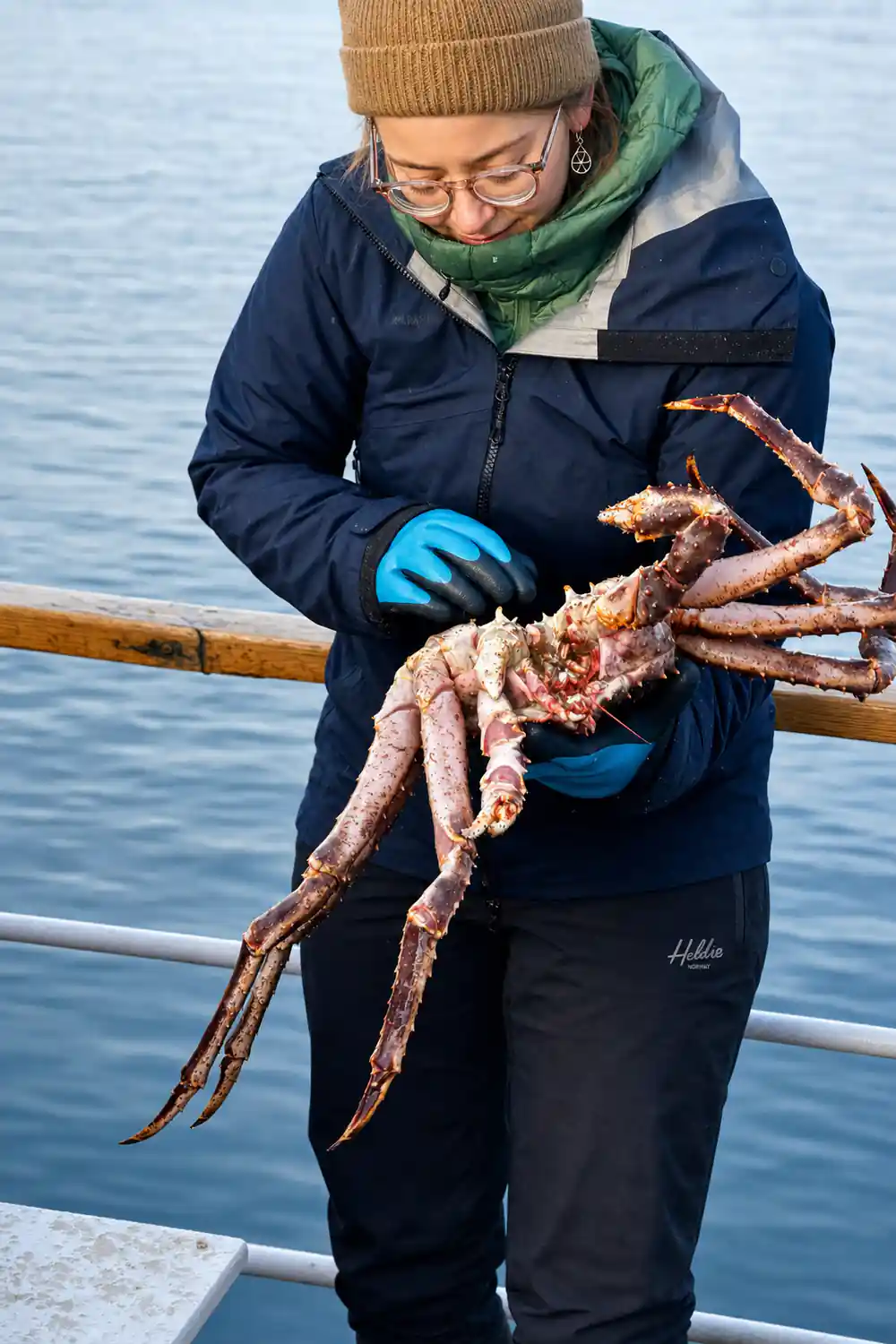
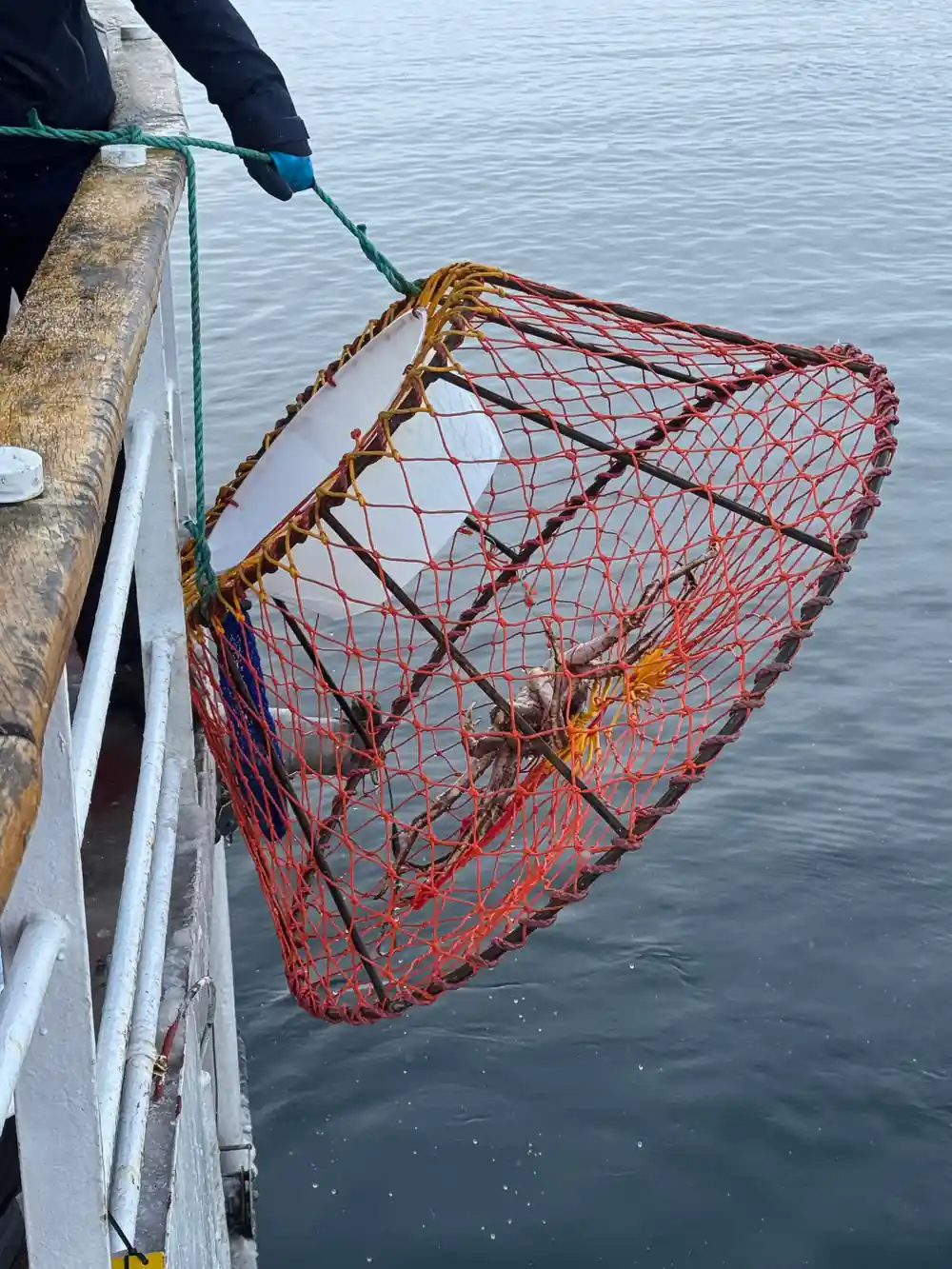
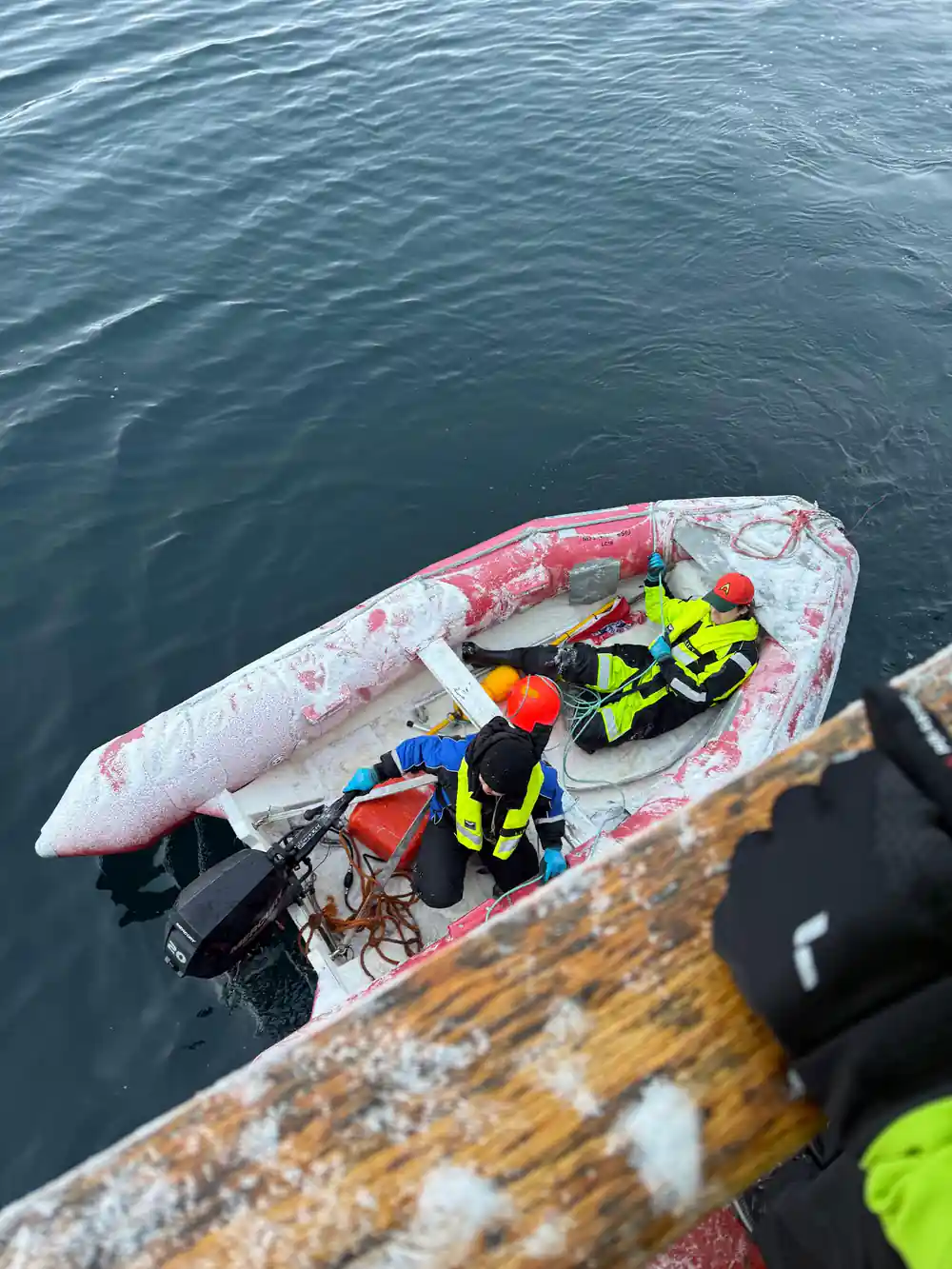
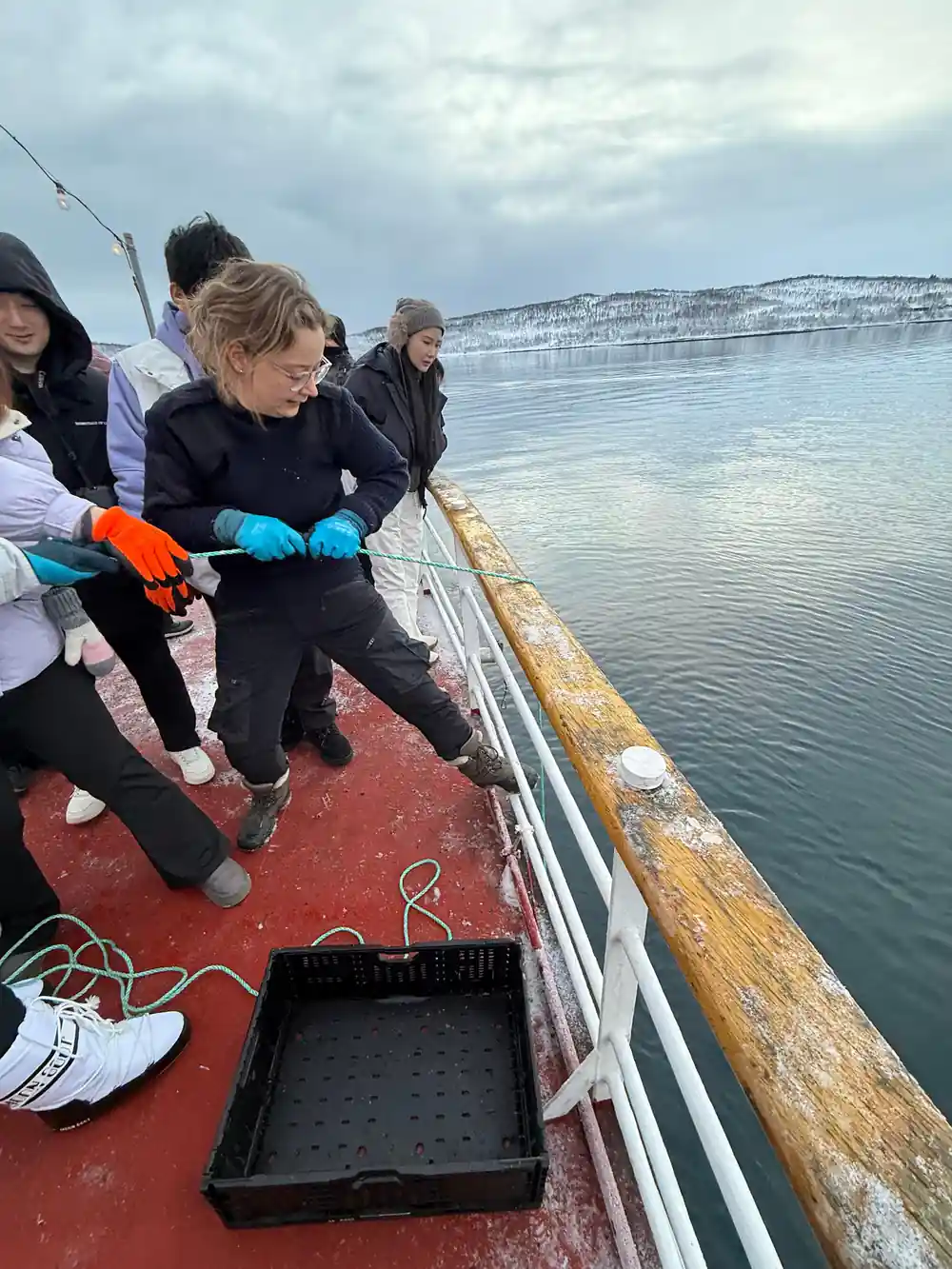
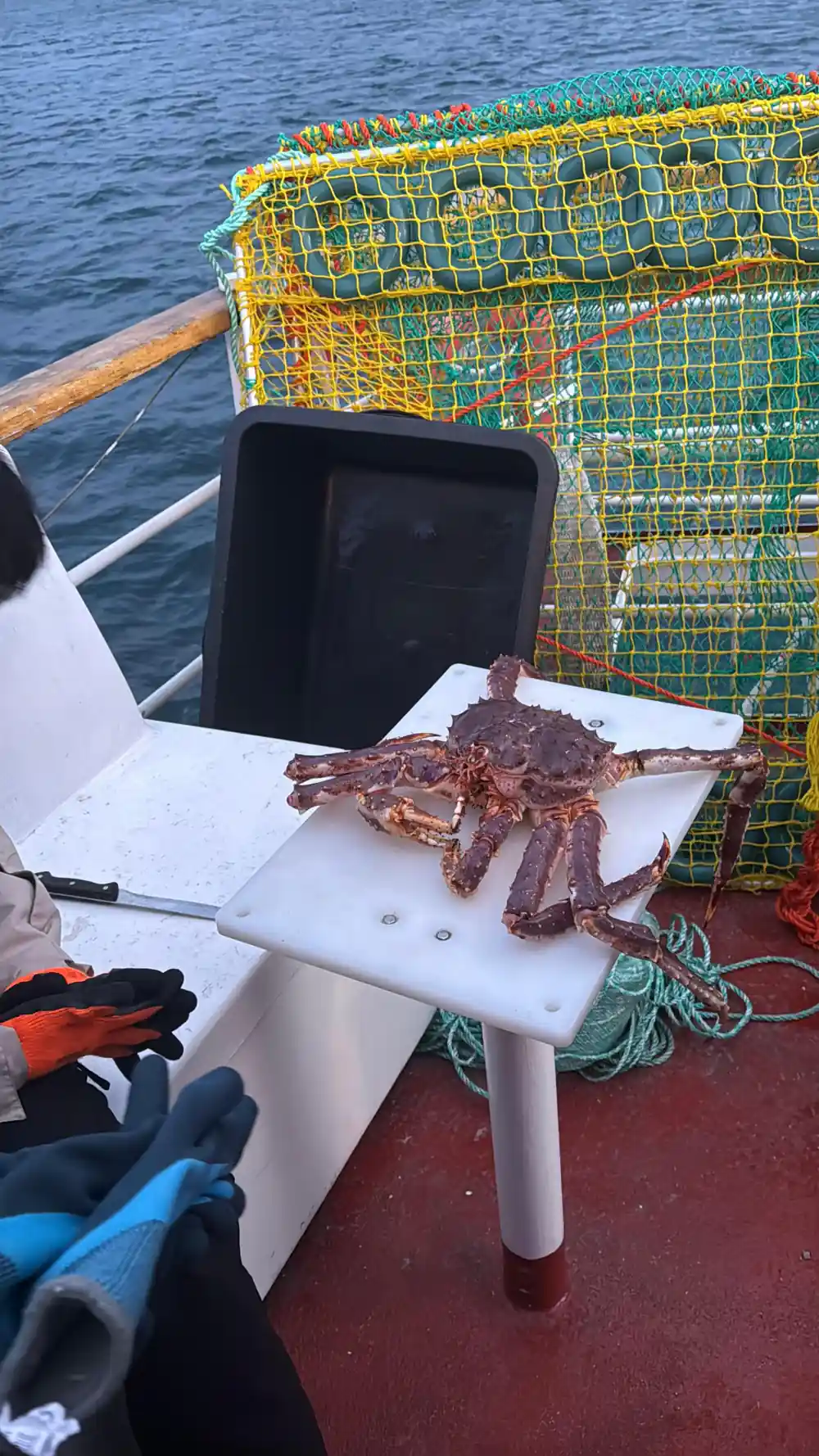
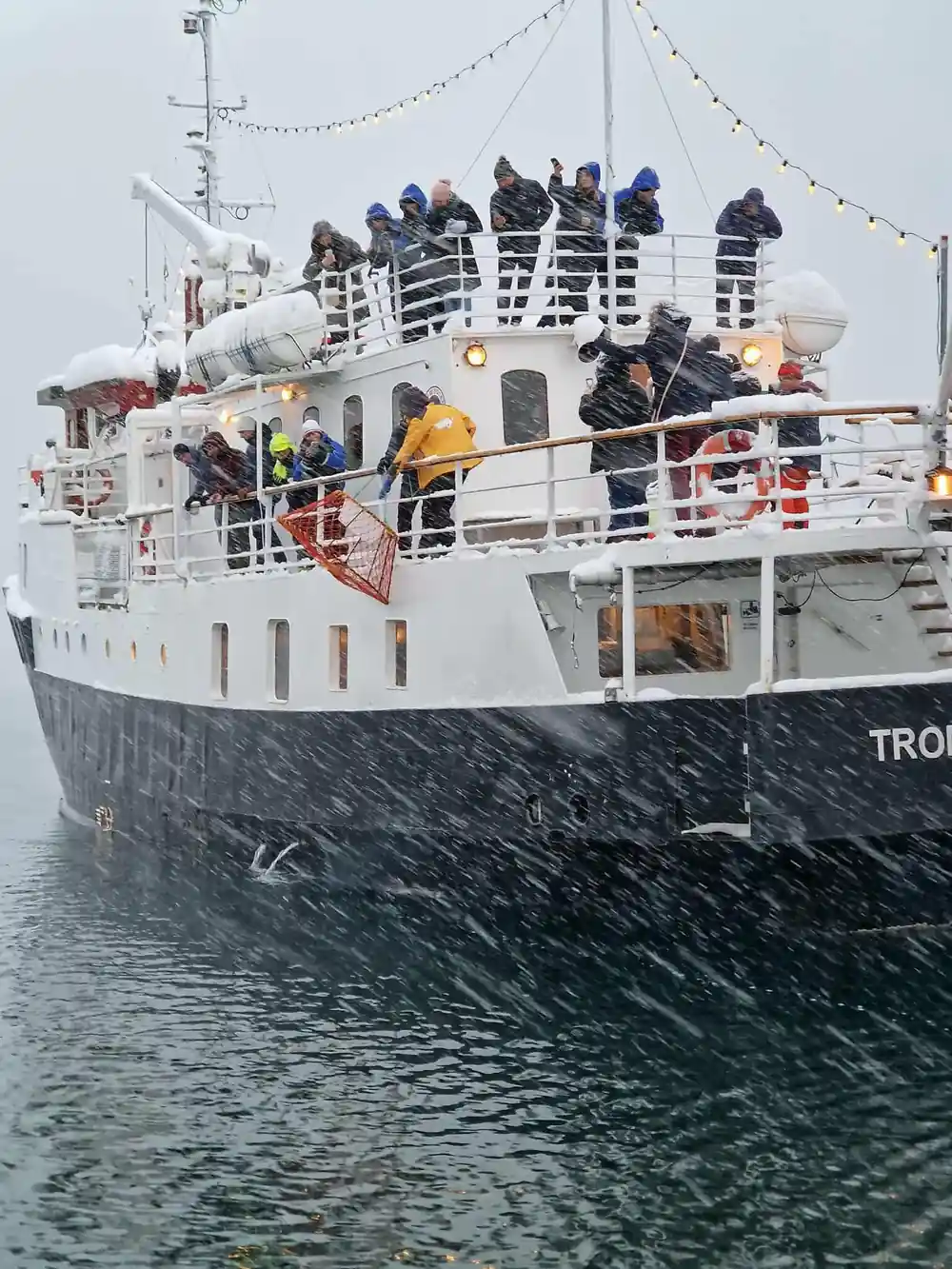
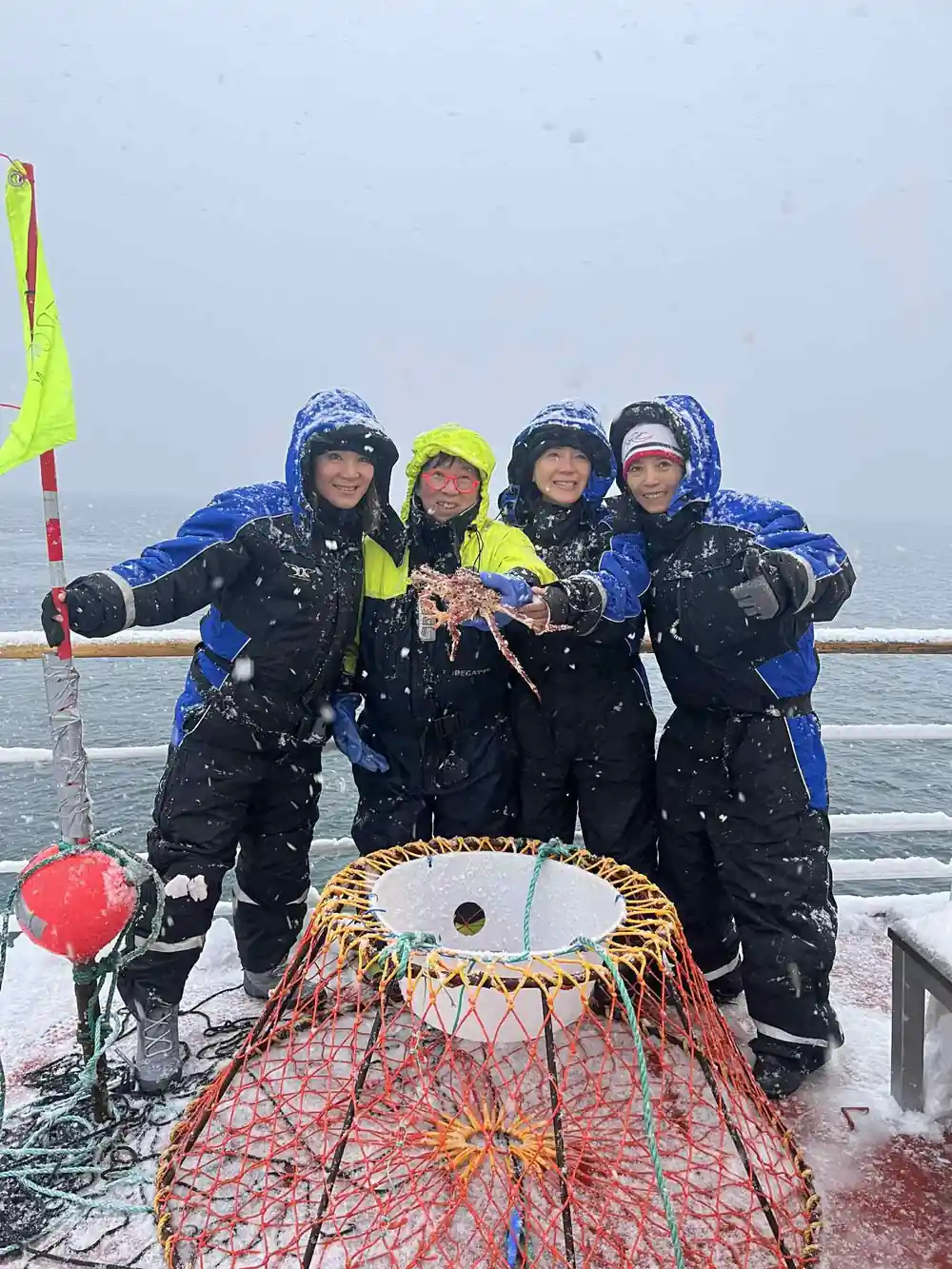
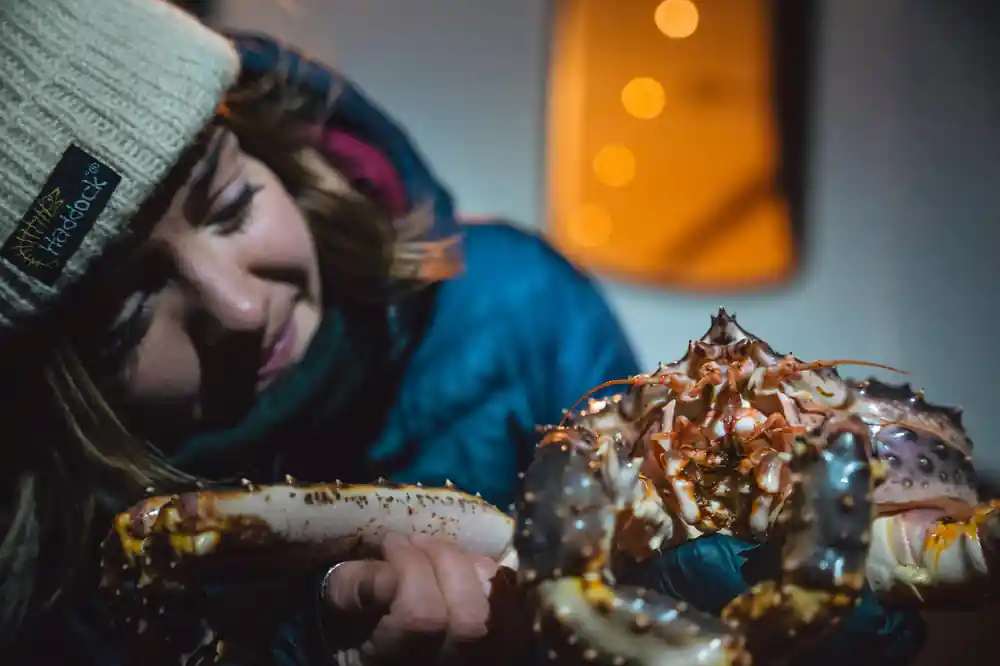
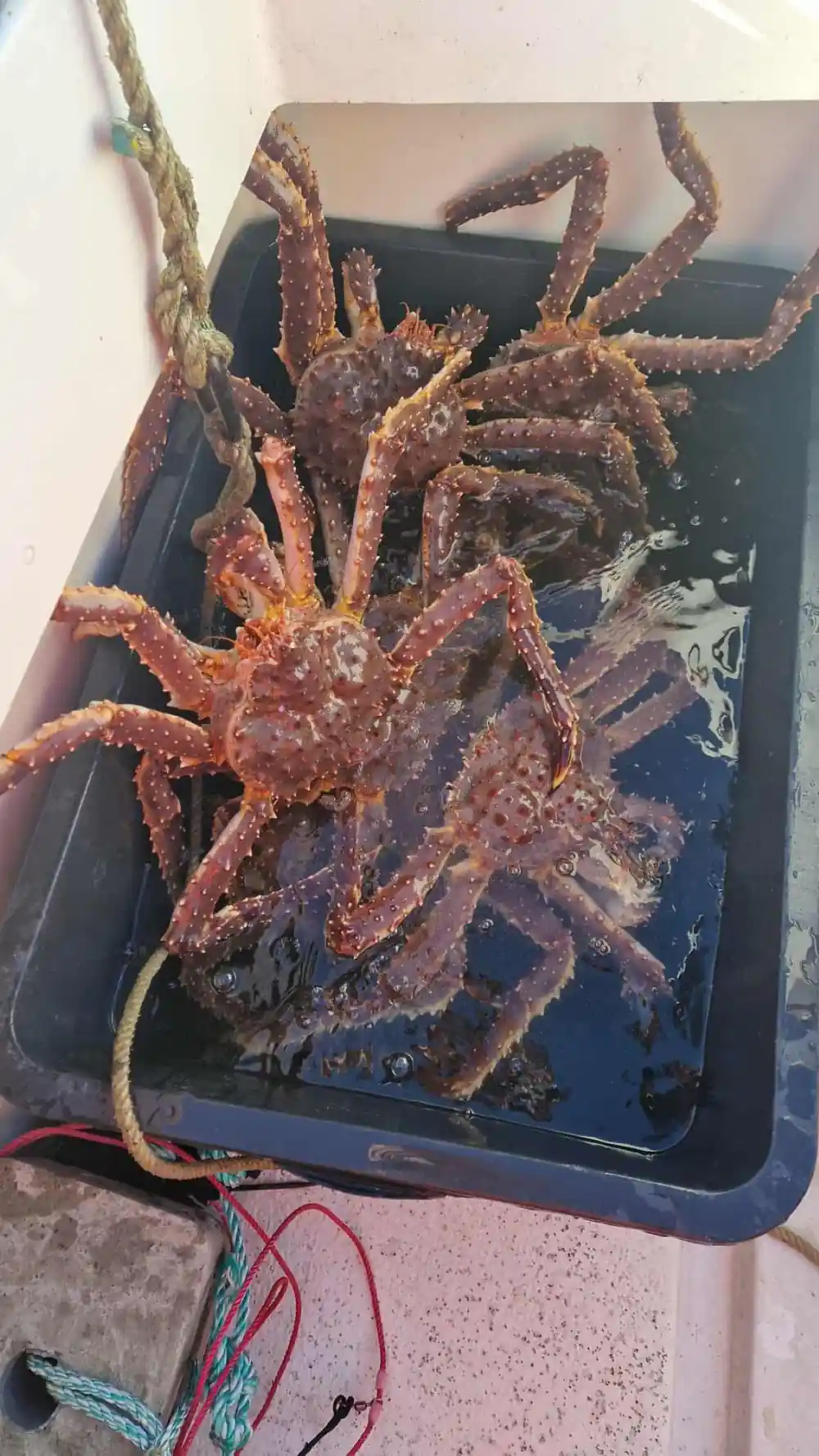
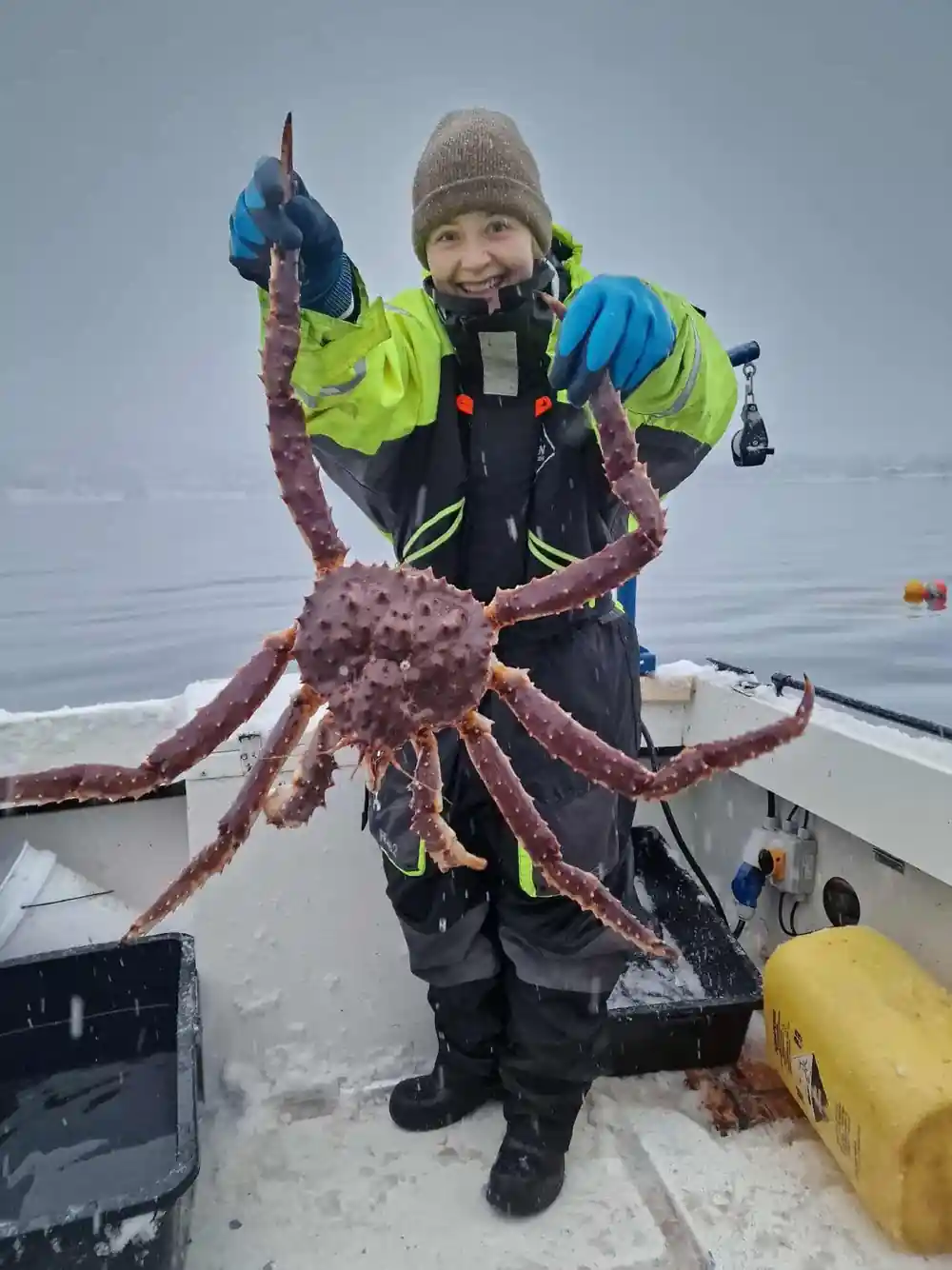
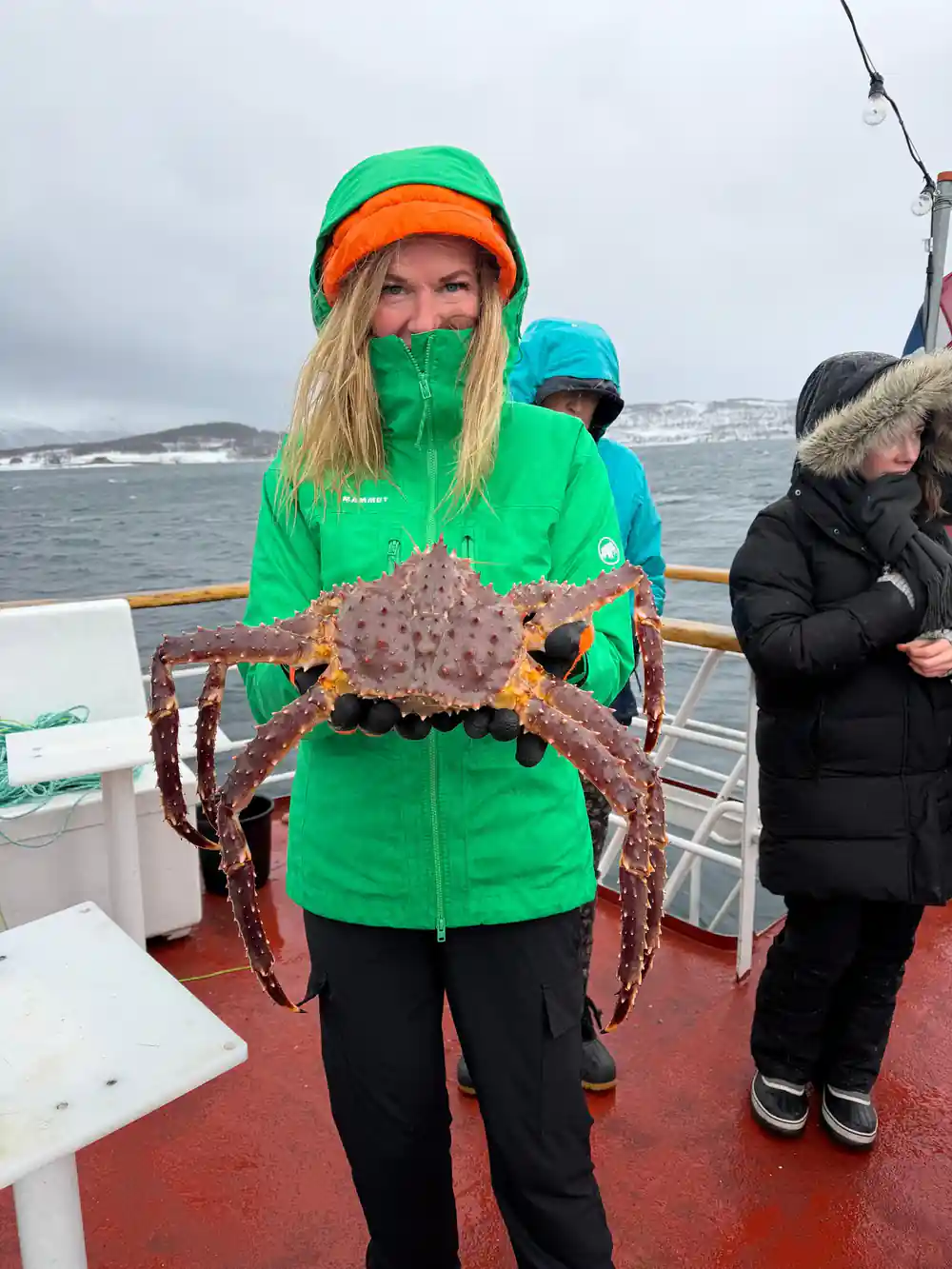
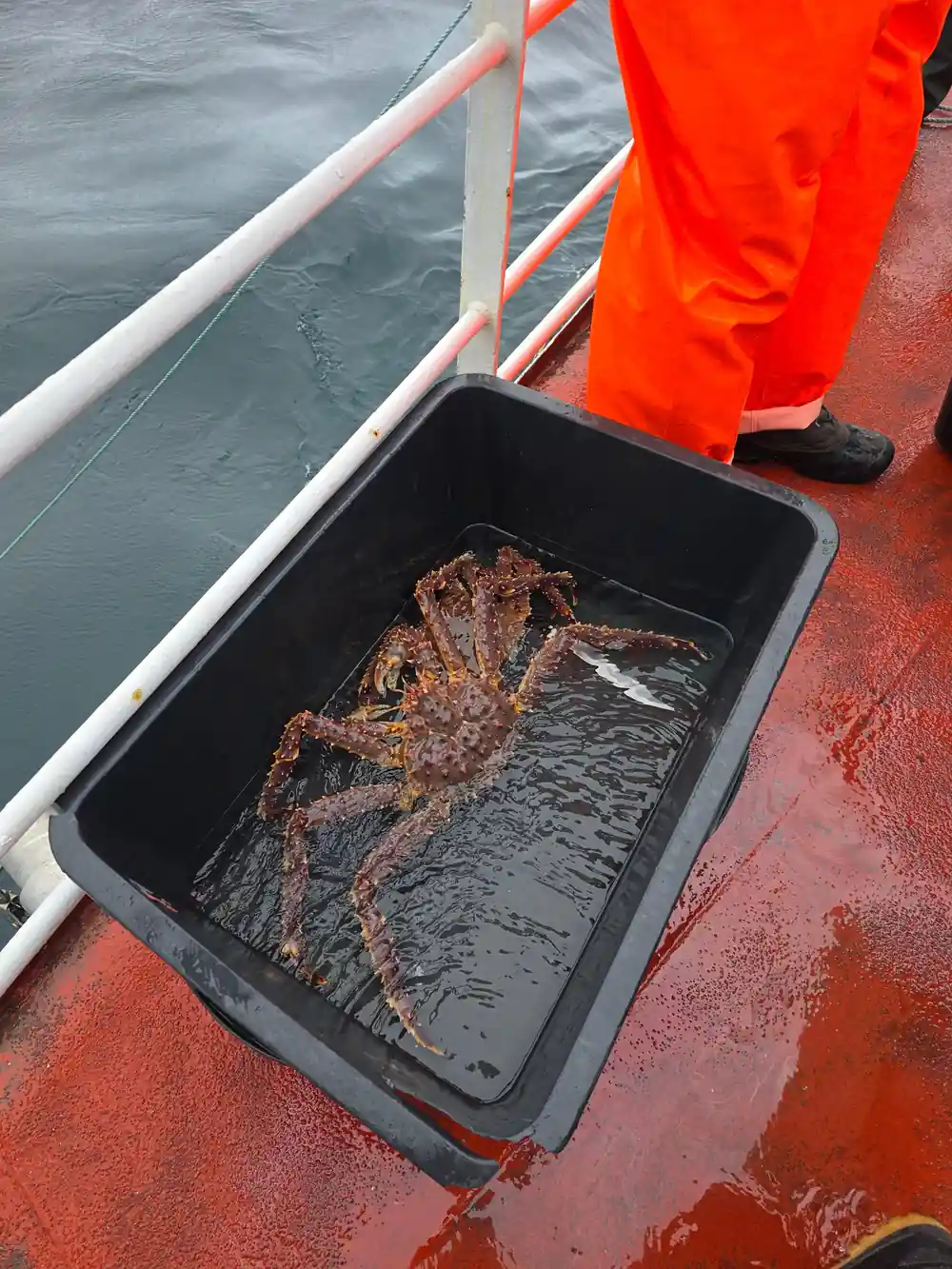
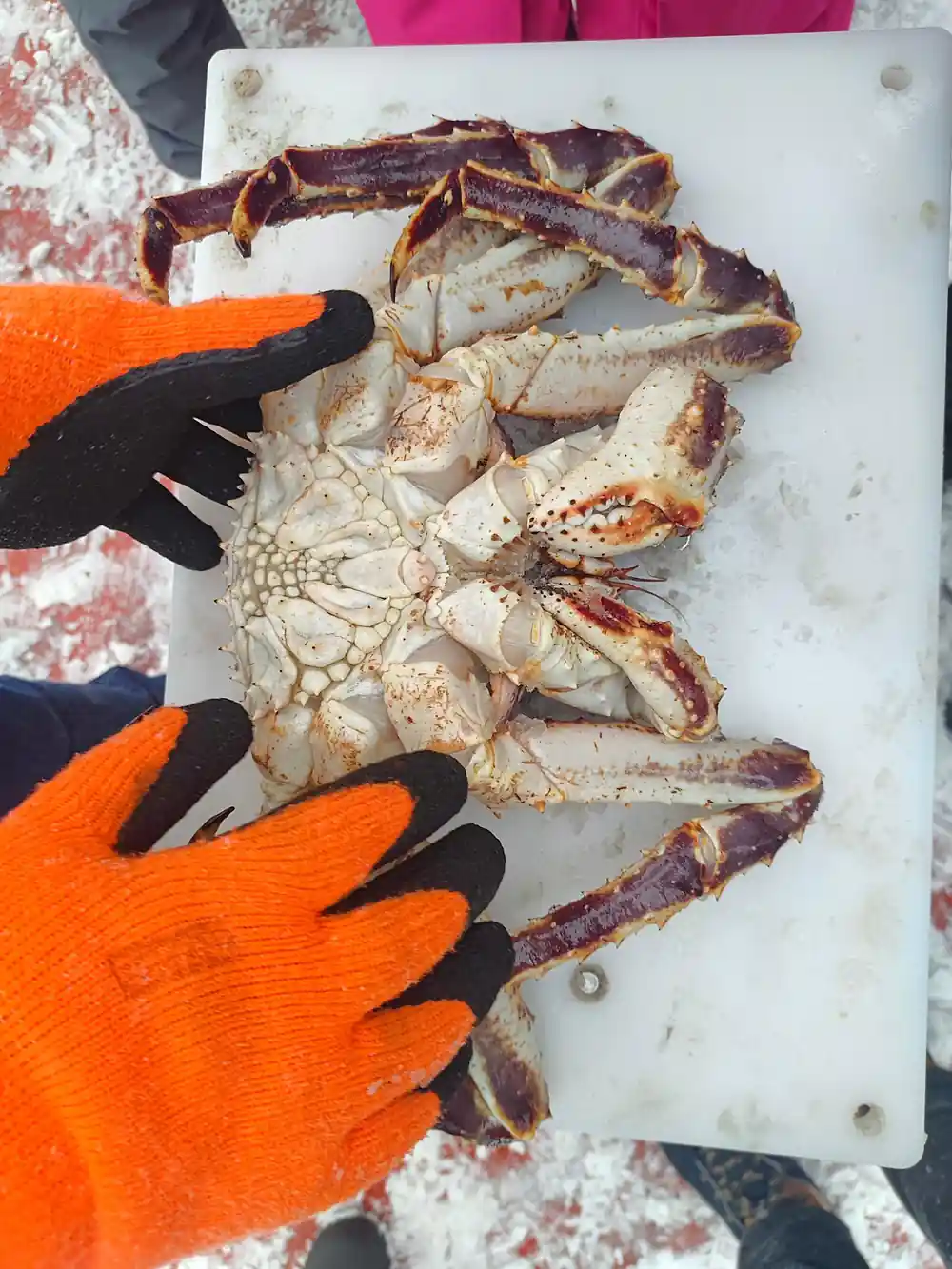
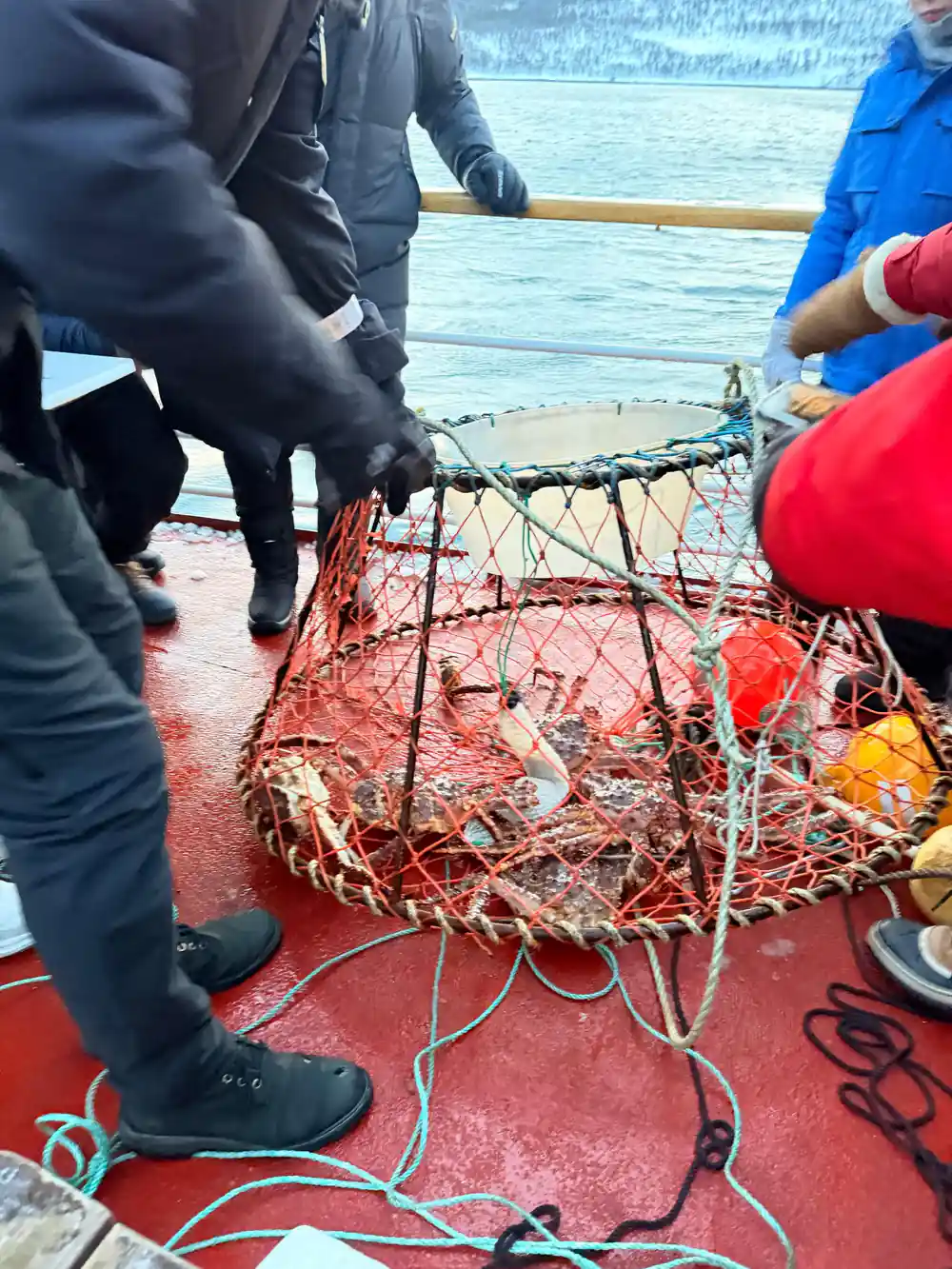
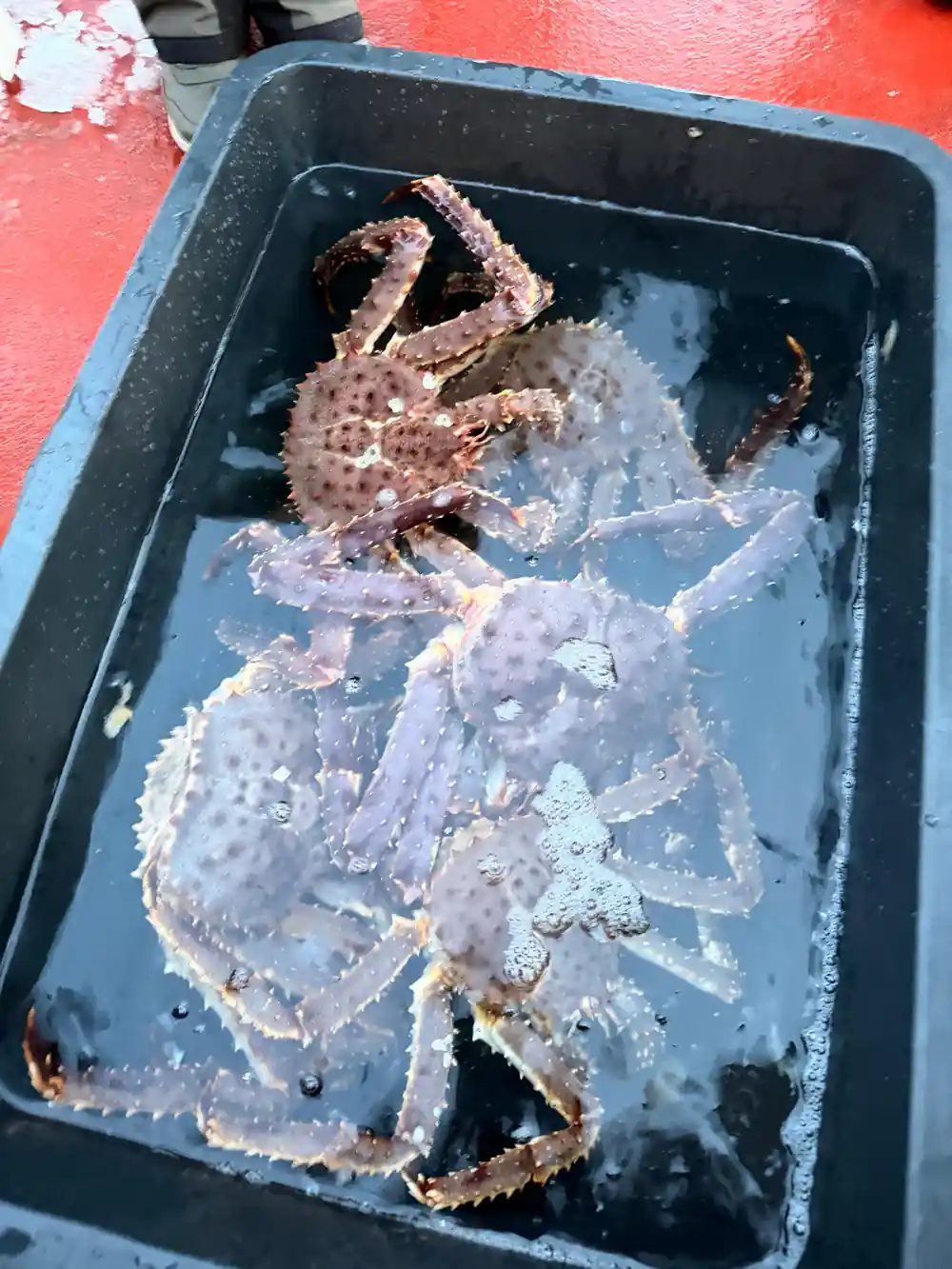
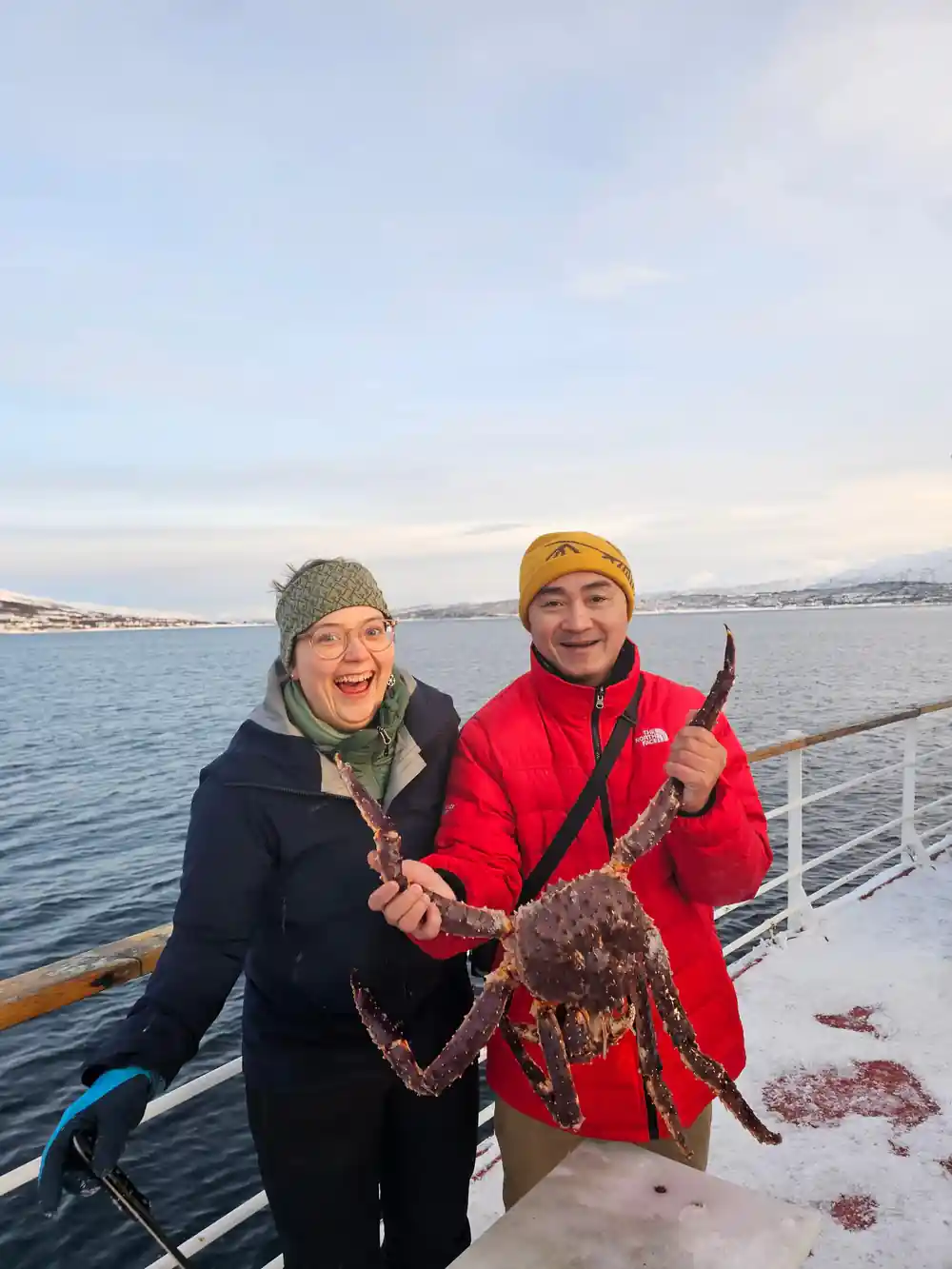
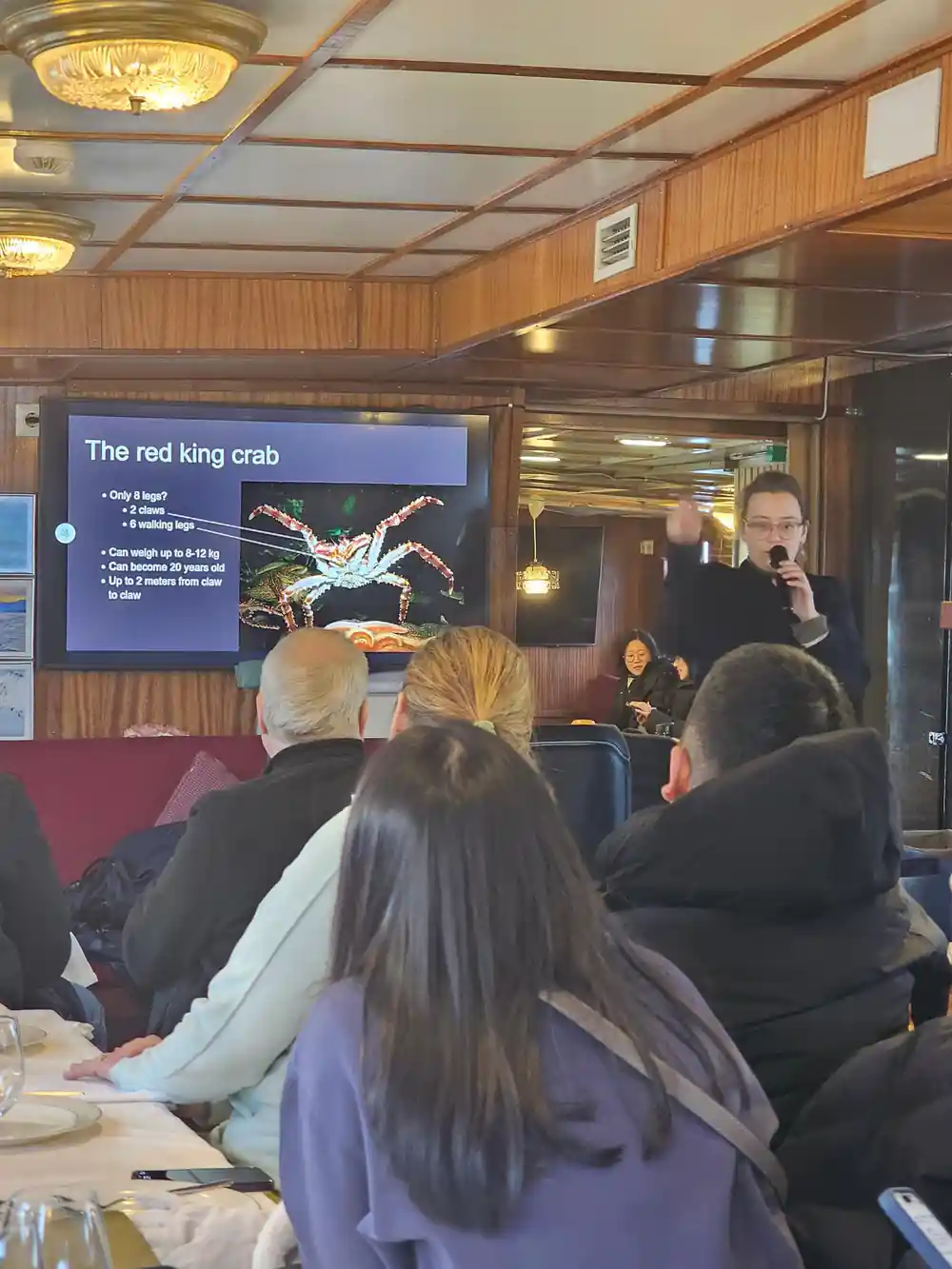
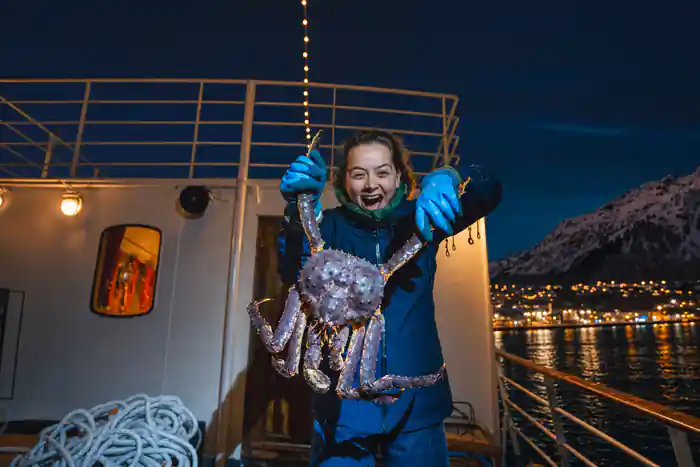
Somewhere out there the pots come up. Before they do there is an introduction to the animal and the way it is caught, which turns the haul from a novelty into something you follow. Then the pots break the surface with live crab moving inside them, and after that the galley takes over while you go back inside to warm up.
The vessel, and why it matters in winter
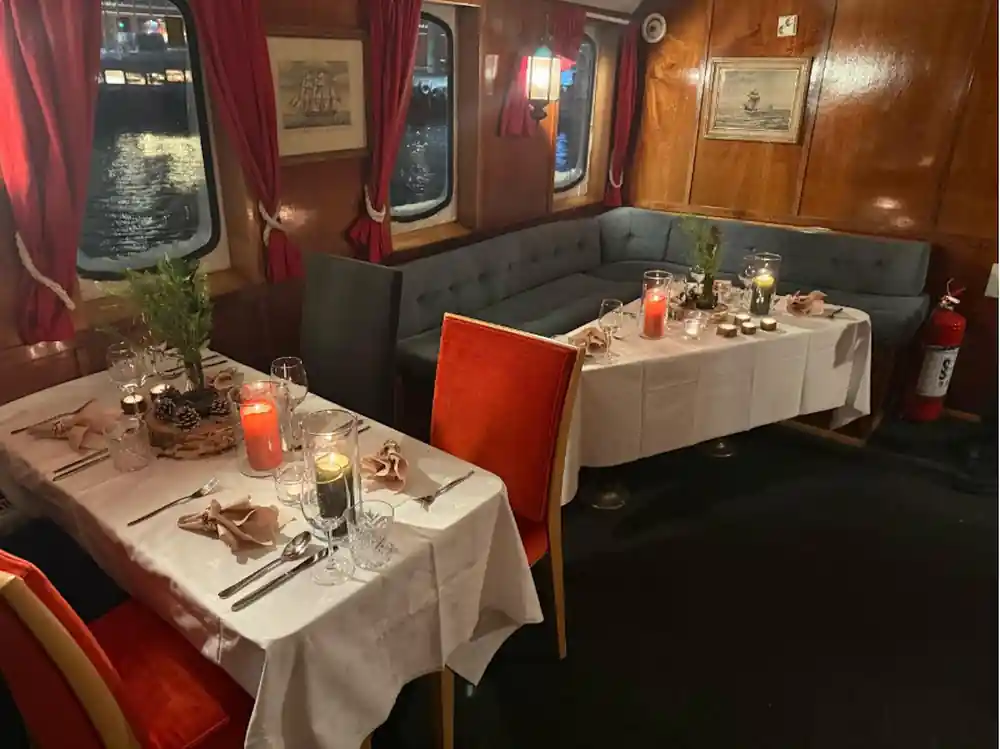
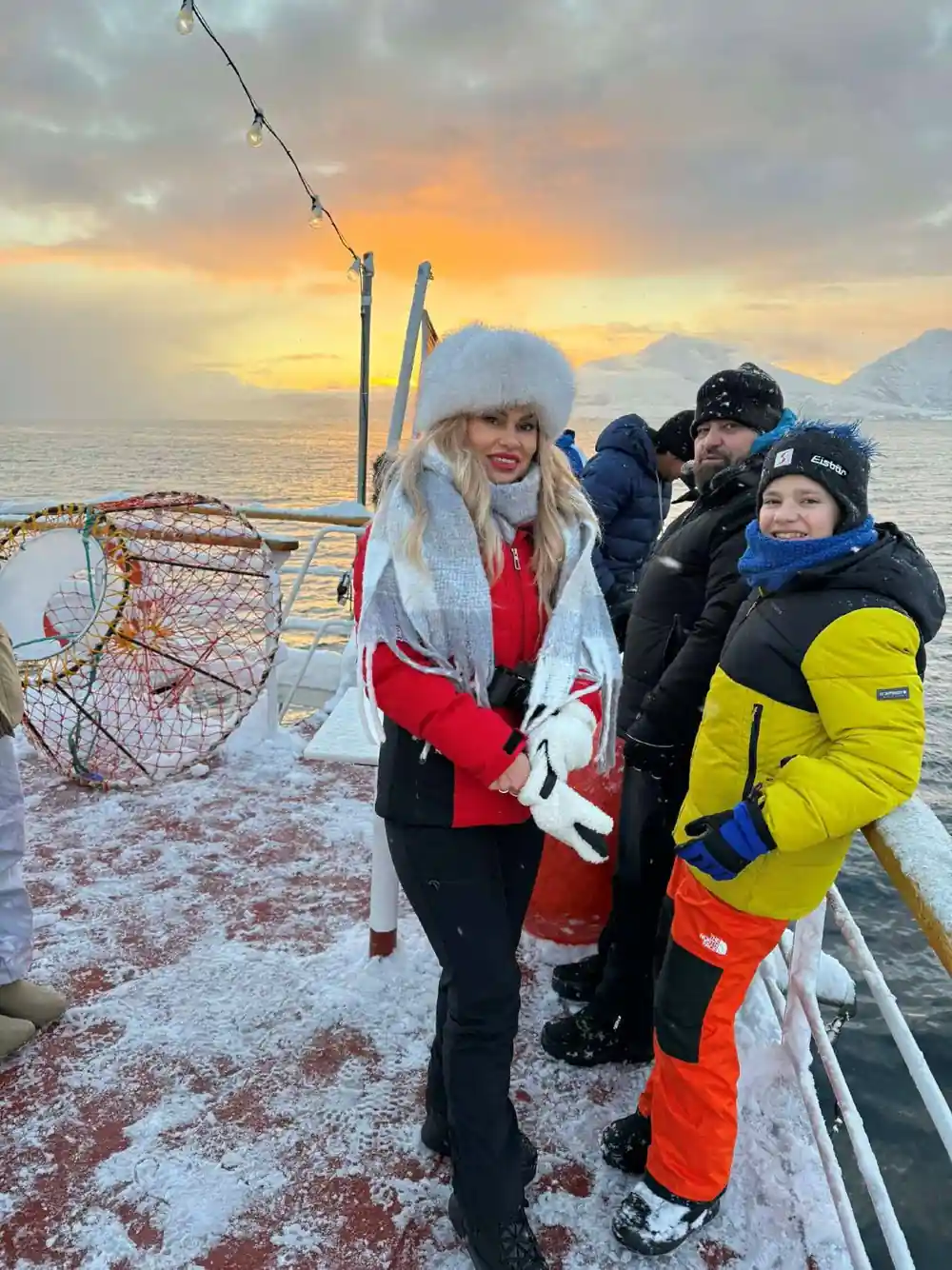
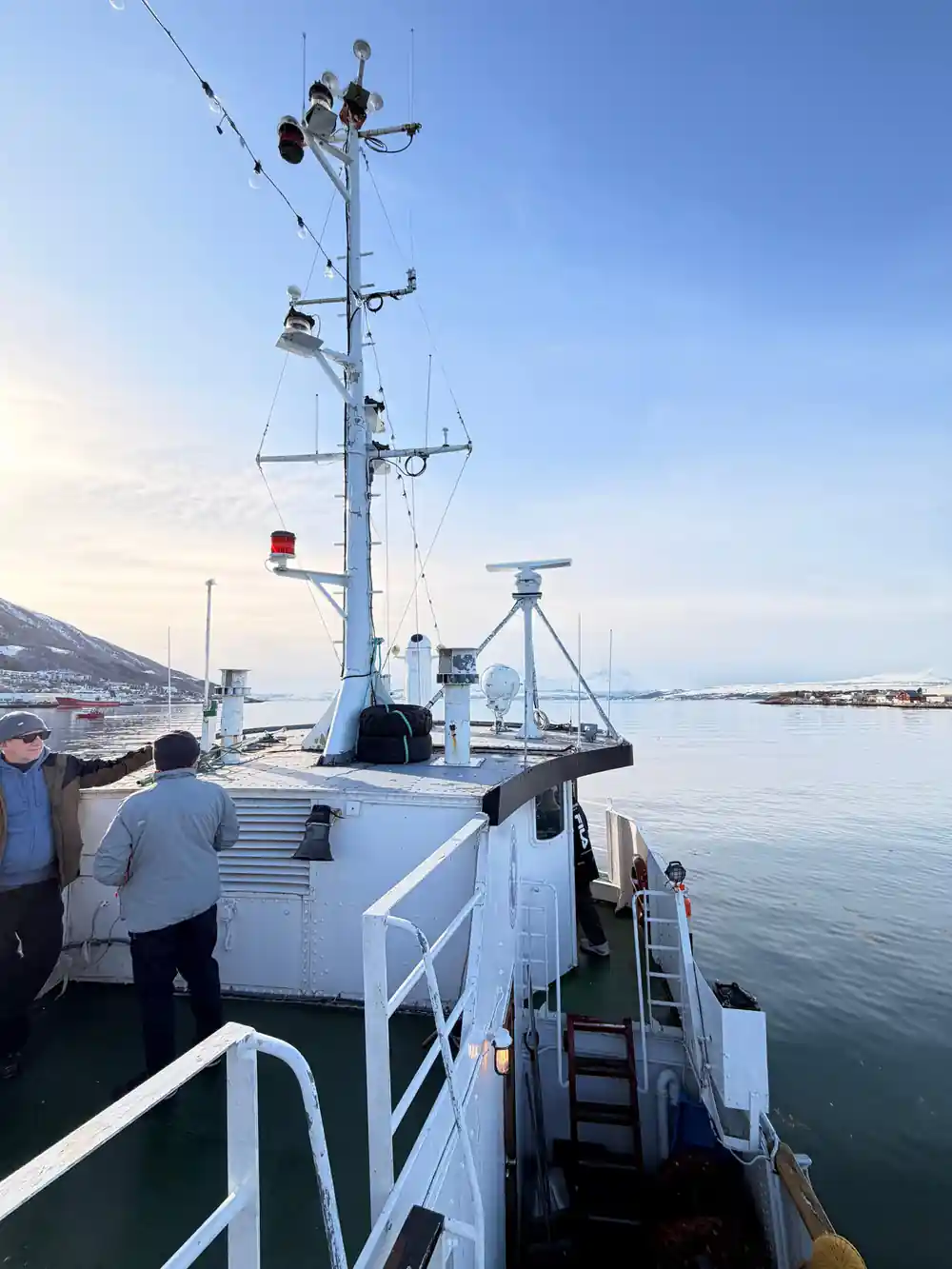
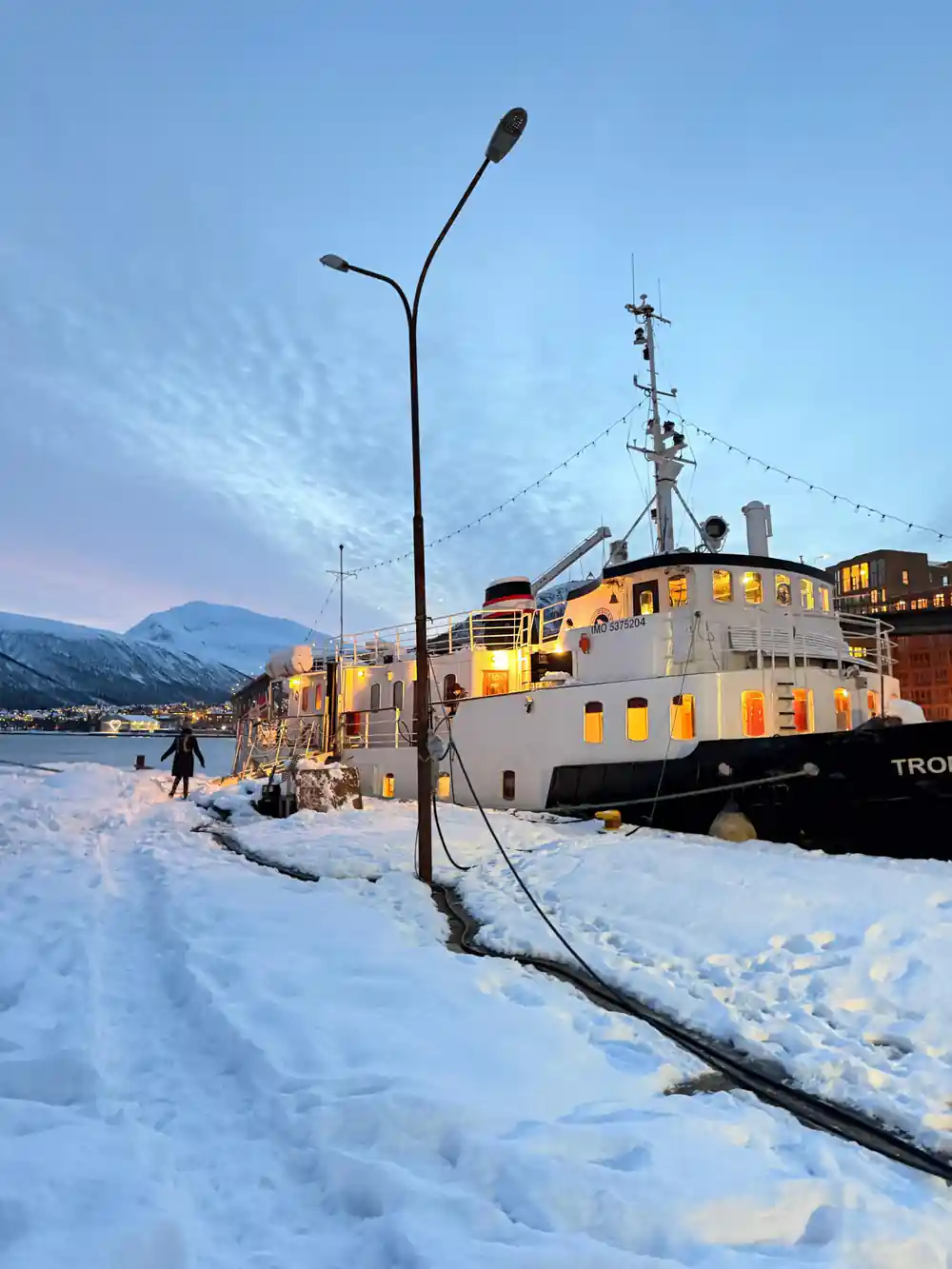
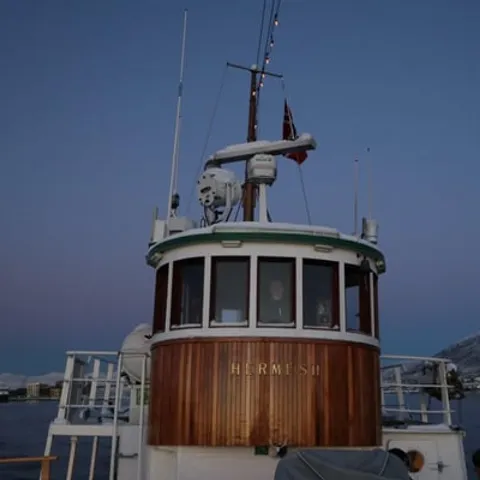
The vessel is a proper explorer with a hull built for this water, not an open launch, and in February that single fact outranks everything else on the booking page. Inside there is a saloon with real seating, there are heads, and hot drinks keep coming.
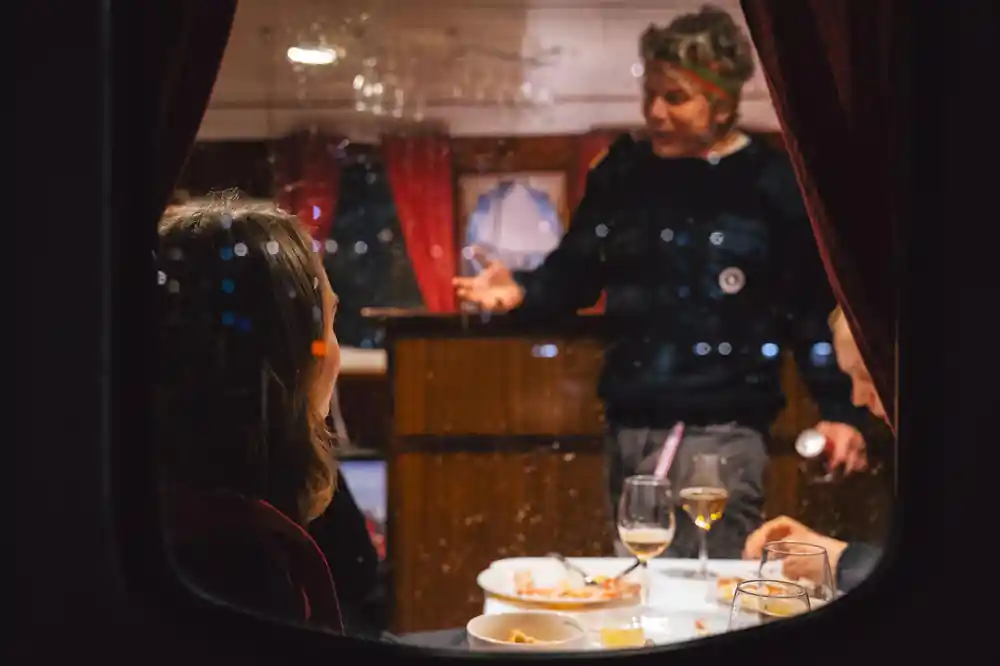
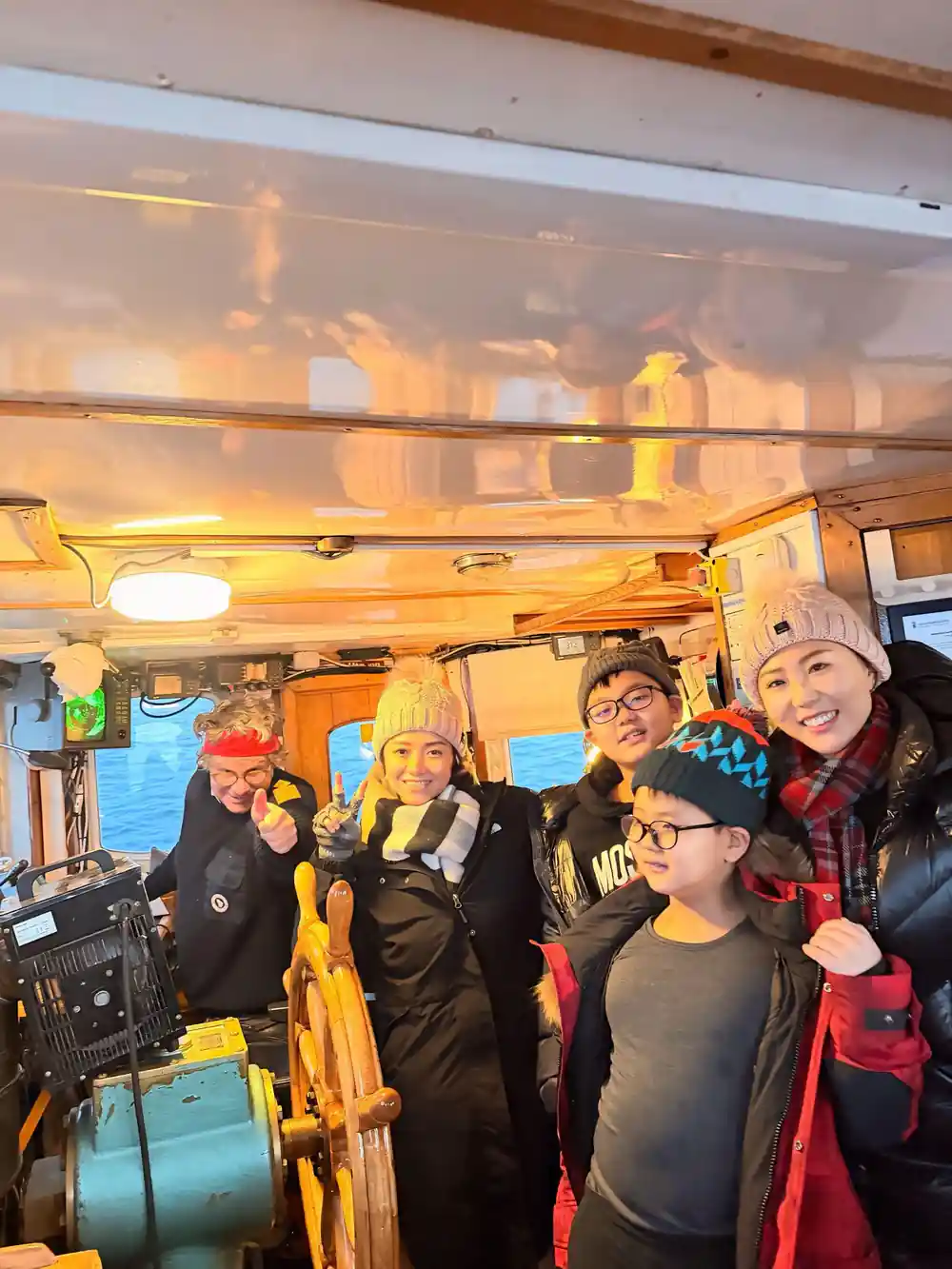
In practice everyone drifts outside when the pot is coming and retreats the moment it is aboard, which is precisely the rhythm the vessel was built around. You are also welcome up in the wheelhouse to hear the captain on what it takes to navigate polar water, and that conversation lands better than it has any right to.
Eating what you caught
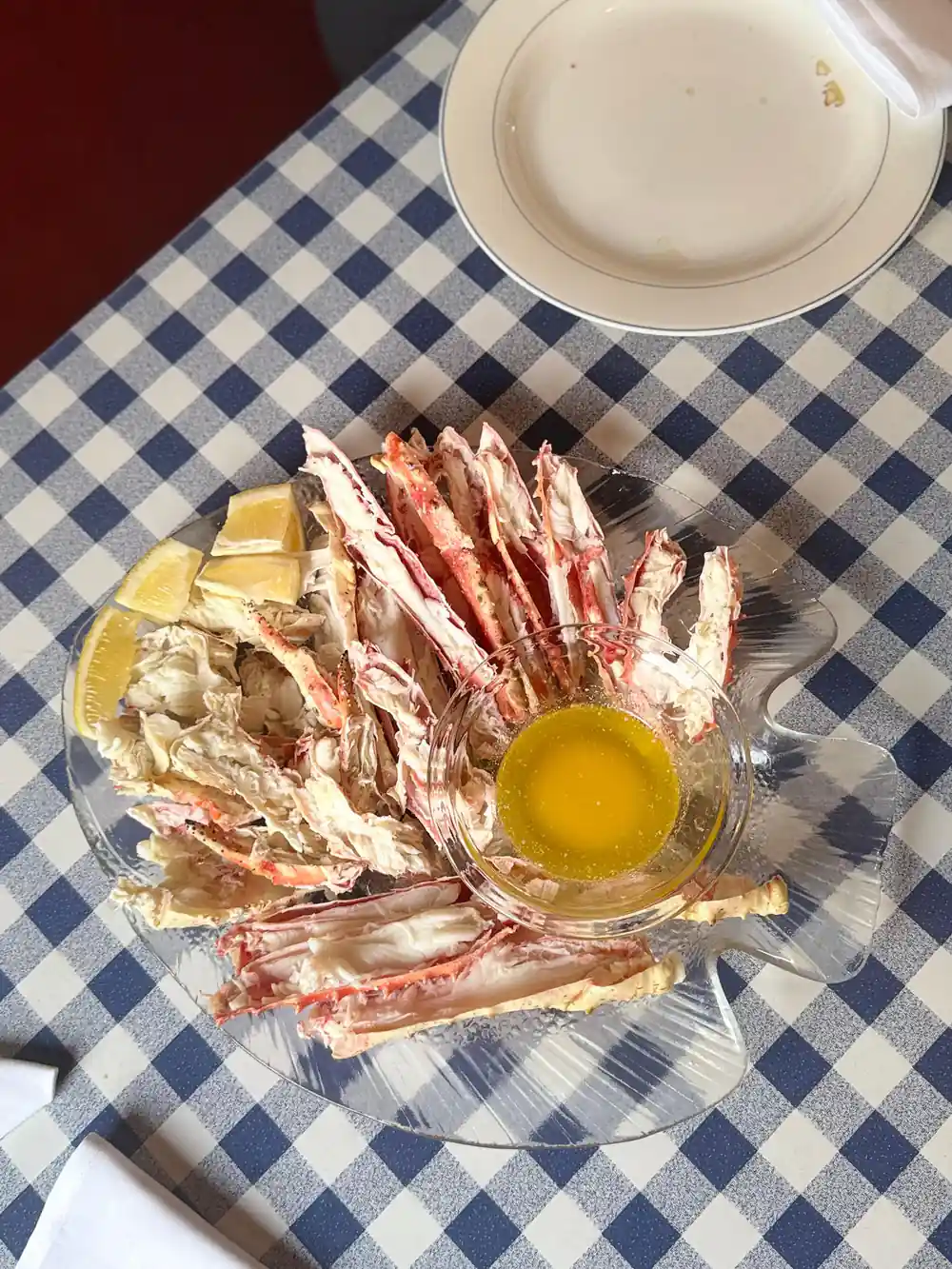
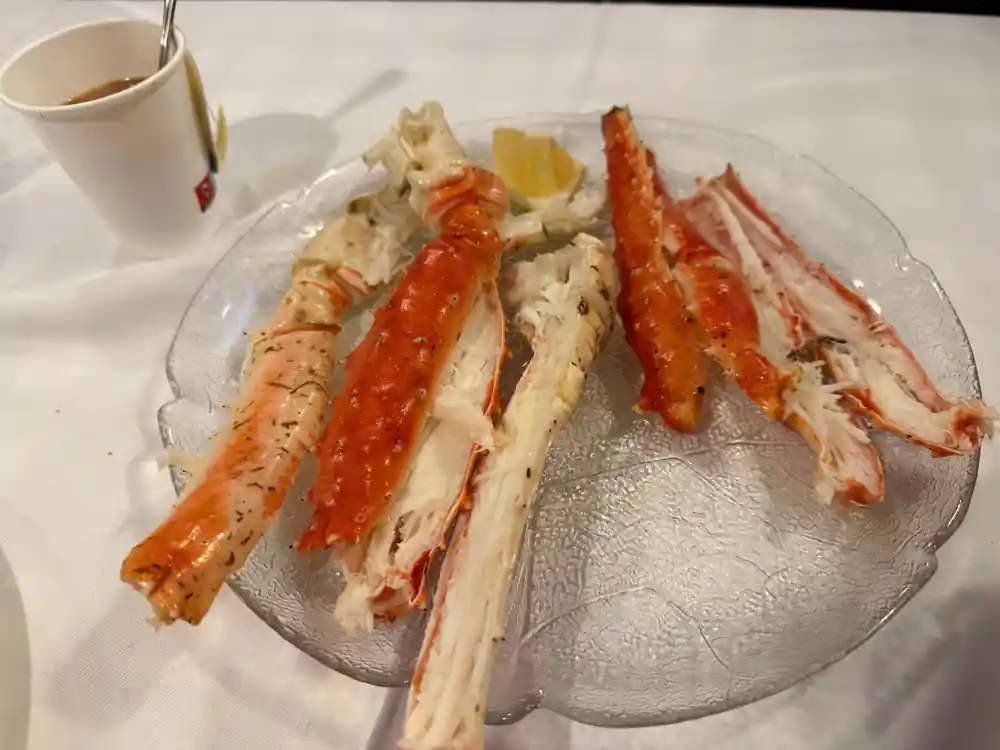
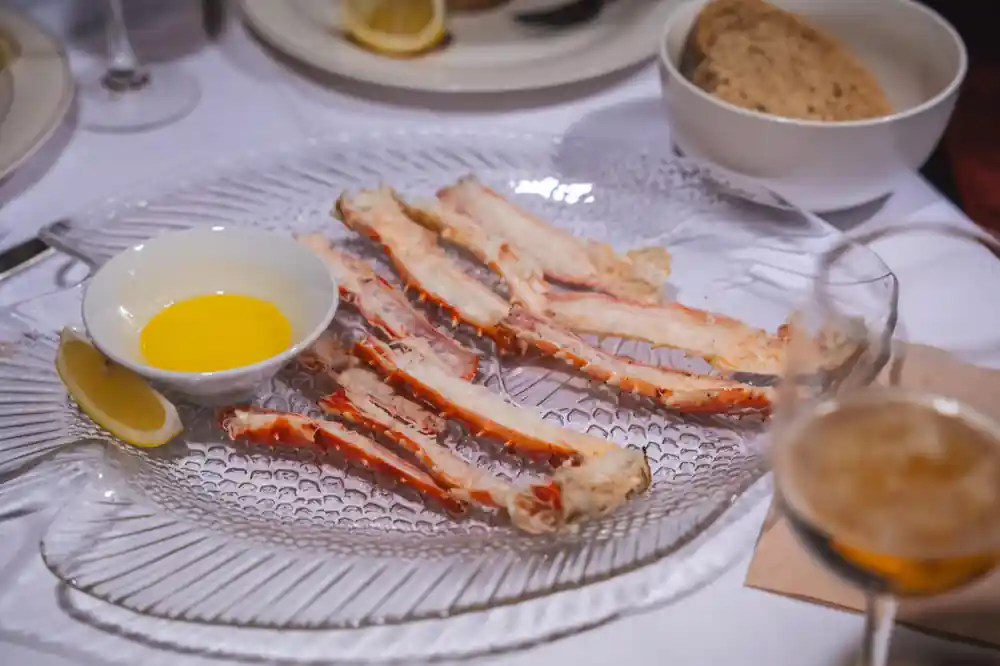
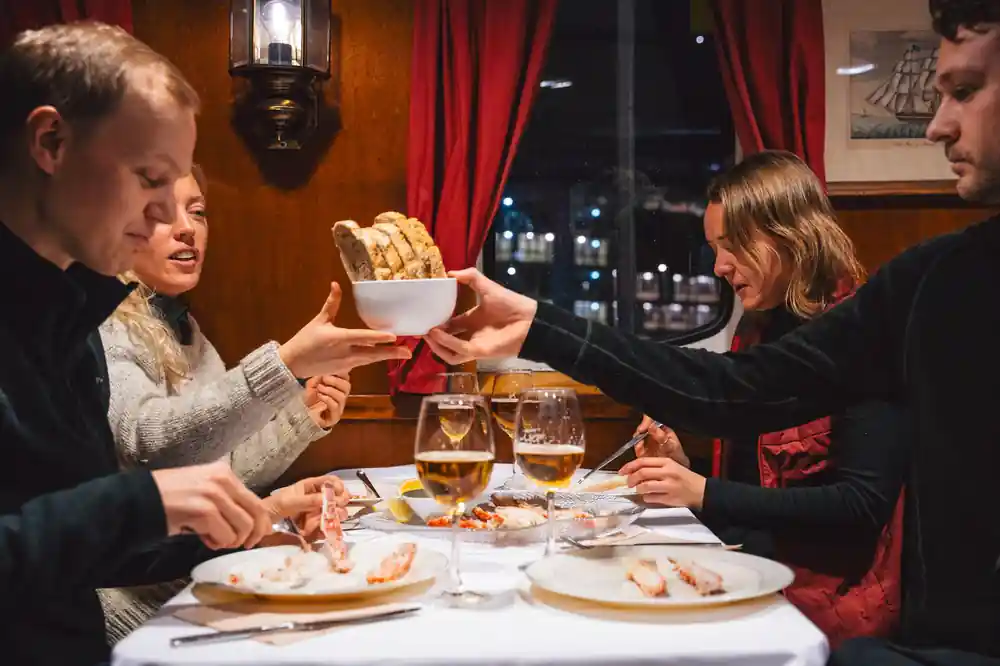
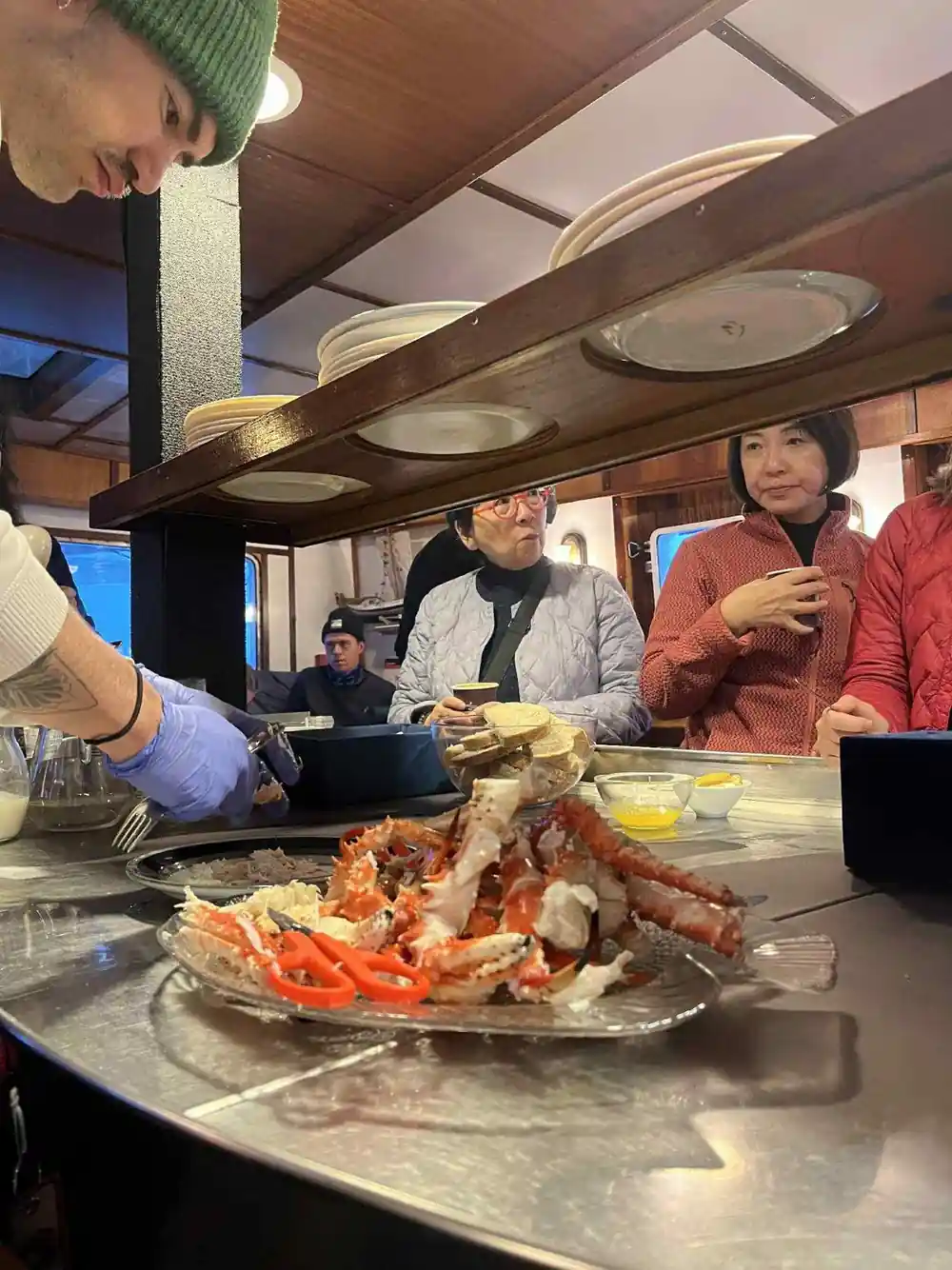
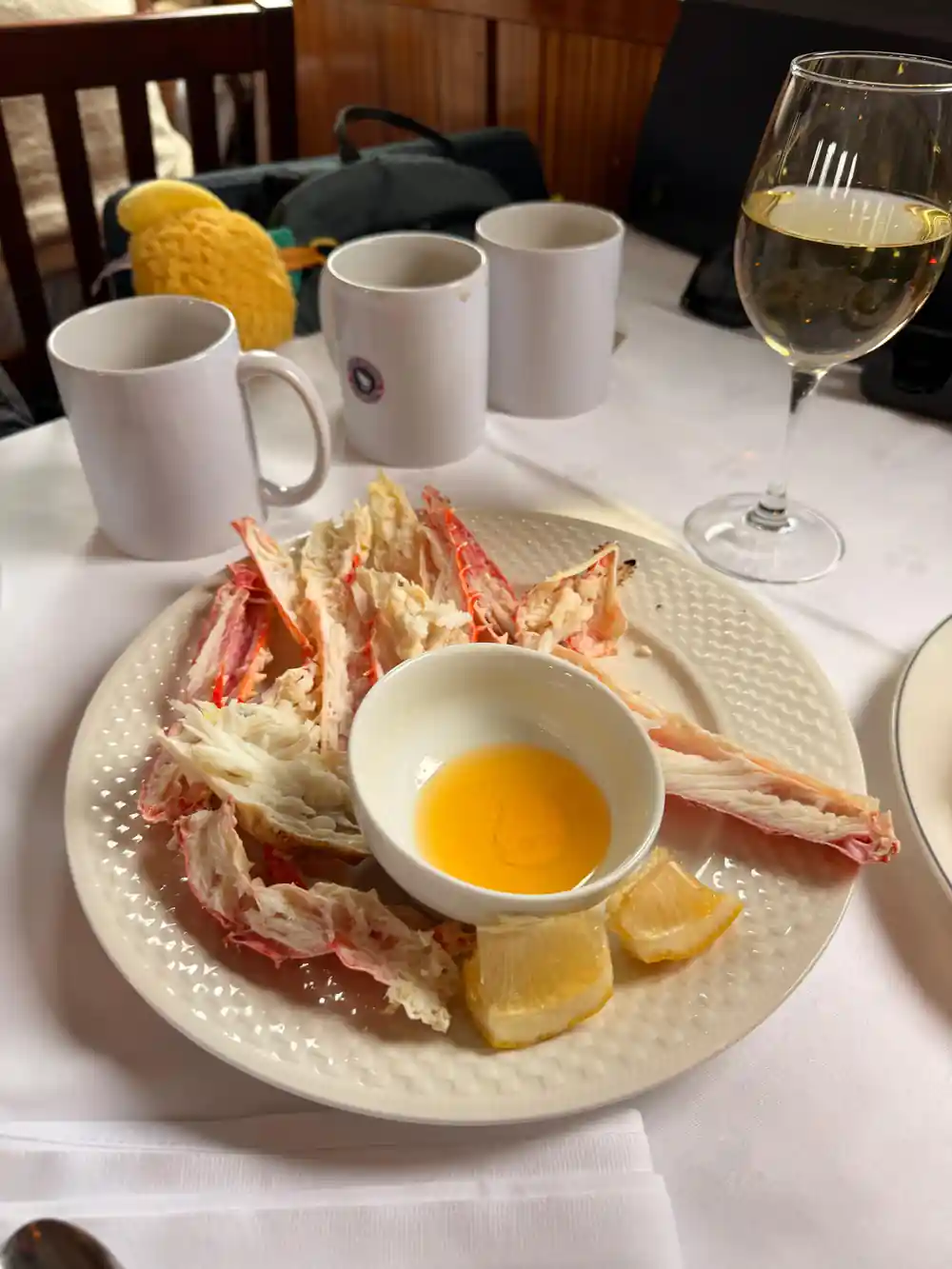
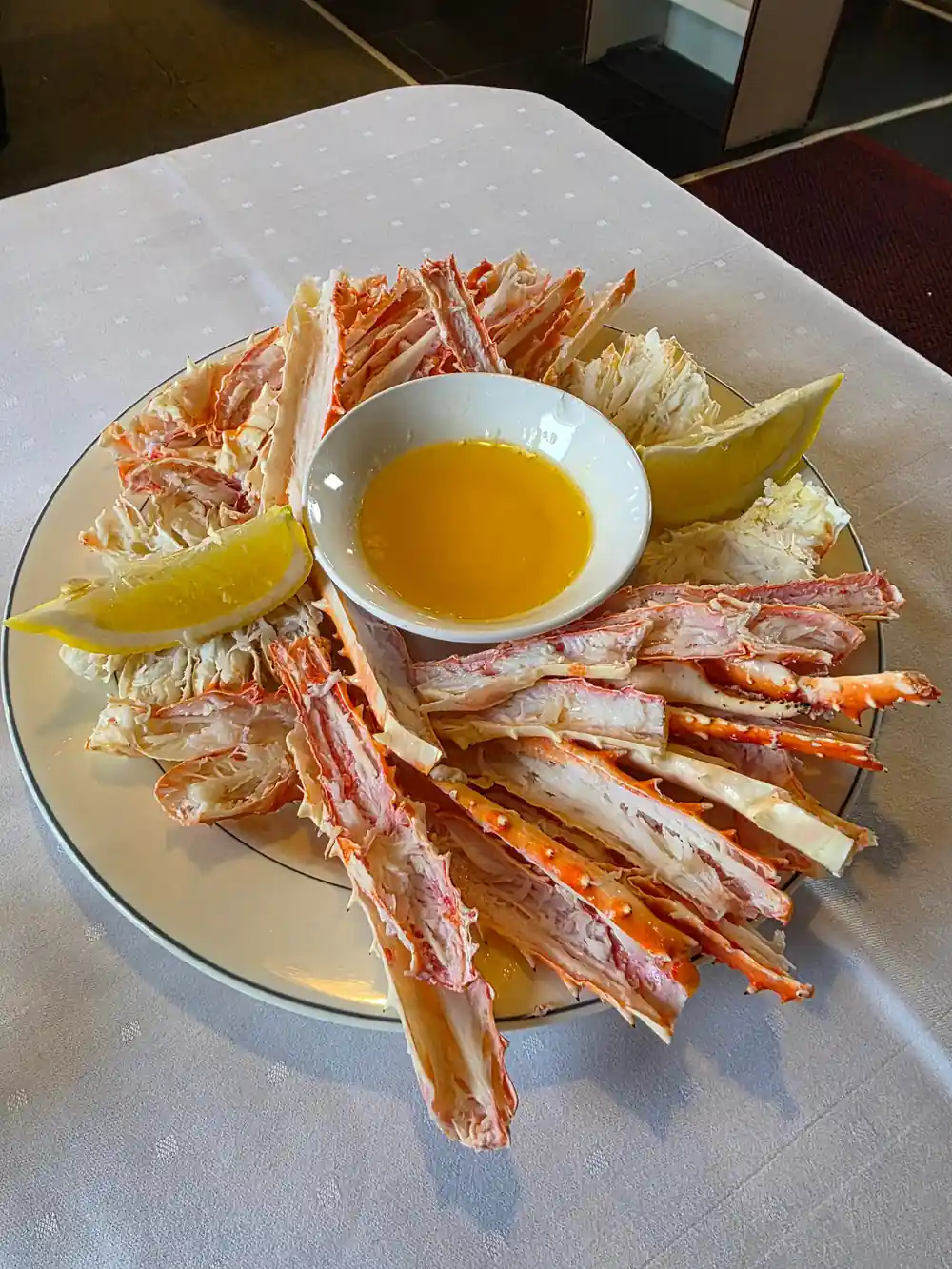
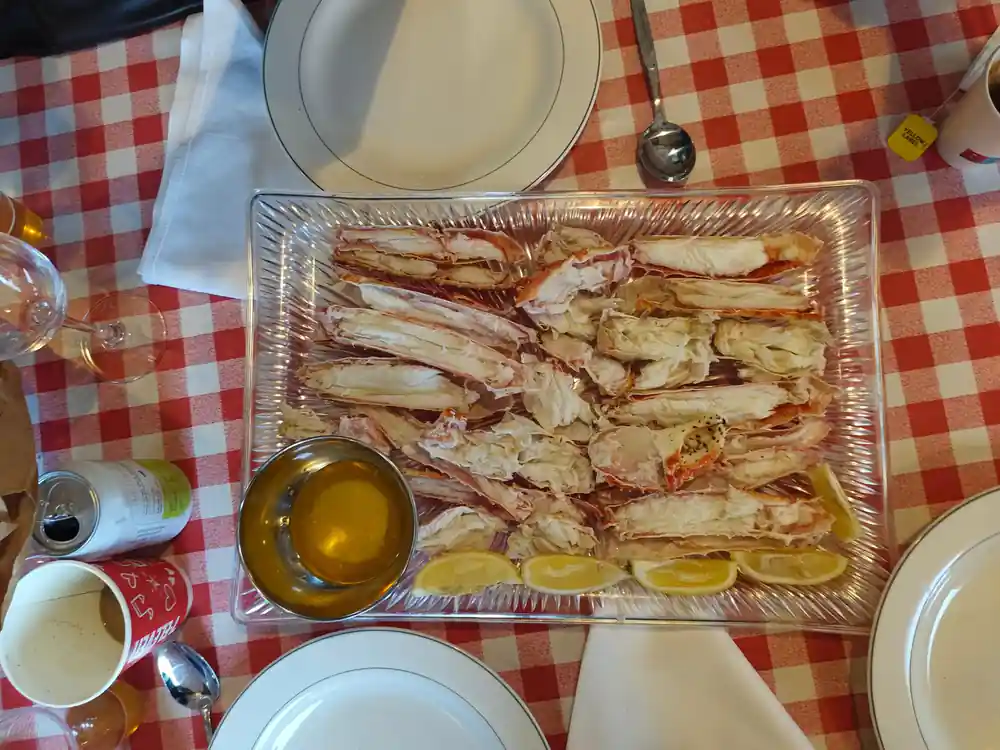
The meal happens on the boat, not at a restaurant afterwards: red fish soup, plus claws from whatever the pots gave up, with coffee, tea and fruit alongside. Do not underrate the soup. An hour outside in Arctic air makes a hot bowl arriving feel like considerably more than a course.
The crab itself needs very little done to it. King crab meat is firm and faintly sweet and much less briny than most shellfish, and the Norwegian instinct is to serve it plainly and let it be what it is. Eating an animal you watched come out of the fjord forty minutes earlier is the part people describe afterwards.
It sails all year
Most things sold in this city depend on the calendar. This one does not. Pots are worked in every month, the animal is down there in every month, and no date on your booking makes the trip better or worse in that respect.
The variable is daylight. Midwinter gives you no sunrise at all, only hours of deep blue at noon that a lot of photographers travel here specifically to shoot. Midsummer gives you a sun that refuses to go down. Ten in the morning is chosen to catch whatever brightness your month has to offer.
Honest about the catch
The pots do not always come up full, and the operator does not pretend otherwise. Guests describe catching one on the first pull and also describe trips where nothing came up at all, and in the second case still getting to hold a crab, photograph it and eat it.
That is the right way round. What is guaranteed is the fjord, the boat, the wheelhouse, the explanation and the lunch. What is not guaranteed is that your particular pot produces an animal, because a pot on a seabed is not a vending machine. Crews here are straightforward about that, which is worth more than a promise would be.
Who it suits, and who it does not
It suits anyone curious about where food comes from and willing to stand on a cold deck for a while to find out. The four and a half hours are long enough to feel like a proper expedition and short enough to leave the evening free, which matters when a Tromso trip is often only three or four nights long.
No age floor, no age ceiling and no published list of conditions that disqualify anybody, which means the useful thing to describe is the vessel rather than a policy. It asks you to step aboard from a quay, walk about while she is making way, and keep your feet on a wet deck as the pot arrives. Steady on your feet is the whole requirement, and there is a warm saloon for anyone who would rather not be outside for four hours.