At a glance
- This Arctic king crab cruise keeps you on the water for 4.5 hours and includes a live guide fluent in Norwegian and English.[1]
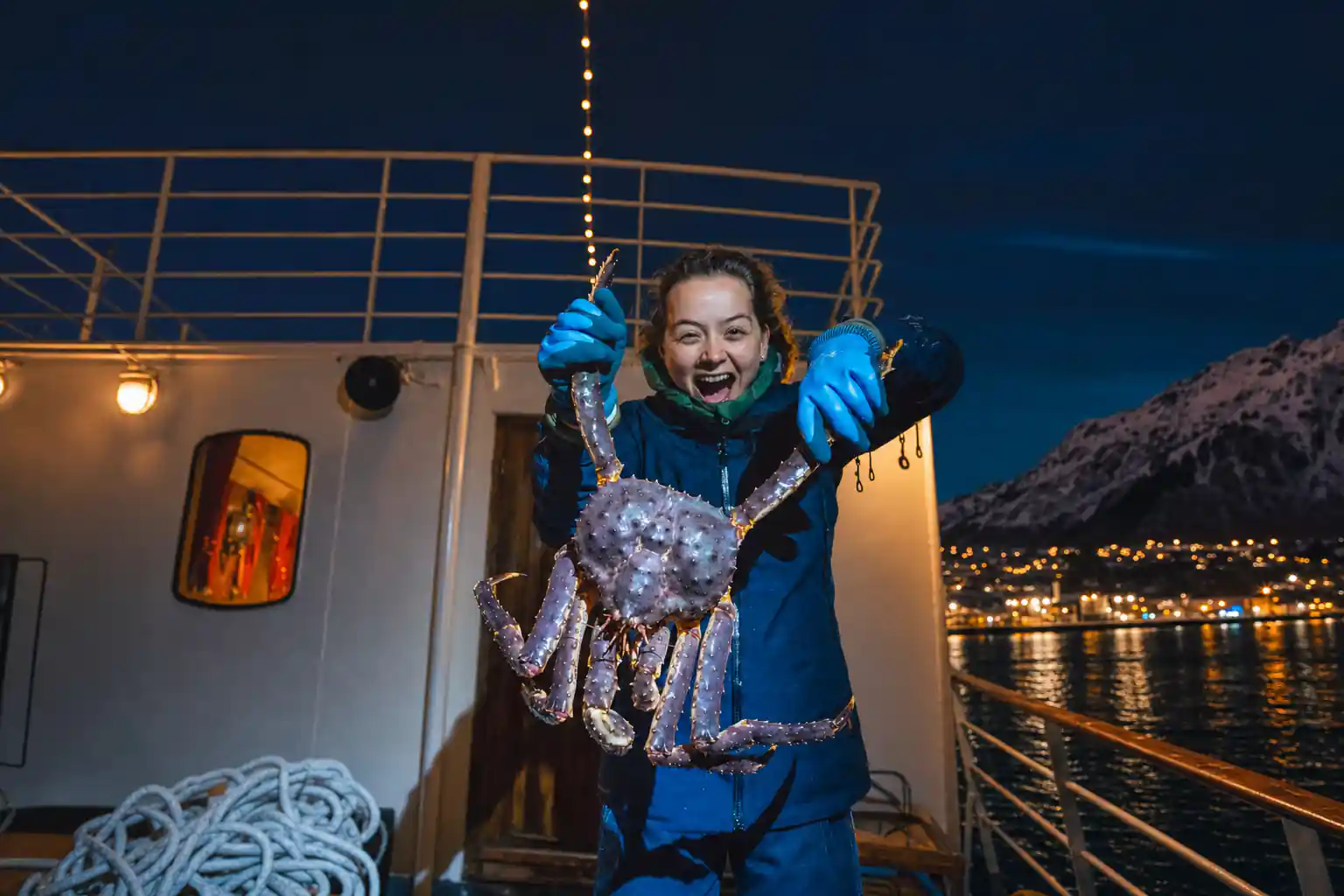
- The tour is called Arctic king crab cruise with self-captured lunch, and the crab is part of the story, not just a plate at the end.
- US$261 is the starting price, and you can book now and pay later.[1]
- Plans change? A full refund applies when you cancel at least 24 hours beforehand.[1]
- Travellers rate it 4.45 from 87 reviews, with the live Norwegian and English guiding a clear plus.[1]
- Top choice King Crab Cruise from US$261 Duration4.5 hours[1]Rating4.45 from 87 reviews[1]GuideLive guide: Norwegian, English[1]CancellationFree cancellation up to 24 hours ahead[1] Check availability
- Arctic Fjord Cruise from US$156 Duration4 hours[2]Rating4.52 from 2,609 reviews[2]GuideLive guide: English[2]CancellationFree cancellation up to 24 hours ahead[2] See this tour
- Fjord History Cruise from US$157 Duration2.5 hours[3]Rating4.90 from 389 reviews[3]GuideHost or greeter: Norwegian, English[3]CancellationFree cancellation up to 24 hours ahead[3] See this tour
In September/October, the herring migrates northeastward to the main wintering areas off the coast and in fjords in northern Norway.
Why this cruise earns a place on your list
Getting there and booking
- Fly into Tromsø. Travel between Tromsø Airport and the city centre takes about 10-20 minutes.[4]
- The cruise runs 4.5 hours. Check availability to see starting times.[1]
- Reserve now and pay later, with free cancellation up to 24 hours in advance for a full refund.[1]
- The live guide on board speaks Norwegian and English.[1]
Dress and season
- Average winter temperature in Tromsø is around −4°C. Dress in warm layers.[5]
- Polar night lasts approximately from 27 November to 15 January, so expect darkness or twilight.[6]
- Northern lights may be visible from late August to early April when the sky is dark and clear.[7]
- Wildlife boats keep a respectful distance from fishing vessels and gear, at least 0.2 nautical miles (370 m).[8]
Setting expectations first
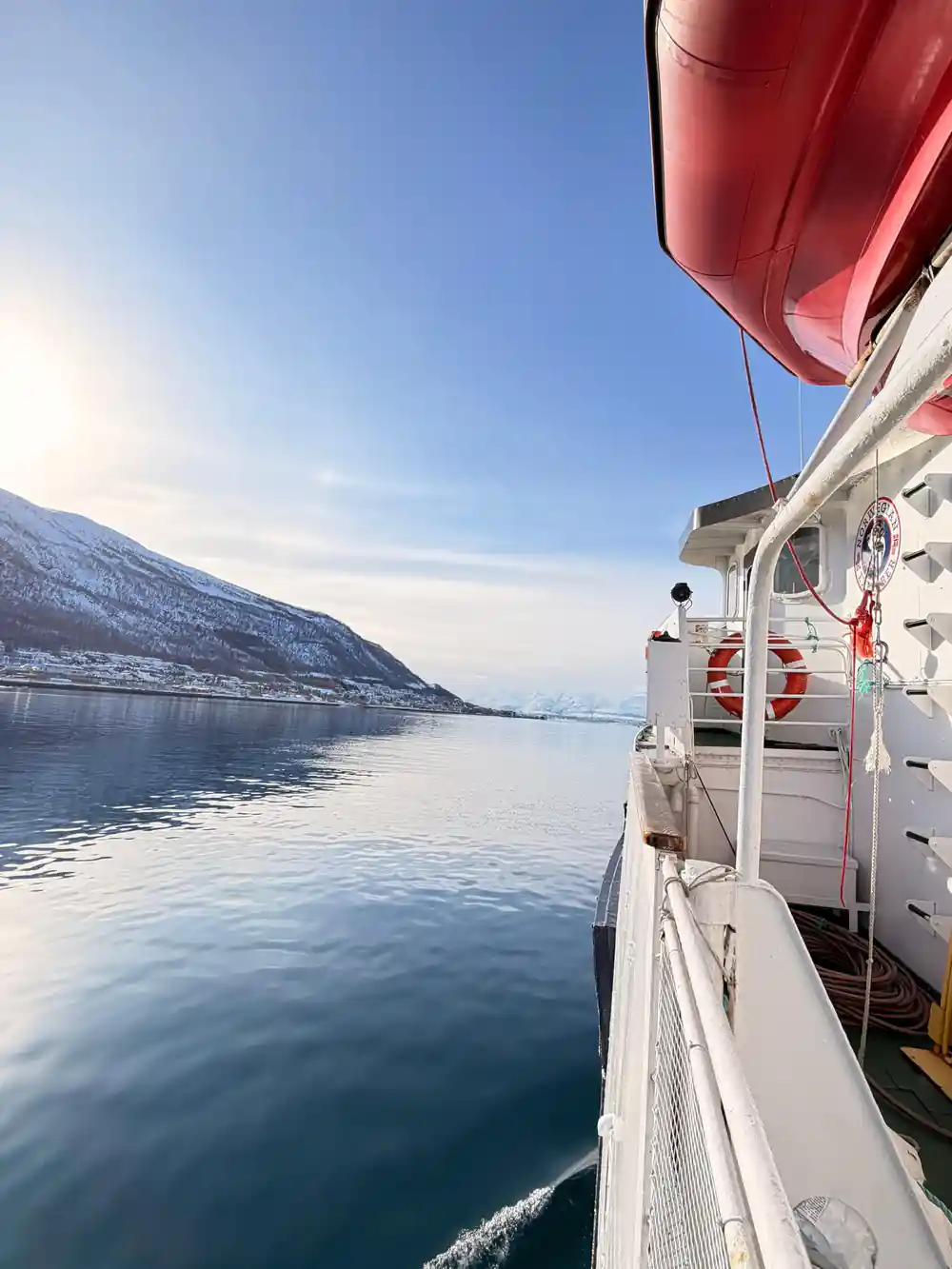
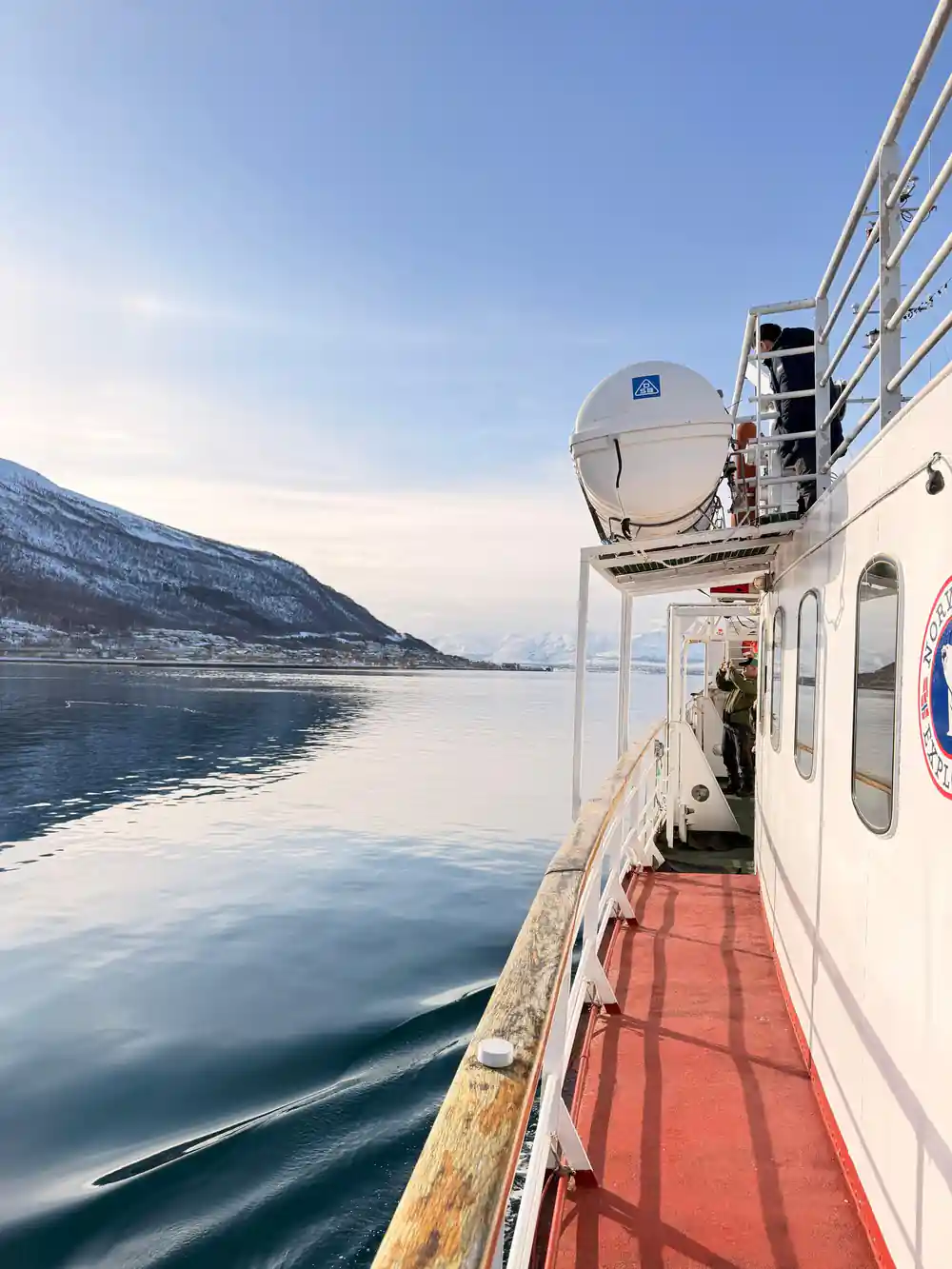
A wildlife cruise in the Arctic is a different experience from a safari in Africa. You are out on a working fjord, where animals come and go on their own schedule. The reward is not a checklist. It is the pleasure of watching a landscape that is alive, quietly and often unexpectedly. You need a little patience at the rail, but that patience is part of the pleasure. The boat does the moving; your job is to look, listen and stay warm.
This tour is a Tromsø king crab cruise with self-captured lunch, not a dedicated whale watching trip. That means the priority is the boat journey and the crab experience, but the same water gives you chances to see eagles, seabirds, seals and, in winter, whales. The cruise lasts 4.5 hours, which is enough time to slow down, scan the surface, and let the fjord reveal itself. Plan to spend part of the trip outside, hold the rail, and ask the guide where to stand for the best view.[1]
Before you book, decide what you want from the day. If your aim is a guaranteed wildlife list, a specialist safari is the honest choice. If you want a winter fjord experience with a meal and a story, this cruise delivers something quieter and more personal. Bring a sense of humour about the Arctic weather and you will enjoy it more.
The white-tailed sea eagle
White-tailed sea eagles are among the easiest birds to spot from a winter boat in northern Norway. They are large, pale-headed raptors that often sit on shoreline rocks or drift along the edges of the fjord, watching for fish. You may see one launch off a point and glide low over the water with slow, heavy wingbeats. Unlike a distant silhouette, an eagle in flight is unmistakable, and when one crosses the bow it can feel like a private show.
On a 4.5 hour cruise, watch both the shoreline and the open water. Eagles often appear when the boat passes a rocky headland or a small island. There is no guarantee, but their size and pale tail make them hard to miss when they do show. If you see one perched, it may sit for long minutes; watch for the moment it drops toward the water.[1]
Photographers will want a zoom or telephoto lens, but a pair of binoculars is enough. The trick is to watch the shoreline before the boat disturbs it. Once an eagle lifts, it often circles once before committing to a direction, which gives you time to raise your camera.
Guests in insulated suits gather around a table laid with white cloths and candles after a winter fjord cruise.
The seabirds that stay all winter
Tromsø sits inside the Arctic Circle region, yet the fjords do not freeze solid, and several seabirds stay through the dark months. You might see black-legged kittiwakes, fulmars, gulls and, at times, diving ducks such as common eiders. They gather where the current brings food to the surface, often near headlands or narrow sounds. Their calls are sharp and quick, easy to lose in the wind.
During the polar night, roughly 27 November to 15 January, lighting is dim and blue, making birds more difficult to spot.[6] Still, the cruise gives you time to watch for movement on the water and in the air. Take binoculars if you have them, and ask the guide about local bird life. The live guide on board speaks Norwegian and English. Move slowly along the rail, brace yourself, and let the guide point out what your eye has skipped.[1]
Seabird activity often increases near fishing boats and around the wake. The birds are not performing; they are simply feeding, and that honesty is part of the charm. Spend a few minutes just following one bird with your eyes and you will start to read the water's rhythm.
Seals on the skerries
Seals are a quieter pleasure. In the skerries and along the rocky islands of the Tromsø fjords, harbour seals and sometimes grey seals haul out on exposed ledges and small islets. From a boat, they look like dark shapes at the waterline, often motionless, and they slip into the water if the boat gets too close. Sometimes a seal will watch the boat from the edge of a rock, head high, curious but ready to slide away.
In winter, the bare rocks leave them exposed, and a patient eye can pick them out. Look for rounded heads bobbing in the water and for a curved, almost dog-like silhouette stretched out on a low rock. The crew keeps a sensible distance, letting the animals decide whether to stay or slide away. The best sighting is often the quietest: a head appears, a few bubbles, and the water closes over it.
Do not expect seals on command. They choose the ledges, not the tour. The best approach is to scan slowly and keep your voice low, as sound carries across water. If the crew slows the boat near a haul-out, respect the quiet and let the animals decide.
from US$261
4.5 hours on the water with a live English and Norwegian guide, and a self-captured king crab lunch.[1]
Whales, and why it is a lottery
In winter, the fjords north of Tromsø fill with orcas and humpback whales feeding on herring.[9] In September and October, Norwegian spring-spawning herring moves northeast to its primary wintering grounds along the coast and within the fjords of northern Norway.[10] That is the engine behind the whale season, but it does not mean whales appear on every cruise. A blow is often the first sign, a vertical puff that catches the low light.
The whales move with the fish; sightings depend on where the herring are on any given day. This king crab cruise is based around Tromsø waters, and it is not a dedicated whale safari. If seeing whales is your main goal, a specialist tour may be a better match. If it is a bonus, then this trip gives you a fair chance to spot them while doing something else you already enjoy. Keep watching even after a long quiet stretch; the whales can surface at any time. Whale safari boats also keep a respectful distance, at least 0.2 nautical miles (370 m) from fishing vessels and gear.[8]
What is under the boat
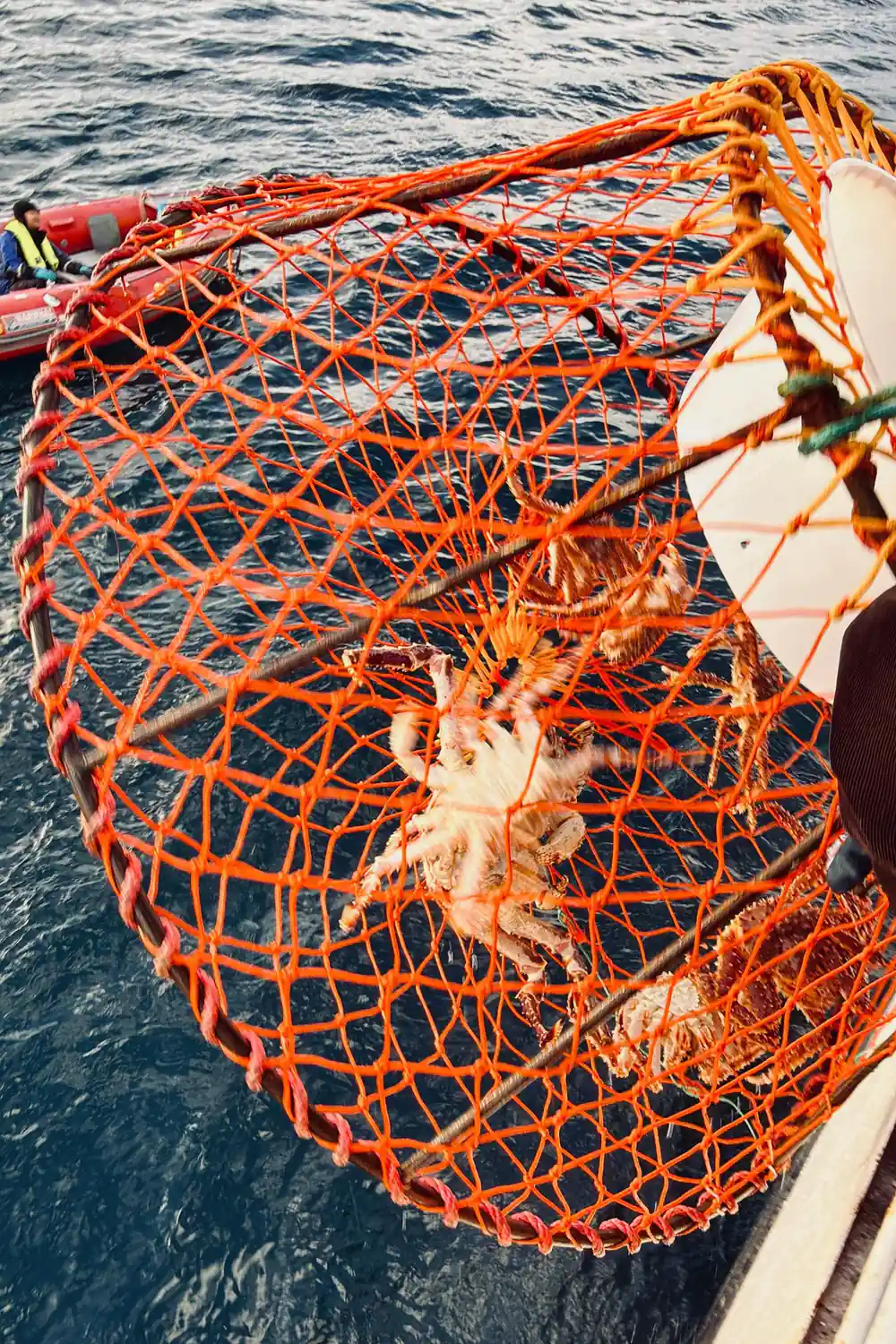
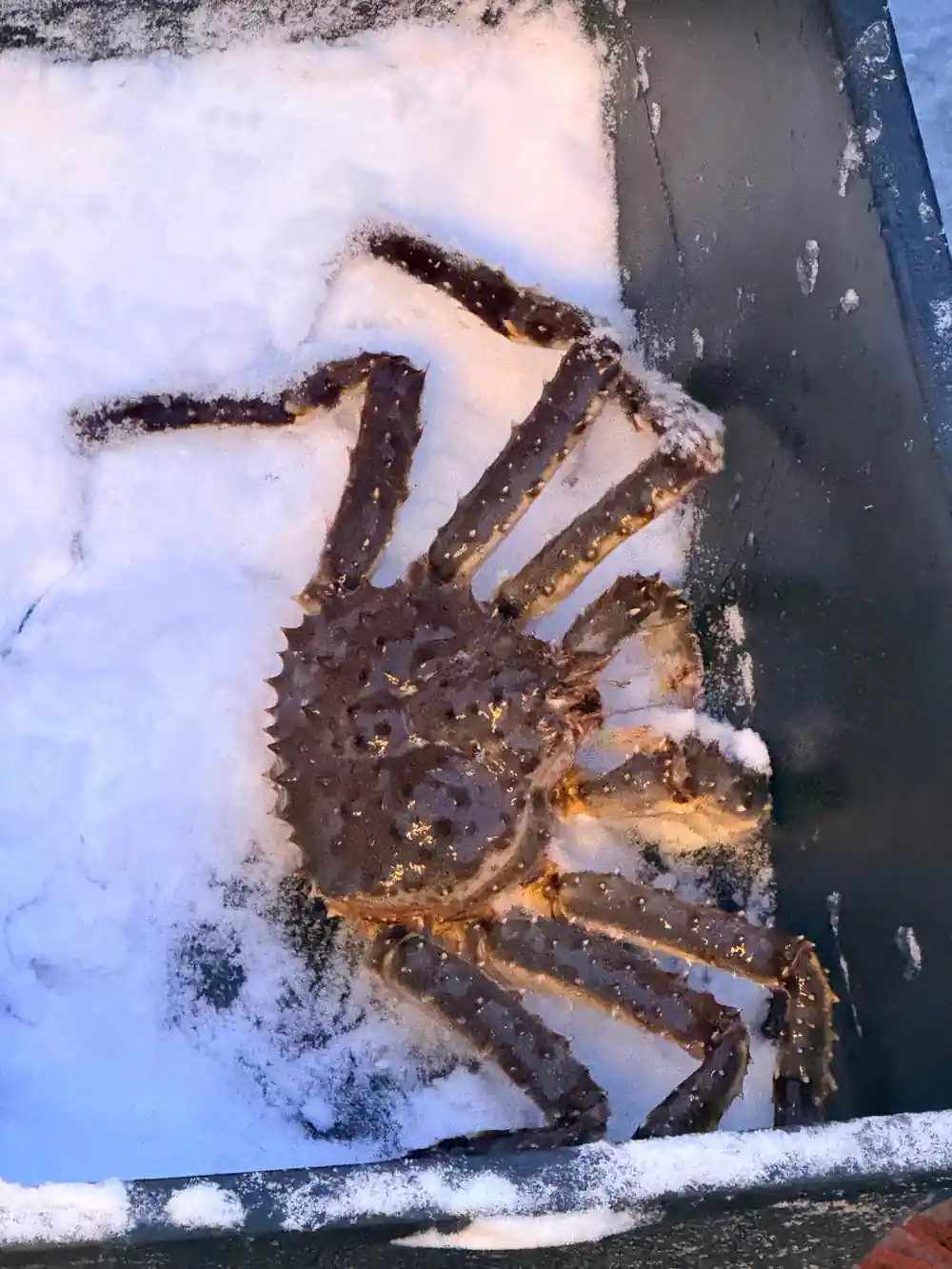
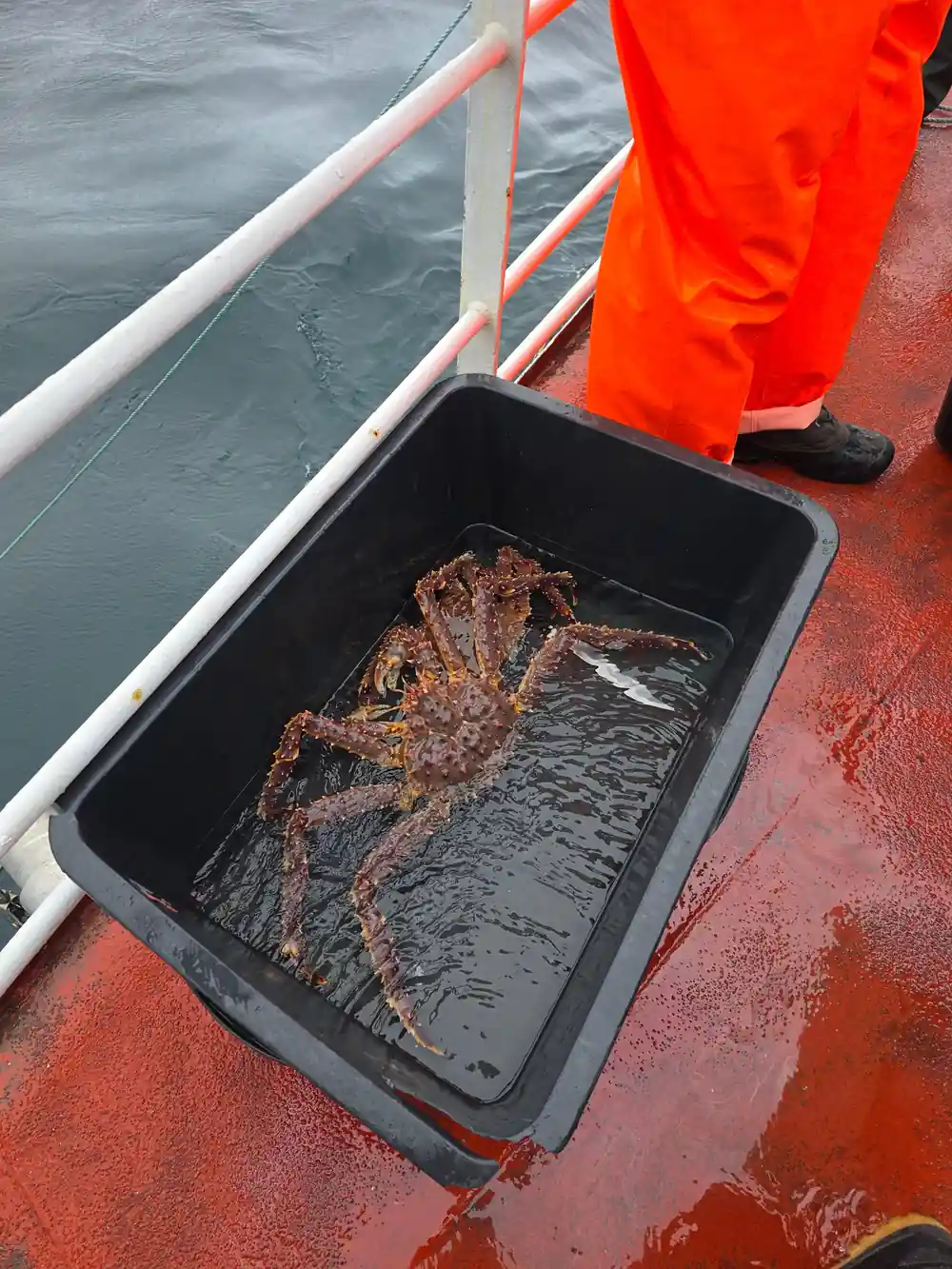
The star of this cruise is the red king crab, and the story starts below the surface. The red king crab came to Norwegian waters after Russian researchers released it in Murmanskfjorden in the 1960s; the first individuals appeared in Norwegian waters in 1977.[11] Since then it has spread along the coast and into the fjords, where it is now fished commercially. There is a satisfying arc in that story, from a cold ocean introduction to a meal on your plate.
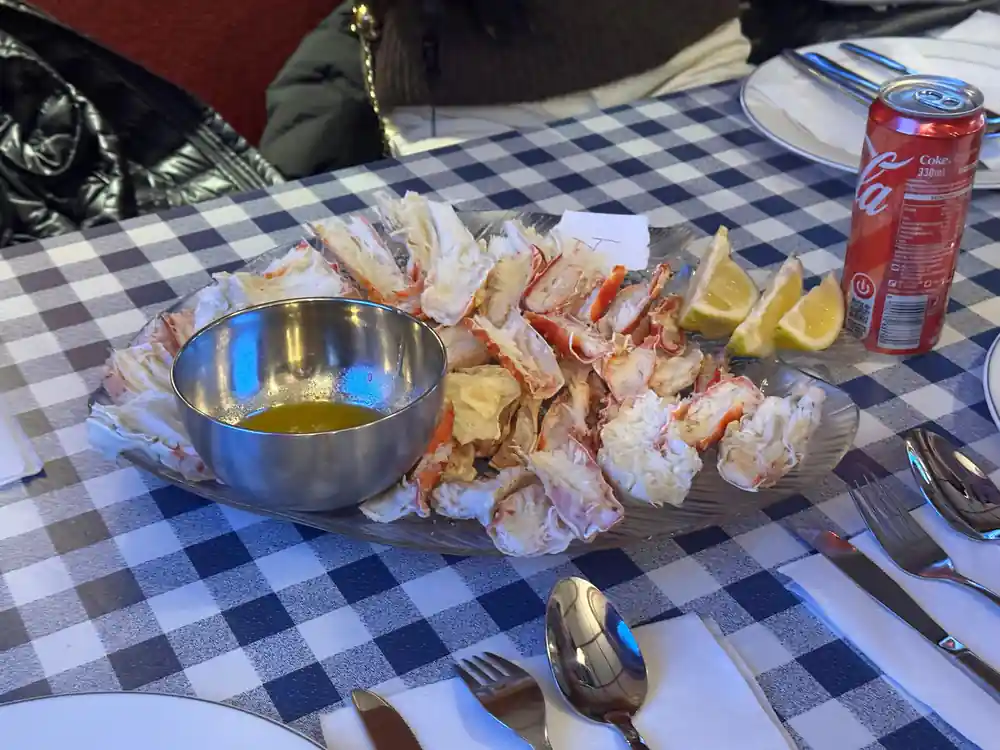
On this tour, the self-captured lunch part means the crab is not just served to you. You are part of getting it from the sea to the table, which makes the meal feel more connected to the place. The crew handles the practical work, leaving you free to focus on the moment and on the water around you. What you take from the table is a stronger sense of where your food comes from, and that is a rare thing on a winter holiday.
What you will not see
It helps to know what this cruise is not. It is not a pelagic birding expedition. Do not expect to tick off rare Arctic skuas or little auks. It is not a whale safari. Do not book it with the expectation of guaranteed blows and tail flukes. And do not expect midnight sun conditions; the midnight sun in Tromsø usually lasts from around 20 May to 22 July, but this cruise is built for the colder months.[12] Go for the combination of boat, crab and fjord, and you will not be disappointed.
The beauty of the trip is that it combines a practical meal with a moving viewpoint over a dramatic landscape. You may see eagles, seals, seabirds and whales, or you may see only water, rock and snow. Either way, you will have spent 4.5 hours in the Arctic on a boat with a warm lunch waiting, and that is a good day in Tromsø.[1]
Respect distance for wildlife boats
Distance rule in nautical miles and metres.[8]
Compare tour prices in US dollars
From-prices in US dollars, across the three listed tours.[1][2][3]
When to go and how to plan
How to book your cruise
Check availability
Look at starting times for the 4.5 hour Arctic king crab cruise and choose a date.[1]
Reserve now, pay later
Secure your spot without paying today, then sort out the rest in your own time.
Keep cancellation in mind
Should your plans shift, you can get a full refund by cancelling at least 24 hours ahead.[1]
Dress for the deck
Average winter temperature is around −4°C. Insulating layers, a windproof outer shell, gloves, and a hat will help.[5]
Bring binoculars and curiosity
Scan the shore for eagles and seals, and ask the guide what is moving in the fjord.
Book your Arctic king crab cruise from Tromsø and keep watch for wildlife from the deck
from US$261Reserve now & pay later