At a glance
- The cruise is built around a self-captured lunch: you take part in bringing in the crab and then eat it.
- The trip runs for 4.5 hours, with a live guide who speaks Norwegian and English.[1]
- From US$261, the price includes pay-later booking and no-fee cancellation up to 24 hours ahead.[1]
- During winter, orcas and humpback whales congregate among the fjords north of Tromsø to eat herring.[2]
- Between late August and early April, the aurora can sometimes be seen when skies are dark and clear.[3]
- Top choice Arctic King Crab Cruise from US$261 Duration4.5 hours[1]Guide languageNorwegian, English[1]Rating4.45 from 87 reviews[1]CancellationFree up to 24 hours[1]BookingReserve now, pay later[1] Check availability
- Arctic Fjord Cruise, Fish Racks from US$156 Duration4 hours[4]Guide languageEnglish[4]Rating4.52 from 2,609 reviews[4]CancellationFree up to 24 hours[4]BookingReserve now, pay later[4] See this tour
- Fjord Adventure, Lunch & Photos from US$146 Duration5 hours[5]Guide languageEnglish[5]Rating4.79 from 688 reviews[5]CancellationFree up to 24 hours[5]BookingReserve now, pay later[5] See this tour
The Polar Night lasts approximately from 27 November to 15 January, while the exact date when the returning sun becomes visible depends on your location and the surrounding terrain.
Worth it for the story and the meal
Good to know
An animal moving west
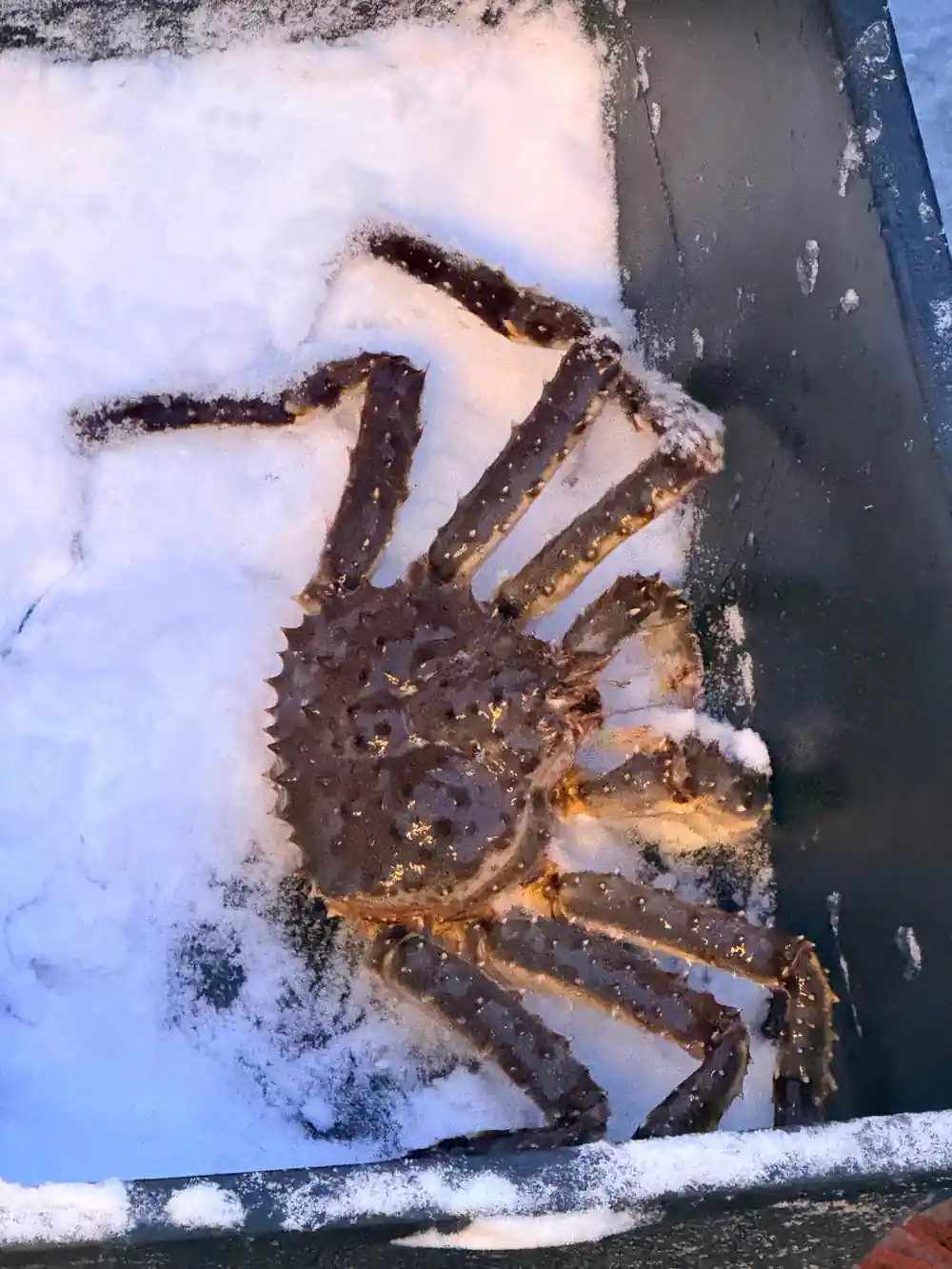
The red king crab is a cold-water species from the northern Pacific.[10] Russian researchers released it in Murmanskfjorden on the Kola Peninsula in the 1960s to build up a new fishery in the area.[10] The first individuals appeared in Norwegian waters in 1977.[10] The release was deliberate, and the result was far larger than anyone expected.
Once it reached the Norwegian coast, the crab did not stay in one place. It has since spread out into the sea and along the coast.[10] That is a striking journey for an animal that originally lived on the other side of the planet. Cold, deep fjords and shelf waters turned out to suit it, and the population has grown into the fishery you see today. In northern Norway the crab is now a familiar name on seafood menus, and visitors travel here to taste it where it is caught.
This history is what makes a king crab fishing Tromso trip feel different. You are not simply visiting a pretty harbour. You are meeting a species that arrived in living memory and made itself at home. When you sit down to the meal, you will know exactly which stretch of coast the crab came from, because you watched it come aboard. The story of the crab on your plate is part of the meal.
The line that divides the coast
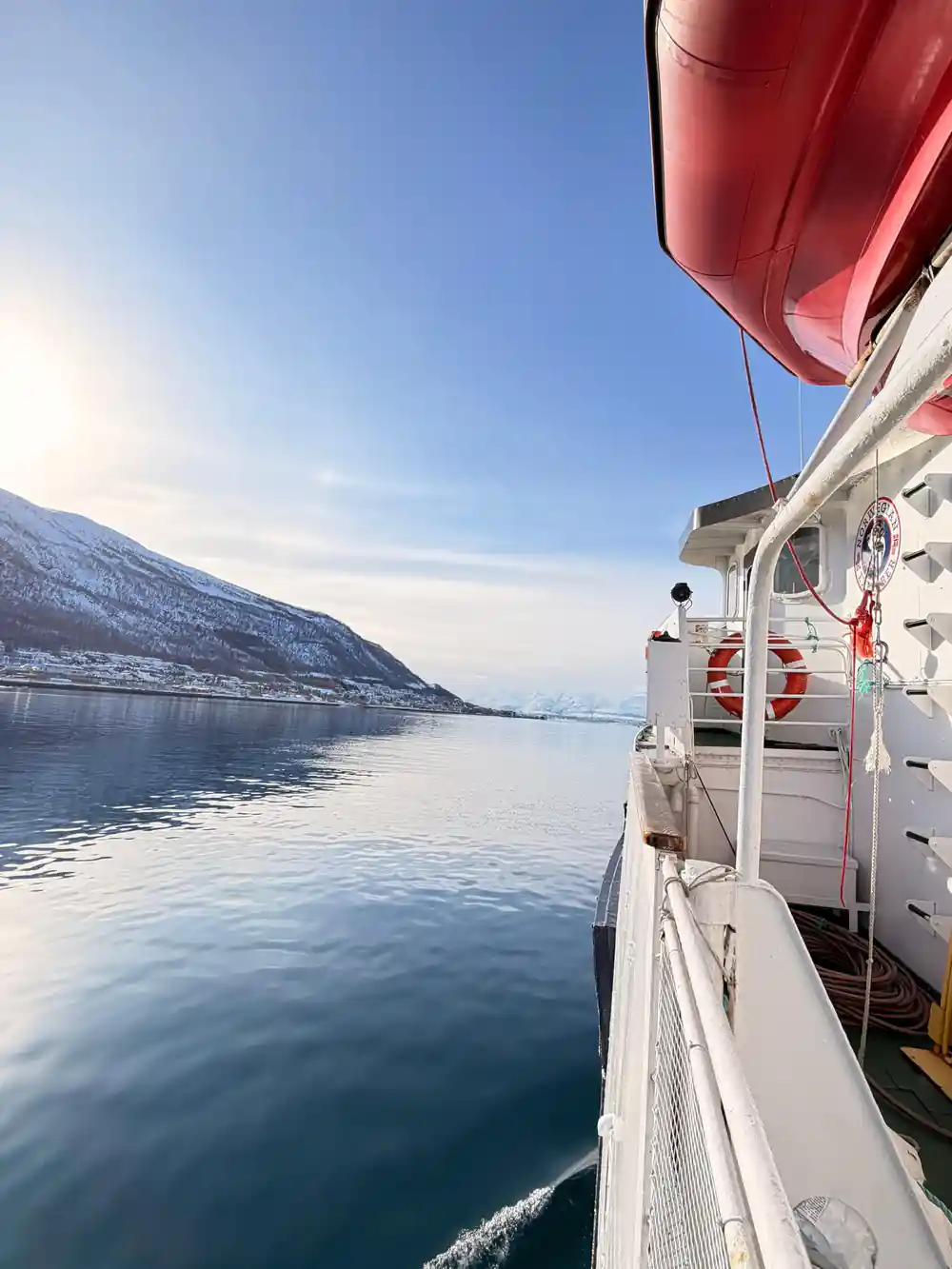
Northern Norway's coast is a long, broken line of fjords, islands and skerries, with open ocean on one side and sheltered channels on the other. The water around Tromsø switches between calm sounds and exposed stretches, and the character of the trip depends on the weather and the route. Some days the sea is glass; other days a swell rolls in from the Atlantic and the boat tips gently as the guide points out islands.
What draws so much life into this maze of water is the herring. Norwegian spring-spawning herring migrates northeastward in September/October to its main wintering areas off the coast and in fjords in northern Norway.[11]
That herring is the magnet. In winter, orcas and humpback whales assemble in the area to eat herring.[2] A boat cruise through the fjords puts you in the same waters where this feeding happens, with snow-covered slopes and low winter light all around. For many visitors, seeing a whale exhale against the snow line is the image they remember longest.
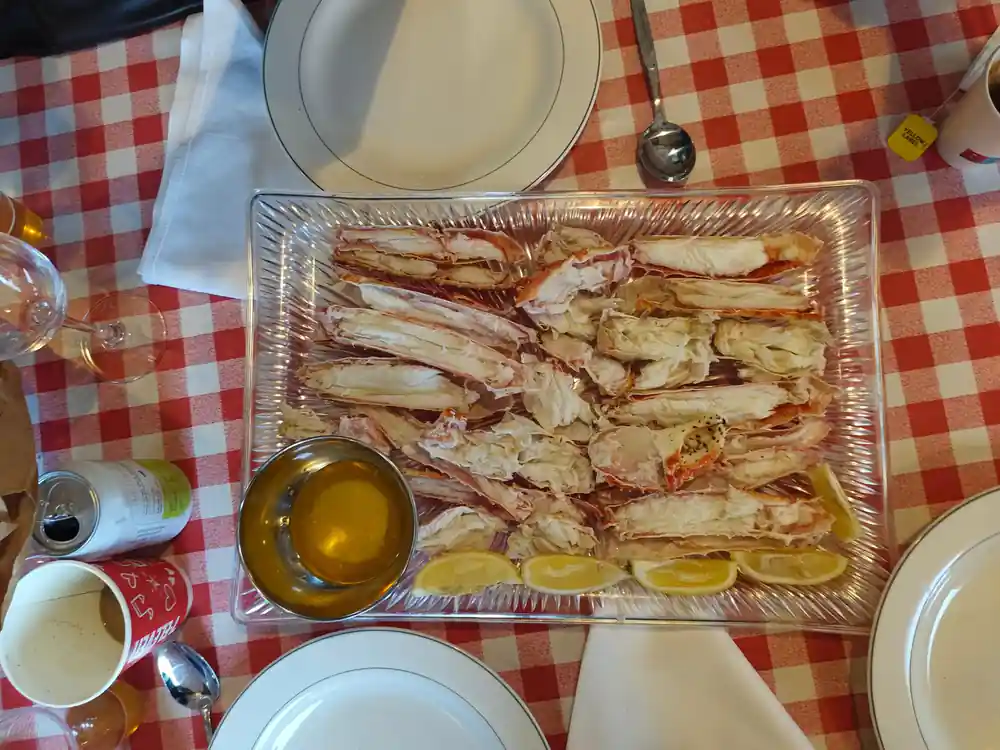
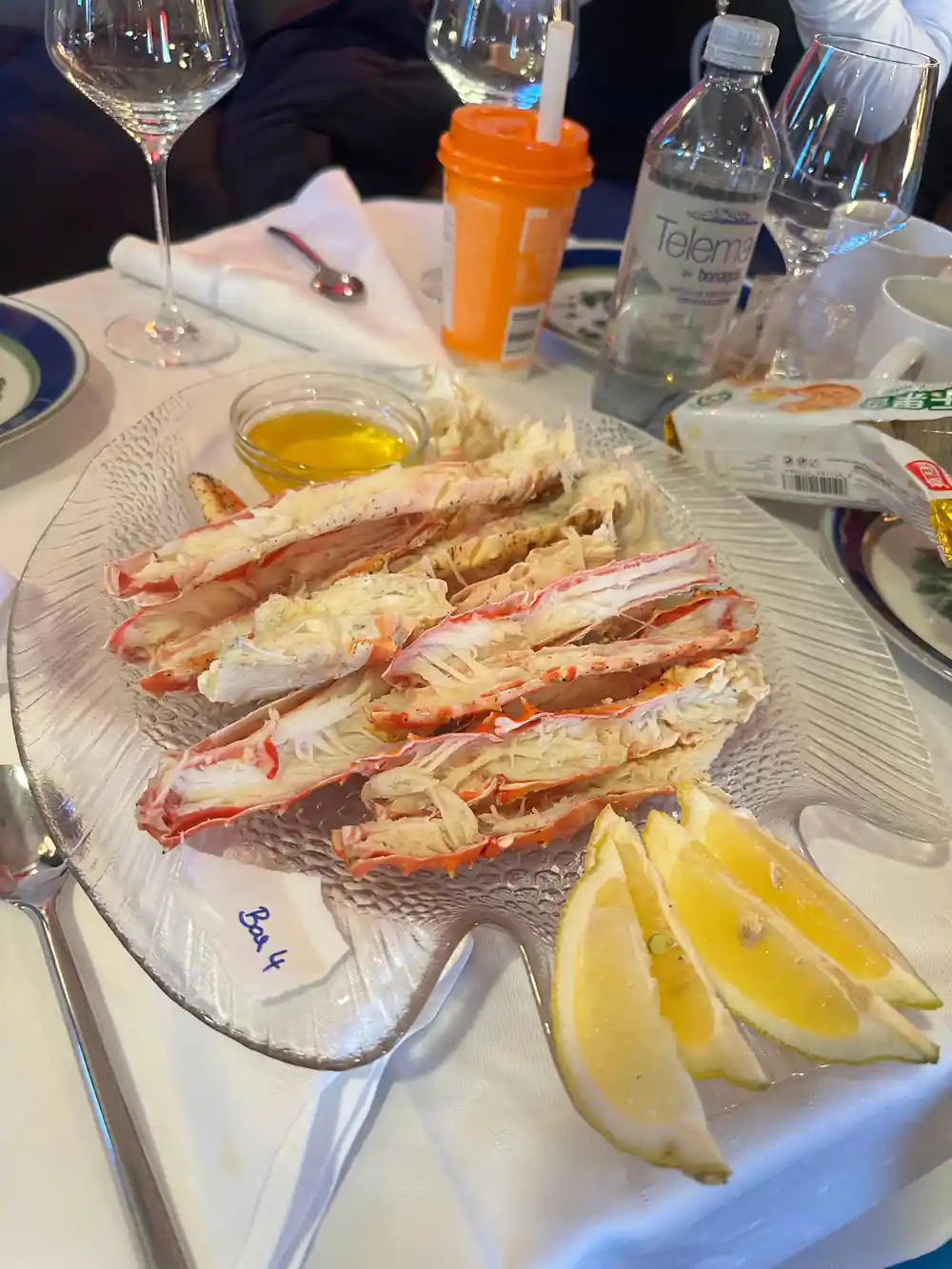
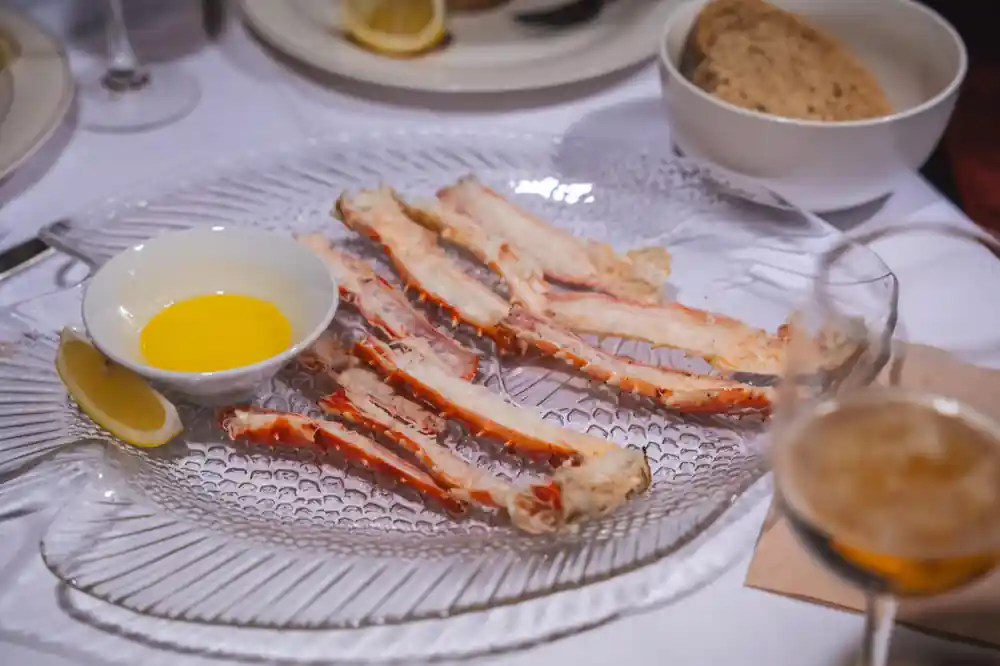
A plate of split king crab legs with melted butter after a winter cruise.
What a self-captured lunch means
The tour you book from this site is Arctic king crab cruise with self-captured lunch.[1] The name is the whole story: the meal starts with the catch. Instead of sitting back while the crew does everything, you are part of the moment the crab comes aboard. It is a participatory meal, not a buffet, and the catch defines what lands on the table.
The cruise lasts 4.5 hours and is led by a live guide in Norwegian and English.[1] That is enough time to motor out, haul gear, watch the catch sorted and still sit down to eat before the boat turns back. The pace is relaxed, with the rhythm of the work. There is time to stand at the rail and watch the light move across the water between pulls.
From US$261, this sits above a plain sightseeing cruise.[1] You can reserve now and pay later, and cancel up to 24 hours in advance for a full refund.[1] Think of the price as covering the outing, the guiding and the meal that comes from your own catch. That flexibility matters when planning a winter trip, because the weather can always shift.
Why an introduced crab is now part of the menu
The red king crab is not a native Norwegian species. It was released by Russian researchers in Murmanskfjorden in the 1960s, and the first individuals appeared in Norwegian waters in 1977.[10]
From there it spread out into the sea and along the coast.[10] It did not just survive. It thrived, and in time a commercial fishery grew up around it. That fishery is why you can now go out on a boat in Tromsø and haul up a pot of crabs for lunch. Tour boats have built a full winter day around the same animal.
For the visitor, the result is simple and memorable. The crab is local in a practical sense: it was caught in these waters, by you and the crew, on the same day you eat it. The same animals that support the boats also support the menus. The backstory simply adds another layer to the taste.
from US$261
Arctic king crab cruise with self-captured lunch has a duration of 4.5 hours, led by a live guide in Norwegian and English.[1]
How a pot works on a fjord seabed
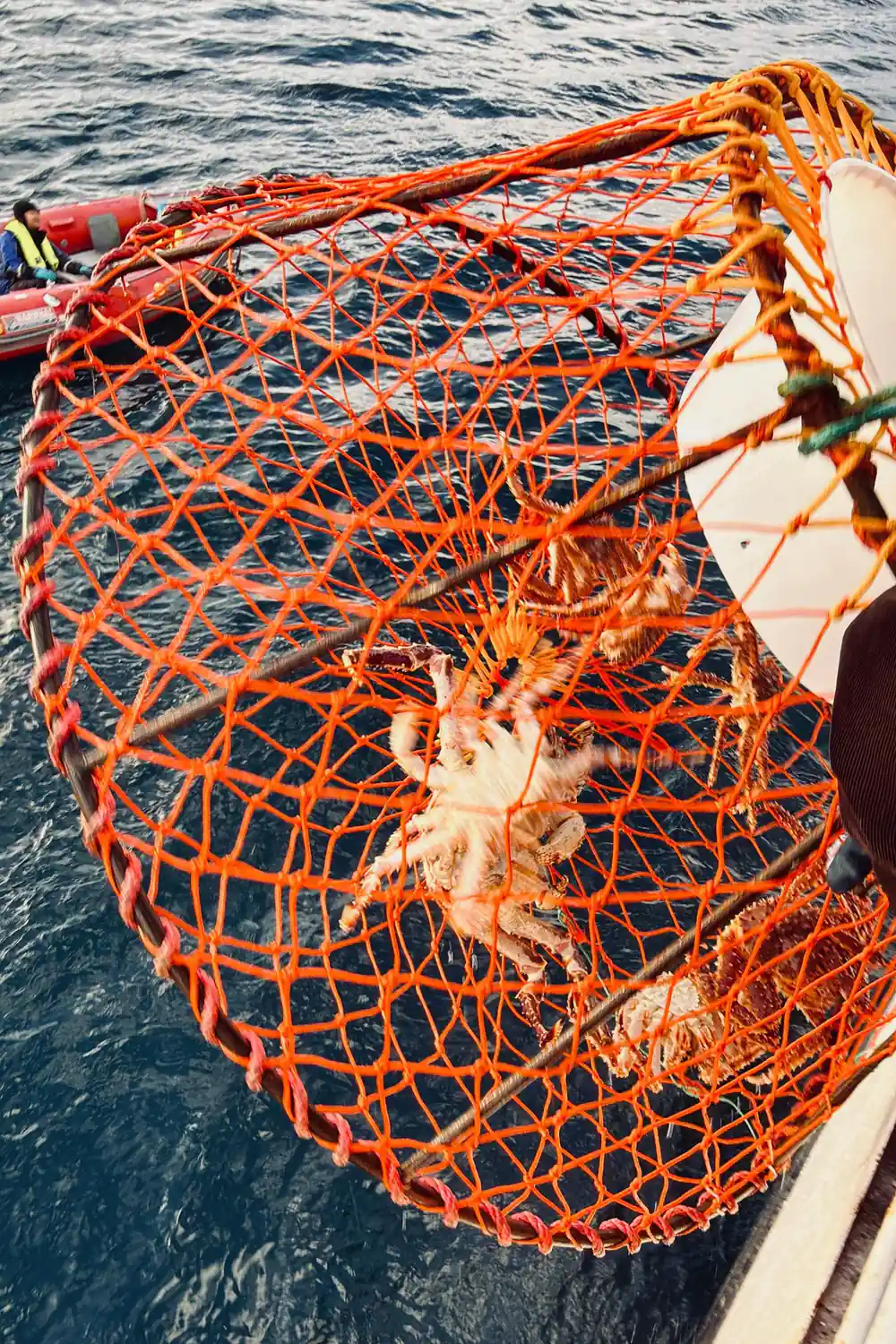
King crab fishing usually works with heavy baited pots resting on the seabed. The boat moves from mark to mark, finds the pot, hauls it up, empties the crabs into a sorting tray, re-baits and drops it back down. It is physical work, and the crew does it as the passengers watch from a safe distance. The deck can be slippery, so it pays to hold the rail and listen to the crew.
On this cruise, that routine is built into a 4.5-hour outing.[1] The live guide explains what is happening in Norwegian and English, so there is no guesswork involved.[1] There are chances to ask questions, see the crabs up close and follow the process from water to deck. The work gives the afternoon a clear shape.
Then comes the transformation. The self-captured lunch is the final act: the crabs you helped bring in are cooked and served. That is what separates this trip from an ordinary sightseeing cruise. The food on the table is the same animal you saw come over the rail, and there is something honest about that.
The fjords as habitat
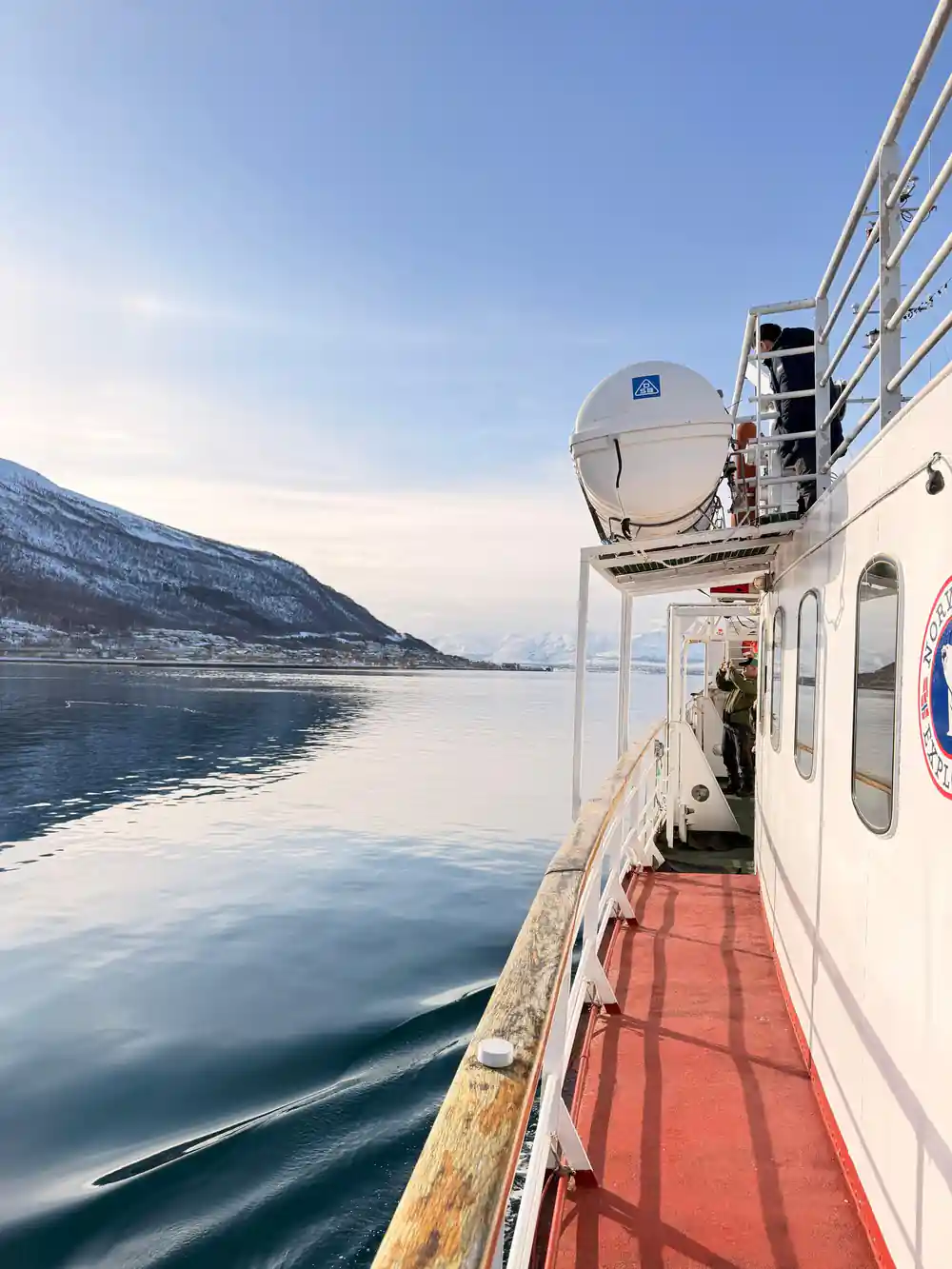
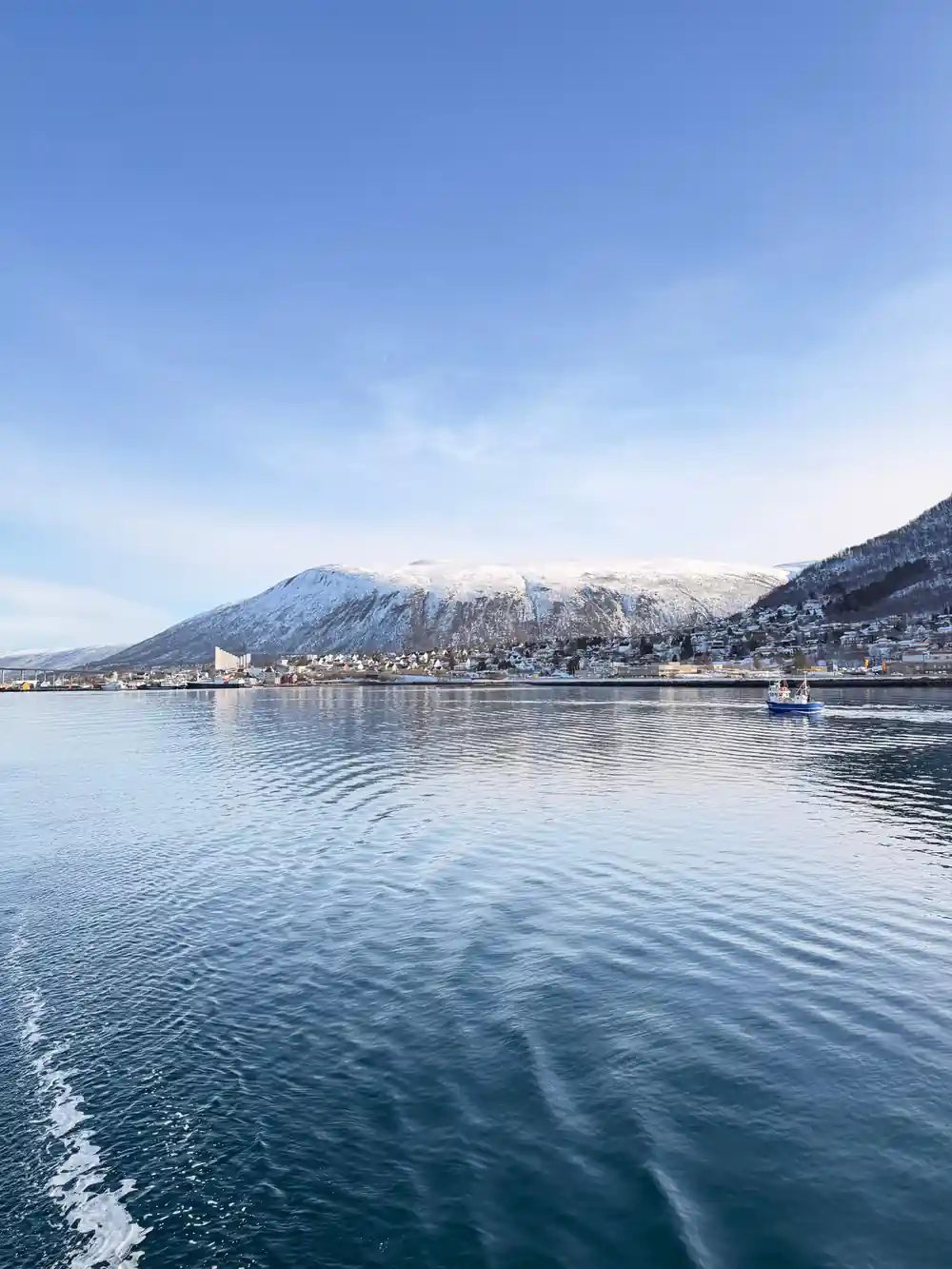
The fjords around Tromsø are cold, deep and wonderfully alive in winter. Snow lies on the slopes, the light stays low, and the water is full of moving life. The combined effect is a landscape that feels both harsh and rich. In the dim winter light, the contrast between dark water and bright snow makes every fjord look like a photograph.
The reason the whales come is the herring. Norwegian spring-spawning herring migrates northeastward in September/October to its main wintering areas off the coast and in fjords in northern Norway.[11] During winter, the area hosts orcas and humpback whales feeding on herring.[2]
Tromsø's average winter temperature is around −4°C.[6] On a boat, wind makes it feel colder, so dress in warm layers, bring a hat and gloves, and use the cabin when you need to warm up. The cold is part of the atmosphere, but comfort lets you stay out on deck for the good bits. If you forget anything, the boat's cabin is a welcome retreat.
How the visitor trip relates to the real thing
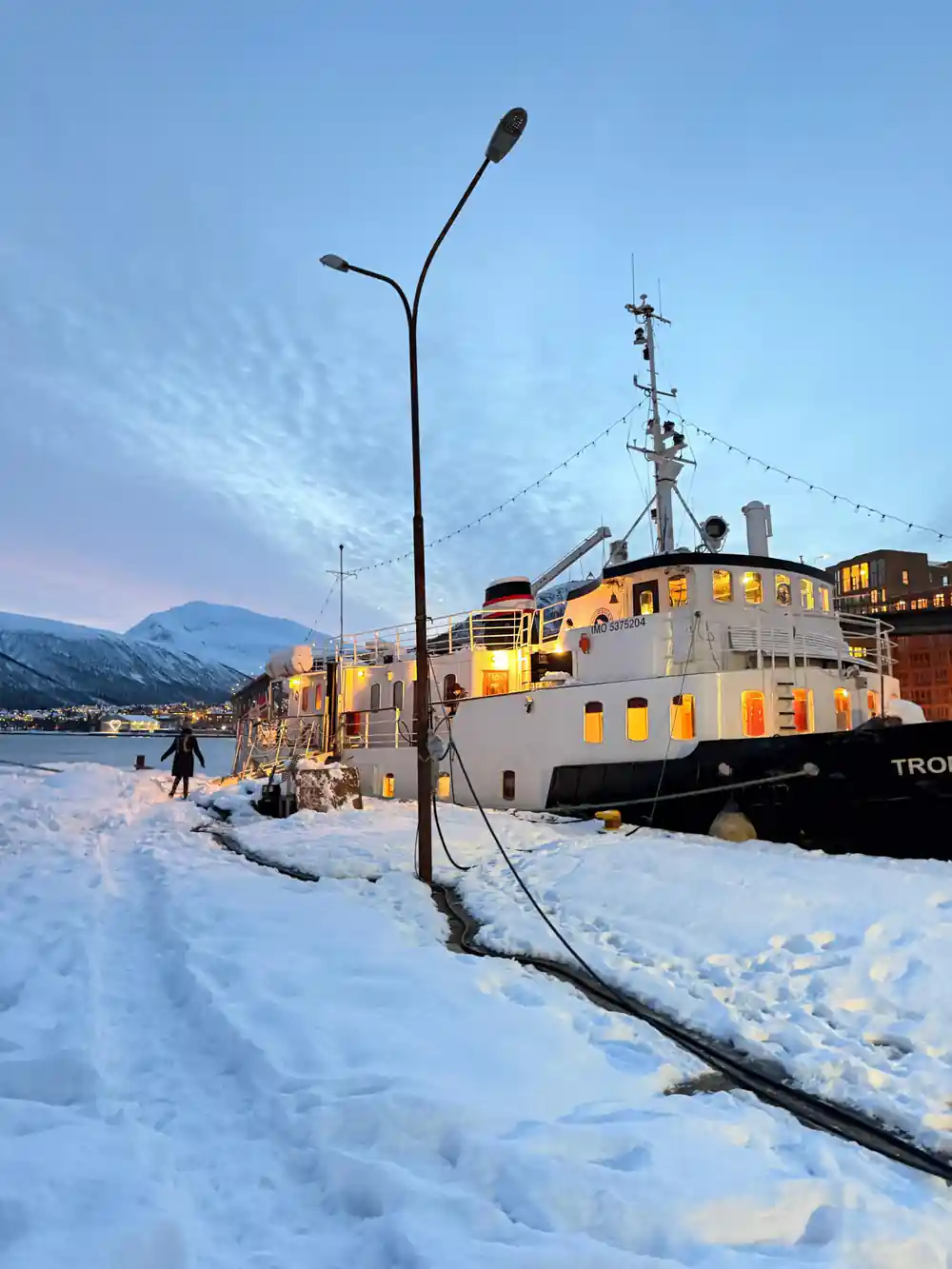
A tour like this is a small window into a working fishery. It is not a staged demonstration with plastic props. You are on a real boat, with real gear and a real catch, and the crew is doing the same work they would do on a normal fishing day. The guide keeps the group together and explains each step, so it feels hands-on without ever feeling unsafe.
The trip takes 4.5 hours, which is long enough to feel like a proper outing but short enough to leave room in the rest of your day.[1] A live guide in Norwegian and English keeps the story straight, and the boat is the kind of vessel you can move around on comfortably.[1] If you have a tight schedule, the 4.5-hour frame is convenient, and the meal is built into the outing.[1]
From US$261, it is an investment in an experience rather than a budget add-on.[1] If you want to understand where your food comes from, to feel the winter fjord and to end with a meal you helped catch, this is the shape of that day. It works as the centrepiece of a longer trip, not just a filler between sightseeing stops.
Tour durations at a glance
Compare tour prices
Prices are from GetYourGuide listings.[1][4][5]
When to go
How to plan the cruise
Reserve your place
Reserve online starting at US$261, with pay-later available and complimentary cancellation up to 24 hours ahead.[1]
Meet the boat
Arrive in Tromsø and join the live guide, who leads the trip in Norwegian and English.[1]
Sail and catch
Spend 4.5 hours on the water, hauling pots and watching the catch come aboard.[1]
Sit down to lunch
The self-captured lunch is the final act: the crab you helped bring in becomes the meal.
Return to Tromsø
The cruise ends after 4.5 hours, leaving time for the rest of your winter day.[1]
Ready to catch your own Arctic king crab lunch?
from US$261Reserve now & pay later