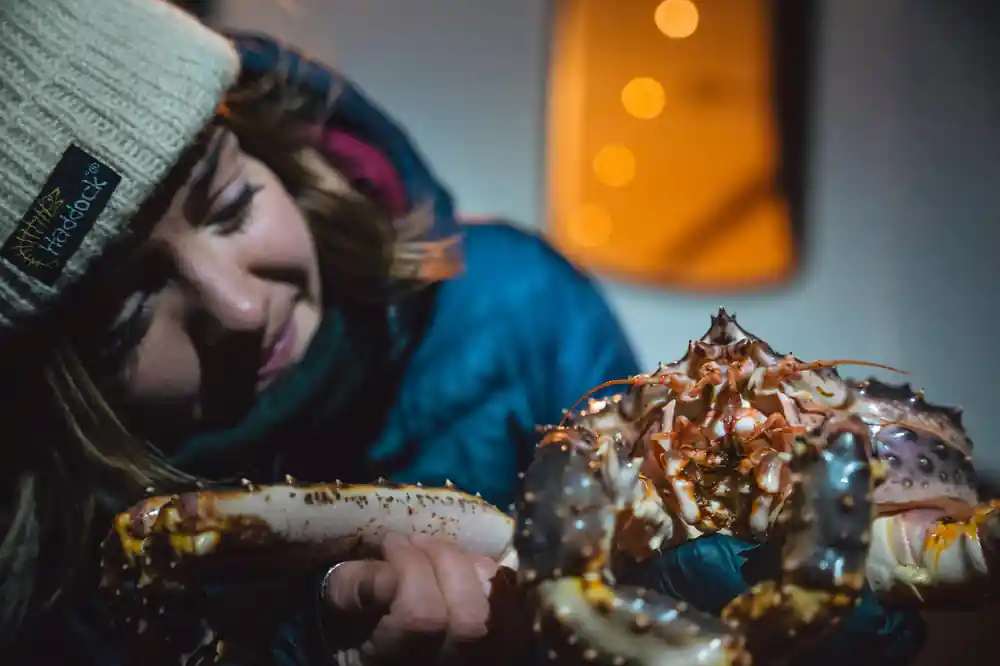
At a glance
- Legs are the main event, with claw meat a close second. Save the body meat for soups or spreads.
- Red king crab came to Norway after Russian researchers released it in Murmanskfjorden in the 1960s; the first individuals appeared in Norwegian waters in 1977.[1]
- Boil the legs in salted water and serve with lemon, butter and bread. That is how Tromsø does it, and it works at home.
- Use kitchen scissors along the soft shell, then pull out the meat with a small fork. No special tools needed.
- Book the cruise with self-captured lunch for 4.5 hours and a live guide in Norwegian and English.[2]
- Top choice Arctic King Crab Cruise from US$261 Duration4.5 hours[2]Rating4.45[2]LanguagesNorwegian, English[2] Check availability
- Arctic Fjord Cruise from US$156 Duration4 hours[3]Rating4.52[3]LanguagesEnglish[3] See this tour
- Fjord History Cruise from US$157 Duration2.5 hours[4]Rating4.90[4]LanguagesNorwegian, English[4] See this tour
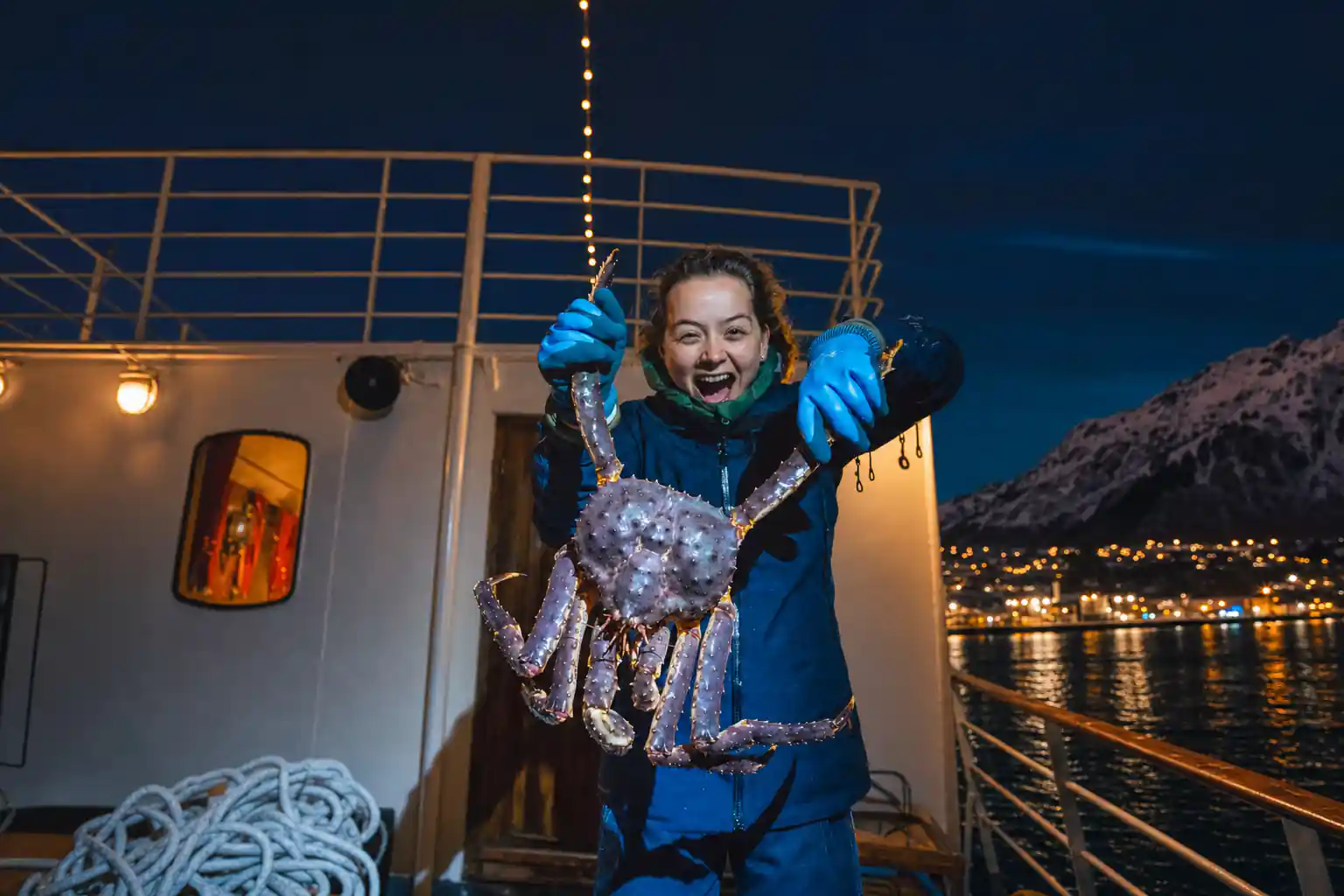

The average winter temperature in Tromsø is around −4°C.
Why this cruise makes sense
Planning
Which parts you actually eat
Start with the legs. That is where the sweet, dense meat lives, and it is the part you will spend your time with at the table. The claws hold big chunks too, and the shoulder meat is often used in bisques or mixed into spreads. For a home cook, the legs are the forgiving part: they respond well to simple cooking and need very little seasoning. A whole crab can look intimidating, but once you understand how the meat is arranged, the rest is simple.
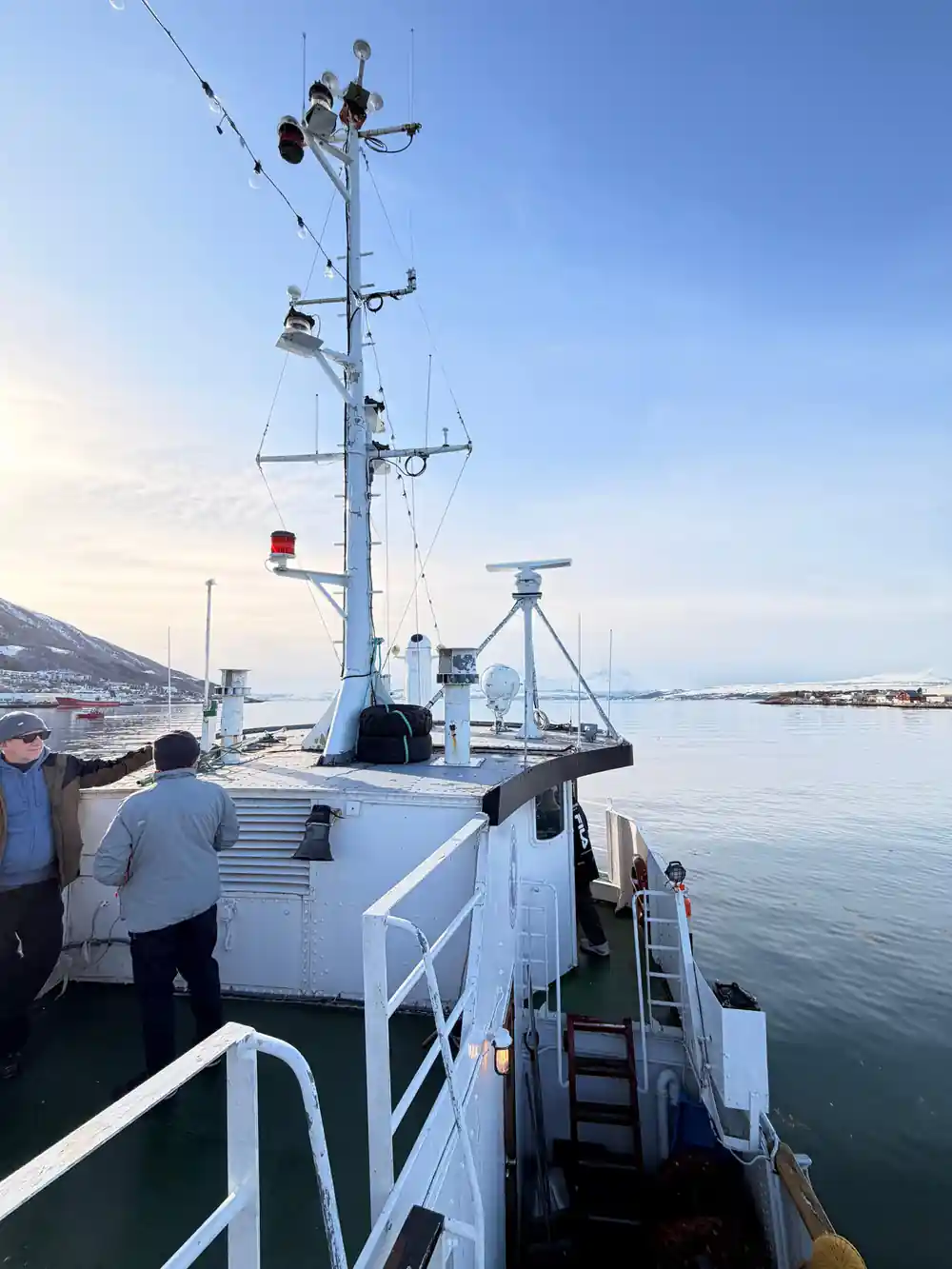
The tour booked from this site is called the Arctic king crab cruise with self-captured lunch, and it is a practical introduction to eating crab at its source. The cruise lasts 4.5 hours, with a live guide speaking Norwegian and English.[2] It is bookable from US$261; reserve now, pay later, with free cancellation until 24 hours before.[2] If you have never cooked crab before, this is a gentle way to learn without the pressure of a restaurant table.
On board, the crew will show you how each leg is handled. You will see how the shell opens cleanly, how the meat releases from the cartilage, and how much you can expect from a single serving. Those are the details that make the difference when you try it at home.
Why it is not really a crab
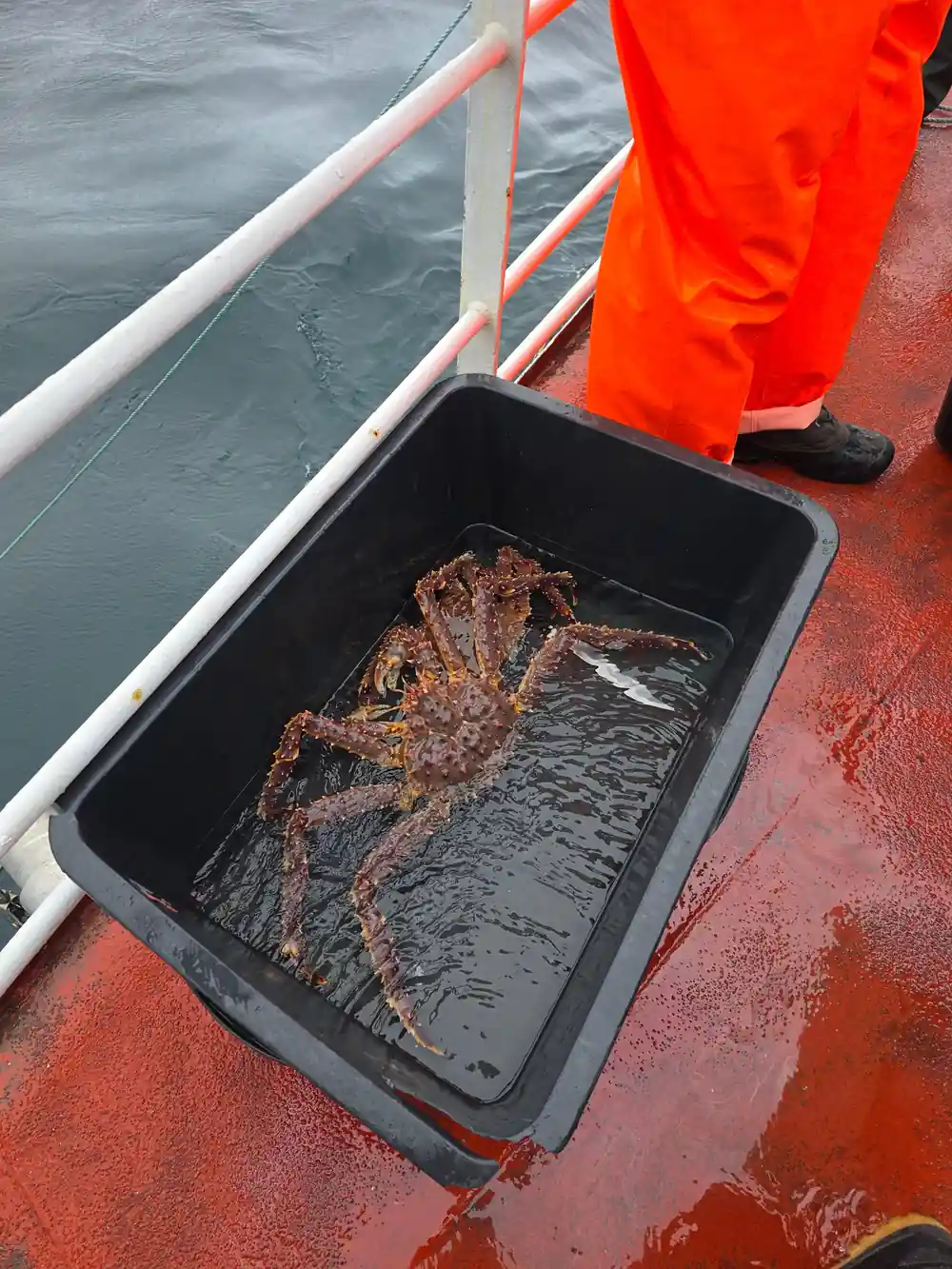
King crabs are often grouped with crabs at the seafood counter, but they are not the familiar beach-crab family. They carry their last pair of legs tucked underneath, walk forward a little awkwardly, and they are built for cold northern waters. The red king crab originally comes from the North Pacific, and in Norway it has a short but eventful history: Russian researchers released it in Murmanskfjorden in the 1960s, and the first individuals appeared in Norwegian waters in 1977.[1]
Knowing that backstory makes the meat taste different. You are not eating an imported product; you are eating a species that has become part of the northern Norwegian landscape. You will also find king crab on menus all over Tromsø, from fine dining to casual harbour spots, and each kitchen has its own way of doing it.
Understanding the crab's story also helps you buy it. You will know to ask where it was landed and how long ago it was caught. At the fish counter, a few simple questions tell you more than a label ever will.
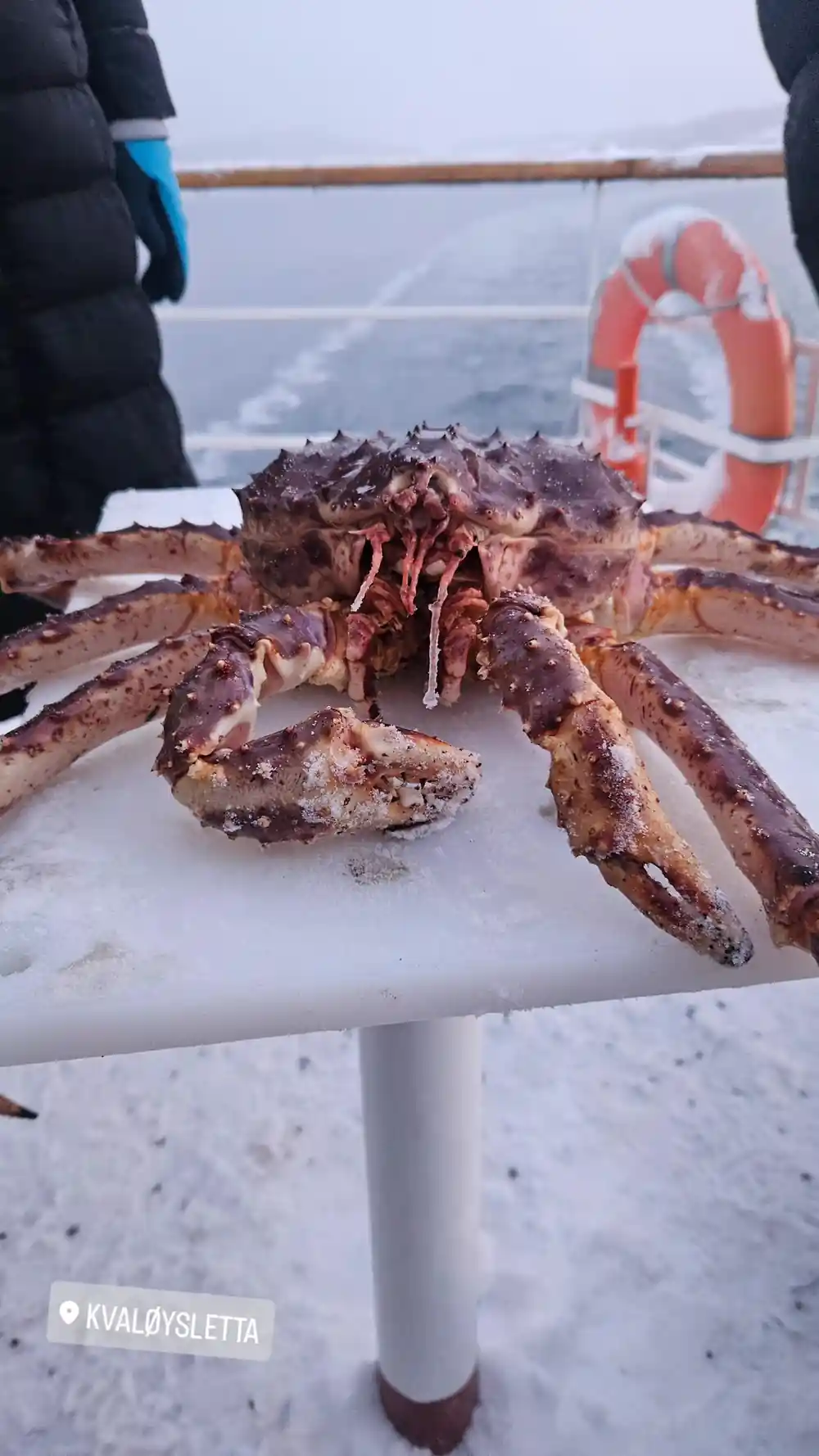
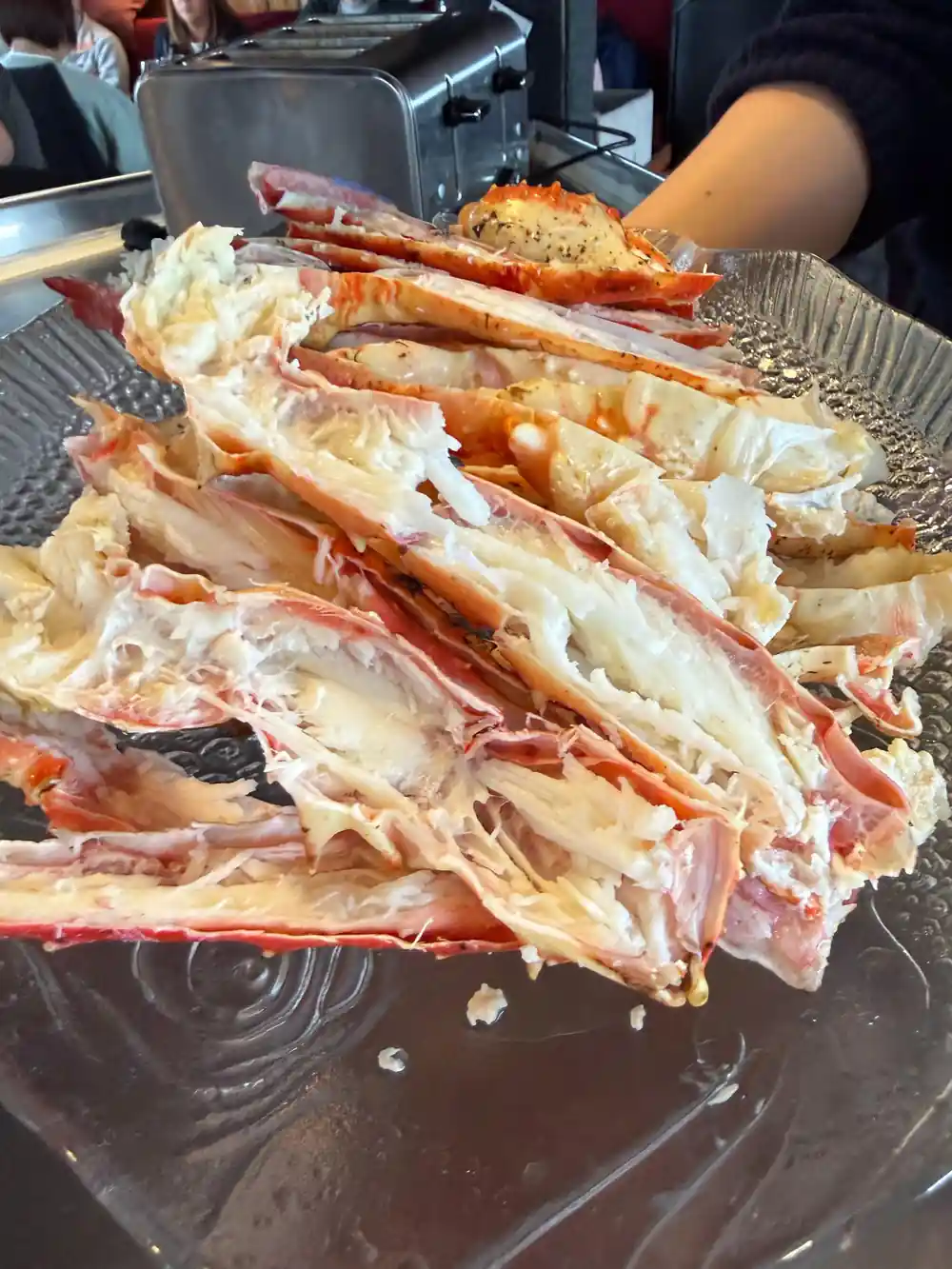
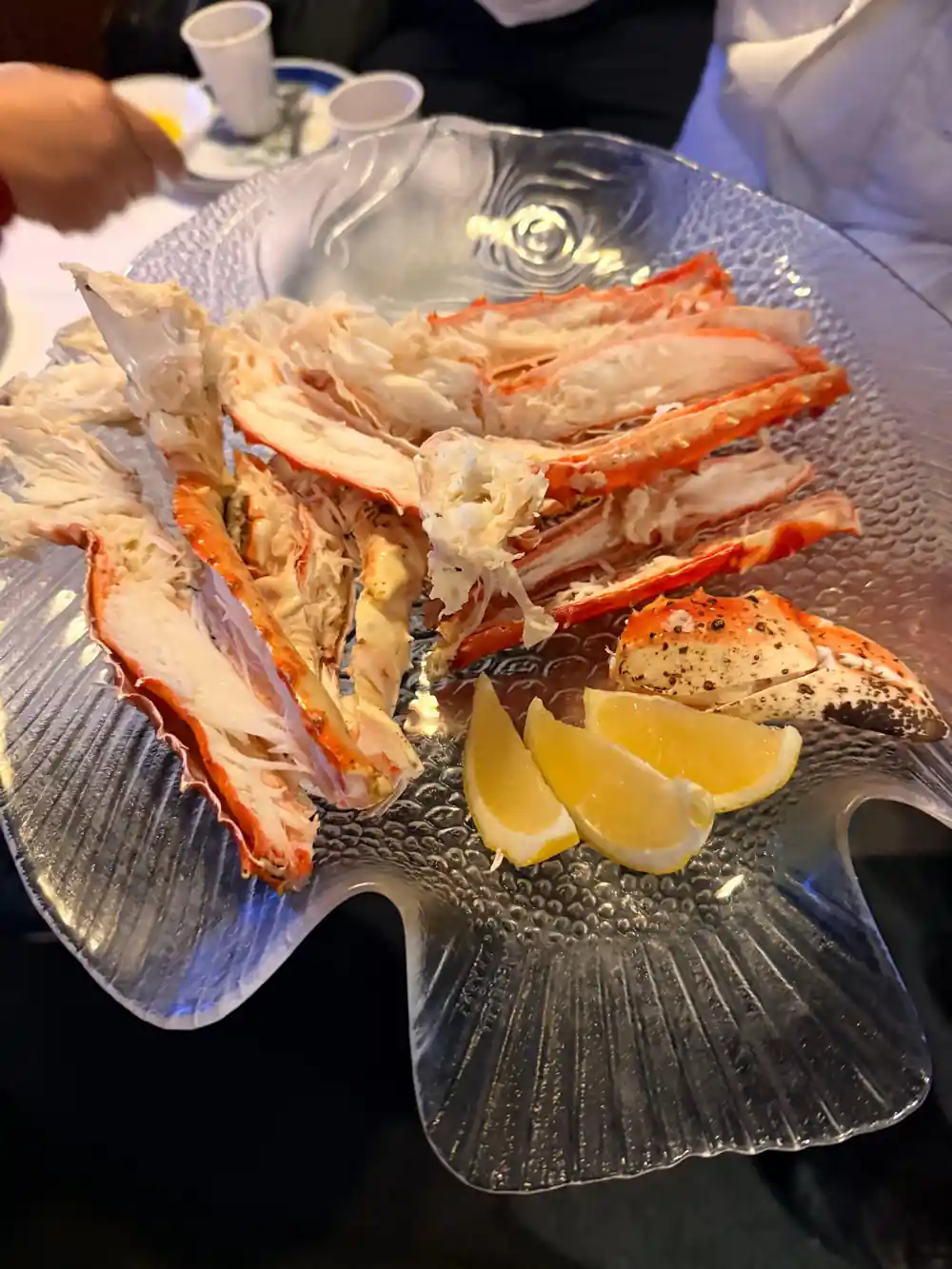
Fresh king crab legs on a plate, ready to crack.
How it is cooked here
The cooking in Tromsø is deliberately plain. Most places boil the legs in salted water, sometimes with a little sugar or dill, and serve them with lemon, mayonnaise and good bread. The goal is to let the crab taste like the sea, not to mask it with butter or spice. At home, you can do the same with a large pot and a steamer basket.
A useful habit from the tour is to work with the crab as soon as it is cooked. On board, the legs are cracked at the table, so the meat stays warm and juicy. If you are cooking at home, keep the cooked legs covered and slightly warm while you melt the butter, then crack each leg just before eating.
A large pot is all you need. Bring salted water to a brisk boil, lower in the legs, then let the pot settle to a gentle simmer. Cooked crab only needs to warm through, so keep an eye on the clock rather than walking away. The moment the shell turns bright and the meat smells sweet, it is ready.
Opening a leg
The easiest way to open a king crab leg is to use scissors and a small fork. Snip along the softer edge of the shell, pull the shell apart, and lift out the long piece of meat. The knuckle joints need a bit more patience, but they hide some of the sweetest flesh. You do not need special tools; kitchen scissors work better than crackers, because the shell is thin and will not shatter into splinters.
If you are eating on the cruise, let the crew show you their trick. It is a social moment as much as a practical one, and it is surprising how many people have never tackled a crab leg before. Once you have done it once, you will be able to handle any crab at home with confidence.
Work over a wide plate or board so no juice is wasted. The little pools of crab liquor are full of flavour; pour them over the meat or save them for stock. Once you have a rhythm, opening several legs takes almost no effort, and the table becomes a much more sociable place.
from US$261
The Arctic king crab cruise with self-captured lunch takes 4.5 hours with a live guide speaking Norwegian and English.[2]
What it tastes like
King crab has a clean, sweet flavour that is milder than brown crab and less briny than lobster. The texture is what people remember: dense, flaky and almost firm, with long strands of meat that pull apart in chunks. It does not need much, but a squeeze of lemon, a little melted butter, or a simple herb mayonnaise all work well.
If you want to try it before cooking it yourself at home, the easiest option is to book a cruise that includes a self-captured lunch and let someone else show you the routine. That way you can decide how much crab you actually need for a home dinner and how you like it best. Even a small portion goes further than you think; the meat is rich, and most people are full well before the shells are cleared.
Pairing also matters more than people expect. A light beer, a dry white wine or even just warm bread with butter will not fight the crab's sweetness. Keep side dishes plain, because the pleasure of crab is in the meat itself.
Buying it in Tromsø
The best time to buy king crab in Tromsø is in the colder months, when the boats are working and the crab is at its peak. Look for shops near the harbour, ask where it was landed, and choose legs that smell sweet and fresh, not fishy. Frozen crab is also common and absolutely fine, especially if you are taking it home. The harbour shops may have live tanks or chilled counters; both are fine, but ask for the catch date if you can.
If you are staying in an apartment, a whole cooked crab can be reheated quickly and served with bread and salad. The tour gives you a low-pressure way to learn the basics before you shop on your own. You can book it from US$261 and take advantage of free cancellation up to 24 hours in advance.[2]
Ask the shop whether the crab is cooked or raw, and if it is cooked, when. Smell is still the best guide. Cooked crab should smell clean and sweet, and the shell should feel firm. If you can, buy the day you plan to eat it, so you avoid an extra round of freezing and thawing.
Taking it home
Cold crab travels well if it is kept cold. If you fly home with a frozen king crab, pack it in a checked bag with a freezer pack and declare it at customs; rules vary by country, so check before you go. A cooked and chilled crab should also stay in the fridge and be eaten promptly for the best texture.
For most people, the best souvenir is not the crab itself but the technique. Once you have spent an afternoon learning how to cook and eat king crab, the versions you make at home will be better than anything from a restaurant. That is the point of the self-captured lunch: it gives you a skill, not just a plate.
When you get home, take the crab out of the box, pat it dry, and reheat it gently if it has been chilled. Packing a little sea salt or dried seaweed with the crab is a nice reminder of where it came from, but the real souvenir is the confidence to cook it again. Friends will ask how you learned to crack a leg so neatly, and the answer starts with that afternoon on the water.
Compare cruise prices
Prices are US-dollar from-prices in the cited listings.[2][3][4]
Tour prices in US dollars
Prices are US-dollar from-prices in the cited listings.[2][3][4]
When to visit Tromsø
Cooking king crab at home
Choose your crab
Look for legs with a clean, sweet smell and a glossy shell. Frozen legs are fine if they feel solid and are not freezer burned.
Thaw slowly
Move the crab from the freezer to the fridge well ahead of cooking. Rapid thawing makes the meat watery.
Boil simply
Bring salted water to a boil, lower in the legs, and let them heat through. Serve as soon as they feel warm.
Crack and serve
Snip the shell with kitchen scissors, pull out the meat, and serve with lemon, melted butter or mayonnaise.
Save the shell
Use the shells to make a quick stock for fish soup. It adds a sweet, briny flavour.
Learn how to cook and eat king crab on the water
from US$261Reserve now & pay later